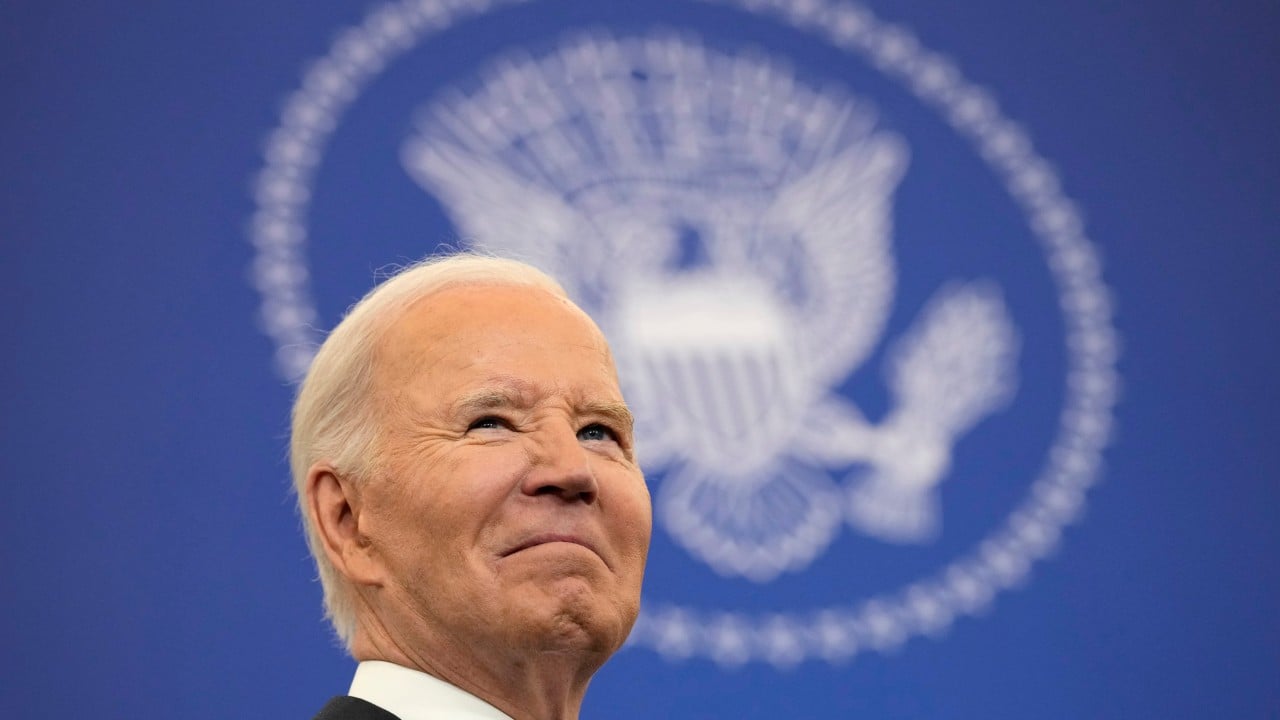
Joe Biden finally said out loud what millions of voters suspected while watching him struggle through the spring and summer of 2024. If he'd known he had cancer, he wouldn't have run for a second term.
"If I had known that I was feeling lousy because I had cancer, I would've not gone forward," Biden told People magazine ahead of the November 17, 2026 release of his White House memoir, Promise Me, America. "Because I don't think an 80-year-old man with cancer should be running." Meanwhile, you can read related stories here: When Standards Collide With Spectacle at Arlington National Cemetery.
It's a stunning concession. Yet if you read the rest of his remarks, you'll notice a massive contradiction sitting right beside that honesty. While admitting that an undiagnosed illness may have made him feel "lousy", Biden still insists he was objectively the best person to lead the country and claims his disastrous June 2024 debate against Donald Trump wasn't "very consequential".
That tension is the real story here. Standard news summaries repeat Biden's quotes at face value and move on. They miss the medical reality of how aggressive prostate cancer develops, the political fallout of his refusal to own the 2024 collapse, and what his delayed diagnosis says about presidential health transparency. To explore the bigger picture, check out the detailed article by The Washington Post.
The Medical Reality Behind Biden's Delayed Diagnosis
In May 2025, less than four months after leaving the White House, Biden's office revealed that doctors had diagnosed him with metastatic prostate cancer. The tumor carried a Gleason score of 9—near the top of a 6-to-10 scale that measures cellular aggression—and had already spread to his bones.
Critics immediately accused the White House of hiding the illness during the 2024 campaign. Biden flatly denied any cover-up in his People interview. "We let the public know when I found out, when I knew what was going on," he said. "I wasn't hiding it at all."
From a clinical standpoint, Biden's timeline is entirely plausible—and honestly, pretty common among men in their eighties.
- Screening guidelines drop off after age 70. The U.S. Preventive Services Task Force recommends against routine Prostate-Specific Antigen (PSA) blood screening for men aged 70 and older because slow-growing prostate tumors often cause more harm from overtreatment than from the disease itself.
- High-grade tumors move fast and quietly. A Gleason 9 prostate cancer doesn't behave like typical localized disease. As urologic oncologists at Michigan Medicine have noted regarding Biden's case, roughly 5 to 7 percent of men present with metastatic disease at the time of initial diagnosis.
- Early symptoms mimic normal aging. Fatigue, generalized aches, and feeling run down are classic signs of systemic illness, yet in an 81-year-old president flying across time zones, doctors and aides almost always blame exhaustion or a cold.
That explains why Biden literally said he was "feeling lousy" without knowing why. When you're 81 and running the free world, feeling drained doesn't automatically trigger a bone scan. Still, the absence of a secret diagnosis doesn't erase the fact that voters and party leaders saw a president visibly declining in real time.
Why Biden Still Refuses to Own the June 20
What Biden’s Cancer Admission Changes About the 2024 Race
news
Joe Biden finally said the quiet part out loud. Looking back at the 2024 presidential race, the former president admitted he wouldn't have launched a re-election campaign if he had known about his cancer diagnosis beforehand.
That single statement shifts the entire historical framing of the 2024 election cycle. For months, the public debate centered on his age, his stamina, and that disastrous June debate performance against Donald Trump. Voters, pundits, and even top Democratic donors spent endless hours dissecting every verbal stumble. Nobody knew there was a hidden medical reality waiting in the wings.
Honesty in politics usually arrives way too late. When it does show up, though, it forces everyone to re-examine what they thought they saw in real time.
The Weight of a Hidden Diagnosis
Let's be clear about the timeline here. During the height of the 2024 campaign, the White House repeatedly assured the American public that Biden was fit for another four years. His physician, Dr. Kevin O'Connor, released annual physical summaries stating the president remained a "healthy, active, vigorous" man fit to successfully execute the duties of the presidency.
Behind closed doors, things felt different to the people watching closely. You saw it in the shortened schedules. You noticed it in the fewer unscripted press conferences.
When Biden revealed that an earlier cancer diagnosis would have kept him off the 2024 ballot entirely, it validated the gut instincts of millions of voters. People aren't stupid. They can tell when someone is carrying a heavy physical burden, even when the official talking points insist everything is fine.
Cancer changes your math immediately. If you're facing aggressive treatments, endless scans, and the sheer exhaustion that comes with fighting the disease, running a grueling national campaign becomes nearly impossible. Doing it while serving as the leader of the free world? That's a recipe for disaster.
How This Rewrites the 2024 Democratic Primary
Think back to late 2023 and early 2024. The Democratic National Committee basically cleared the deck for Biden. Potential challengers like Gavin Newsom, Gretchen Whitmer, and Josh Shapiro stayed on the sidelines out of party loyalty and political pragmatism. Only Dean Phillips and Marianne Williamson mounted serious primary challenges, and the party establishment largely brushed them off.
Now ask yourself a simple question. What happens if Biden steps aside in late 2023 because of his health?
Everything changes.
Instead of a rushed, chaotic handoff to Kamala Harris in July 2024 with barely a hundred days left before Election Day, Democrats would have held a real, competitive primary. Voters would have tested candidates on the debate stage. The eventual nominee would have built a national fundraising machine and a distinct policy message from scratch, rather than inheriting a campaign infrastructure designed for someone else.
The Cost of Lost Time
In modern presidential politics, time is the one resource you can't buy back. When Biden finally exited the race in July 2024, Harris had to sprint through a compressed general election schedule. She had to introduce herself to undecided swing-state voters while simultaneously defending the administration's record on inflation and border security.
Had Biden known about his illness earlier, that bottleneck never happens. A full primary season lets a political party stress-test its message. It weeds out weak talking points before the general election begins. By staying in until mid-summer, the campaign inadvertently locked the party into a corner where normal democratic processes had to be bypassed for speed.
Presidential Health Transparency Remains Broken
This isn't just a Biden story. American history is packed with presidents hiding serious medical conditions from the voters who put them in office.
Woodrow Wilson suffered a debilitating stroke in 1919, leaving his wife Edith and a small circle of advisors effectively running the executive branch while the public remained in the dark. Franklin D. Roosevelt hid the true extent of his paralysis and his failing heart during his 1944 re-election bid, dying just months into his fourth term. John F. Kennedy concealed severe Addison's disease and chronic back pain behind a carefully curated image of youthful vigor.
We keep repeating the exact same cycle.
Presidents treat their medical charts like classified national security secrets because admitting vulnerability feels like political suicide. Opponents will weaponize any sign of weakness. Cable news panels will speculate wildly. Donors will freeze their checkbooks. So, the inner circle circles the wagons, releases vague medical summaries, and hopes the candidate can power through.
Why Medical Summaries Fall Short
When you read an official White House physical report, you're reading a carefully negotiated legal document, not a candid clinical assessment. Doctors bound by patient privacy laws under HIPAA can only release what the president explicitly authorizes. If a president doesn't want specific screenings highlighted, or if symptoms haven't yet triggered a formal diagnosis, the public gets a rosy picture that masks underlying risks.
Even routine screenings have limits. Depending on the type of cancer and how aggressively it develops, a patient can pass a standard physical in February and face a life-altering diagnosis months later. Still, the culture of secrecy around executive health leaves voters guessing when they deserve hard facts.
What Voters Should Demand From Future Candidates
You can't rely on political campaigns to volunteer bad news about their candidate's health. History proves they won't do it unless their backs are completely against the wall. If voters want real accountability before casting a ballot, the pressure has to come from outside the party machinery.
Start by looking closely at what candidates actually release. Don't settle for a one-page letter from a hand-picked personal doctor praising a candidate's golf swing or cholesterol numbers. Demand standardized, independent medical disclosures from major party nominees before primary voting even begins.
Pay attention to cognitive and physical stamina in unscripted settings, too. Teleprompter speeches tell you almost nothing about how a leader handles high-stress, real-time decision-making. Town halls, long-form interviews, and adversarial press briefings show you how a candidate actually holds up under pressure.
Finally, stop treating a candidate's decision to step down for health reasons as a personal failure. Whether it's a president, a senator, or a local mayor, recognizing physical limits before a crisis hits is a sign of basic responsibility. Voters should reward leaders who put the country's stability ahead of their own ambition, rather than punishing them for being human.