The internet treats the passing of a television naturalist like the canonization of a saint. We roll out the archive footage, dust off the glowing tributes about how they opened our eyes to the natural world, and collectively nod at the comforting myth that prime-time television saved the planet.
Let us stop the sentimental theater right now.
Bill Oddie was a brilliant comedic force, a ferocious birdwatcher, and a deeply passionate advocate for the British countryside. But the lazy consensus surrounding his broadcasting legacy is that watching him splash about in wellies on Springwatch or The Goodies somehow translated into meaningful ecological conservation.
It did not.
In fact, mainstream nature television of that era perfected a specific kind of passive, armchair environmentalism that made viewers feel virtuous while habitat loss accelerated in the background. If your metric for success is how many people bought a pair of binoculars, Oddie was a triumph. If your metric is species abundance, cleaner rivers, and halted development, television naturalism was a polite distraction.
We need to talk about why we confuse eccentric enthusiasm with actual environmental impact.
The Comfort Food Fallacy of British Wildlife TV
For decades, British broadcasting served up a very specific aesthetic of nature. It was hosted by eccentric men in sweaters—Oddie chief among them—who treated the outdoors like an overgrown, slightly damp English garden.
This programming relied on a dangerous premise: that nature is something out there, mediated by a charming presenter, safely packaged into a one-hour slot before the evening news.
When Bill Oddie ranted about bird habitats or badger culls, he was preaching to a choir of people who already owned homes with gardens. He made conservation feel like a cozy hobby rather than a brutal, high-stakes political conflict over land use.
I have spent years working with grassroots conservationists and land managers on the ground. I have watched billions of pounds in public interest and private donations flow toward glossy media campaigns while local wildlife trusts struggled to buy a single acre of neglected scrubland. The cameras capture the charismatic megafauna and the quirky avian behaviors, but they entirely miss the bureaucratic and economic violence destroying the British landscape.
Oddie was a symptom of an industry that preferred charm to confrontation.
The Myth of the Citizen Naturalist
One of the most persistent dogmas of the Oddie era is that public participation in spot-checks—like the Big Garden Birdwatch—constitutes real science and effective conservation.
Let us look at the hard mechanics of this argument.
Proponents claim that millions of citizens logging blue tits and house sparrows provide vital data sets for ornithologists. True, scale matters. But sheer volume does not compensate for skewed variables. Backyard bird counts heavily favor suburban, affluent areas with bird feeders. They tell us very little about the catastrophic collapse of insect populations in intensive agricultural zones or the chemical poisoning of our chalk streams.
When people participate in these programs, they experience a psychological loophole known as moral licensing. By counting a chaffinch in Berkshire, the viewer feels they have done their bit for the biosphere. They have checked the conservation box. Meanwhile, the housing development approved down the road paves over the local migration corridors, unbothered by backyard tallies.
Oddie championed this accessible, democratization of birding. But democratization without teeth is just tourism.
What Real Conservation Looks Like
If you want to understand why British wildlife is in freefall, stop looking at television schedules and start looking at land ownership deeds, agricultural subsidies, and water authority privatization.
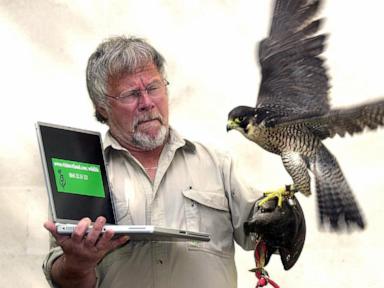
Real conservation is unglamorous. It involves sitting through grueling municipal planning meetings, fighting corporate agricultural lobbies, and dealing with the bitter, localized politics of rewilding. It rarely involves wearing a fleece and pointing excitedly at a peregrine falcon.
Oddie’s great tragedy as an activist was that his platform was too polite. Television demands entertainment, and entertainment demands narrative arcs that can be resolved in sixty minutes. Real ecological restoration takes centuries, involves dead ends, and requires dismantling economic structures that television executives depend on for advertising revenue.
To his immense credit, Oddie was never afraid to make a nuisance of himself. He took on the shooting lobby and courted controversy. But the medium he worked in neutered the rebellion. Television turns agitators into national treasures. Once you are a national treasure, you are safe to ignore.
The Legacy We Actually Need to Dismantle
We do a disservice to Bill Oddie's memory by turning him into a cardboard cutout of eco-benevolence. He was a complex, combative, occasionally difficult man who cared deeply about birds.
Treating his career as a golden age of environmental awakening lets everyone else off the hook. It allows viewers to believe that loving nature on a screen is the same thing as defending it in reality.
The next time a beloved broadcaster passes away and the tributes flow about how they "taught a generation to love the wild," ask yourself a simple question. Did that love stop a single bulldozer?
Usually, the answer is no. And until we stop confusing television with stewardship, the wild will keep disappearing while we sit indoors, watching someone else look at it.