The desk at the corner of the trading floor is always too quiet at 3:00 AM. While the rest of the world sleeps, screens glow with a pale, unforgiving white light, reflecting in the eyes of people who trade in futures they cannot quite see.
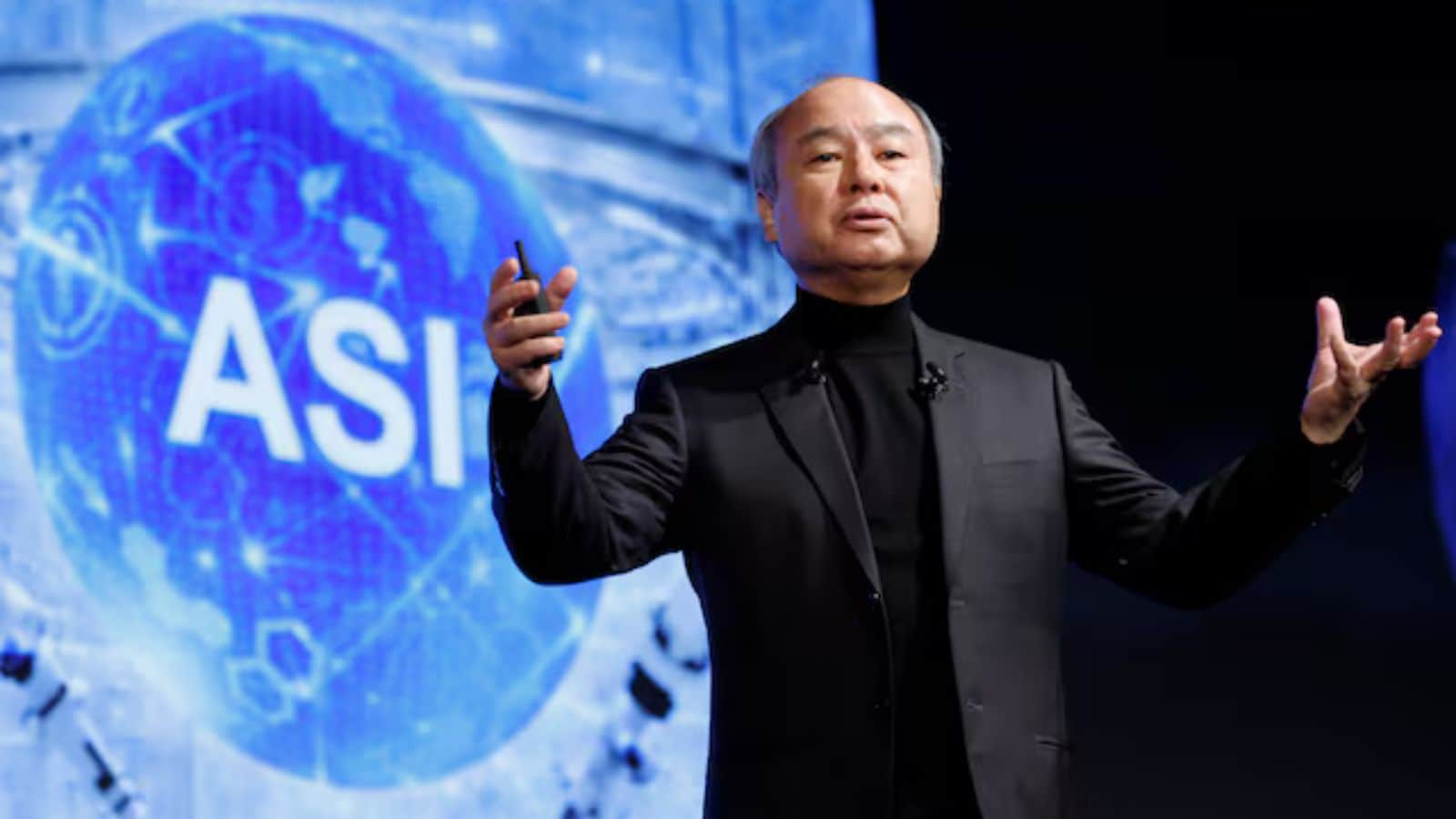
Masayoshi Son has spent a lifetime staring at those screens. Meanwhile, you can find related developments here: The Fall Of Volkswagen And Why Blue Chip Exile Is Only The Beginning.
To understand what happened when SoftBank Group quietly engineered a towering maneuver—raising over ten billion dollars through high-yield debt specifically to pour into the insatiable machinery of OpenAI—you have to look past the spreadsheets. You have to look at the geometry of ambition. For years, the conventional wisdom of finance was built on caution: guard the capital, balance the ledger, measure the risk. Son operates on a different frequency entirely. He does not manage risk; he feeds it, starving caution until only momentum remains.
Consider what happens when a single company decides to bend the arc of technological history through sheer gravitational pull. To understand the bigger picture, check out the recent article by Investopedia.
OpenAI is not merely a software provider. It is a furnace. It consumes electricity on a scale that rivals small nations, sucks in silicon chips that cost more than luxury yachts, and pays researchers salaries that blur the line between science and science fiction. To keep that furnace burning, normal venture capital is like throwing a single match into a blast furnace. It does nothing. It requires industrial-grade fuel.
Enter the junk bond market.
To the uninitiated, the phrase "junk bonds" sounds like financial debris—the broken pieces of corporate wreckage traded by desperate speculators. In reality, high-yield debt is the raw electricity of aggressive capitalism. It is money borrowed at steep interest rates by entities betting everything on a future that must arrive yesterday. When SoftBank taps that market to secure billions for a private artificial intelligence lab, it is an astonishing gamble. It is a signal flare fired across the bow of global finance, whispering a terrifying question: What if we are right?
And more importantly: What happens to everyone else if we are?
There is an invisible weight to this kind of money. Down in the trenches where engineers write the code that teaches neural networks how to reason, translate, and synthesize, nobody talks about bond yields. They talk about context windows. They talk about token limits. They talk about the terrifying, thrilling moment when a model hallucinates something brilliant instead of something wrong.
Yet, every line of code written in San Francisco is now tethered to the credit markets of Tokyo and New York. That is the modern alchemy. Abstract finance transforms into tangible electricity, which transforms into raw compute, which transforms into an intelligence that threatens to rewrite human labor.
Walk through any modern office building in a major financial district, and you can feel the low-frequency hum of anxiety. Middle managers look at their spreadsheets with a new, quiet dread. Writers look at blank pages and wonder how long the blankness will remain uniquely human. They are feeling the tremor before the earthquake, sensing that the ground beneath their professions is shifting.
That shift is being financed, in part, by these very billions.
When a debt-financed tidal wave of capital hits an ecosystem, it alters the laws of economic gravity. Smaller competitors, no matter how clever their algorithms or how elegant their architecture, find themselves starved of oxygen. The race stops being a marathon of wits and becomes a demolition derby of balance sheets. Who can burn cash the longest? Who can survive the interest payments while waiting for the technology to monetize itself?
This is where the vulnerability lies. Son is a visionary, but visionaries have a history of arriving too early and bleeding out on the pavement of premature timing. The Vision Fund's past bets—WeWork, the rollercoaster ride of tech valuations—left scars that still ache in the corporate memory of SoftBank's board. Yet, the fear of missing the artificial intelligence revolution is infinitely more terrifying than the fear of losing money. In the calculus of modern titans, bankruptcy is a temporary inconvenience, but irrelevance is absolute.
So the debt was issued. The investors subscribed. The capital moved across fiber-optic cables in milliseconds, landing in accounts that will be spent on clusters of graphic processing units humming in desert data centers.
We are standing at a strange intersection in human history. For the first time, our most powerful tools are not being built to bridge physical distances or extract physical resources. They are being built to replicate the intangible: thought, intuition, language, and creativity. And the fuel for this replication is not oil or coal, but raw, unfiltered financial leverage.
When the history of this decade is written, the footnotes won't just belong to the algorithms that dazzled us with poetry and code. They will belong to the anonymous bondholders who bought high-risk paper in the middle of the night, betting their capital that the future would look different enough to pay them back.
The screens in Tokyo are still glowing. The furnaces in the data centers are still roaring. And somewhere in the dark, the math is quietly compounding, waiting to see if we are building a bridge to paradise or walking off a cliff of our own financial design.