Silence.
In the sterile, glass-walled conference rooms of Shanghai and Beijing, where nine-figure global endorsement deals are drafted with surgical precision, the loudest sound in the room is never the shouting of an angry executive. It is the sudden, suffocating quiet that descends when a Western superstar steps across an invisible line.
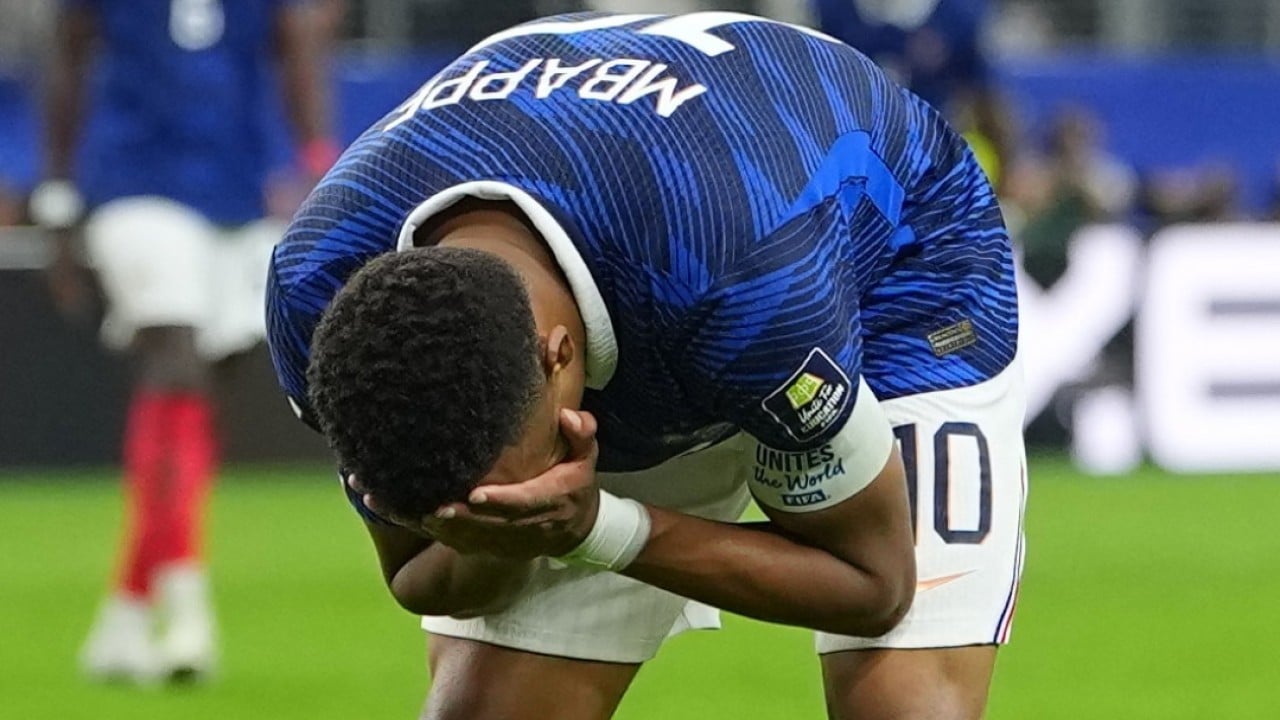
Consider a hypothetical scene—one that mirrors the real-world crisis rooms across corporate China whenever a geopolitical storm hits the sports industry. Imagine a marketing director in Pudong, thirty-eight floors above the Huangpu River, staring at her phone at two in the morning. On her screen is a clip of Kylian Mbappe, a player whose face was supposed to anchor her brand’s upcoming lunar calendar campaign, whose speed and charisma were meant to translate directly into market share among twenty-something consumers in Shenzhen and Chengdu. Beside the video, a hashtag is climbing Weibo at ten thousand posts a minute. By sunrise, the campaign assets are locked in a digital vault, the billboards are scheduled to be stripped down before rush hour, and the press release—drafted with cold, unmistakable finality—is ready to go out. Mbappe has been dropped for offending national sentiments.
To a casual observer scrolling through sports headlines in Paris, Madrid, or New York, the news reads like another baffling episode of corporate overreaction. Why would Chinese brands sever ties with one of the most bankable athletes on earth over a political remark, a gesture, or an association deemed offensive? Why throw away years of brand building overnight?
Because in the modern global economy, a jersey is no longer just fabric, and a superstar is no longer just an athlete. They are diplomatic vessels sailing through waters mined with historical memory and sovereign pride.
The Architecture of a Broken Contract
I have spent years watching international brand partnerships unravel from the inside, sitting across from legal teams and regional managers who suddenly realize that the contract they spent eight months negotiating missed the only clause that actually mattered. You can feel the temperature drop in those rooms. The coffee goes cold on the table while translators argue over the exact shade of meaning in a single Mandarin phrase, knowing full well that the public court on social media has already delivered its verdict.
When reports surfaced that Chinese sponsors had cut ties with Kylian Mbappe over allegations of offending national sentiments, the Western press largely treated it as a straightforward business bulletin. A list of brands. A brief summary of the controversy. A footnote about financial losses.
That dry accounting misses the human and psychological machinery driving the decision.
To understand why a company in Guangzhou or Shanghai would willingly absorb millions of dollars in sunk marketing costs rather than keep a global icon on its roster, you have to understand the nature of the Chinese consumer market. Think of a multinational sponsorship not as a billboard rented on the side of a highway, but as a guest invited into a family home. In the West, consumers routinely separate the art from the artist, the athlete from the endorsement. A football fan in London might disagree fiercely with a striker’s politics on Sunday afternoon and still buy his signature boots on Monday morning.
In China, that separation rarely survives a crisis of national dignity.
The phrase "offending national sentiments" is often mocked in foreign media as vague bureaucratic boilerplate. In reality, it is a precise commercial tripwire. For decades, modern Chinese identity has been shaped by a fierce protective instinct regarding sovereignty, territorial integrity, and national respect—an emotional current rooted in the memory of the nineteenth and twentieth centuries, when foreign powers carved up Chinese ports and dictated terms at gunpoint. When a foreign celebrity, intentionally or through sheer negligence, touches a nerve connected to Taiwan, Hong Kong, Xinjiang, or perceived disrespect toward Chinese culture, the reaction is not merely political. It is deeply personal.
For a domestic brand, silence is fatal. If a company hesitates to distance itself from a controversial ambassador, consumers do not just boycott the athlete; they turn on the brand itself, accusing it of prioritizing foreign profit over national loyalty. Within forty-eight hours, an endorsement deal transforms from a revenue engine into an existential threat.
The Invisible Trap of Global Stardom
Look closely at the life of a modern megastar like Kylian Mbappe, and you begin to see how easily the trap springs shut.
By his mid-twenties, Mbappe had already carried the weight of French football, navigated the labyrinthine politics of Paris Saint-Germain, stepped into the blinding spotlight of Real Madrid, and become the face of a generation. Every word he speaks in a mixed zone after ninety exhausting minutes on the pitch is recorded by forty microphones, transcribed by algorithms, and broadcast instantaneously to every corner of the planet.
Yet the infrastructure surrounding top athletes is still overwhelmingly Western-centric. Agents, publicists, and brand managers in Europe often view Asia through the lens of summer pre-season tours—a lucrative blur of packed stadiums, flashing cameras, and ceremonial jersey presentations. They understand tax structures in Spain and image rights in France, yet they remain remarkably blind to the shifting cultural currents of East Asia.
Consider what happens next when a controversy erupts.
A comment made for a domestic European audience, or a stance taken on an issue that feels straightforward in Paris, lands on the Chinese internet stripped of its local context and filtered through a completely different historical lens. Suddenly, the public relations team in Europe is trying to put out a fire using a bucket of water while standing on the wrong continent. An apology issued too late looks insincere; an apology issued too quickly alienates fans back home who accuse the athlete of bowing to authoritarian pressure.
It is an impossible tightrope, and no amount of media training prepares a twenty-something footballer for the realization that a single sentence can vaporize tens of millions of dollars in Asian commercial equity before his plane even lands.
A Pattern Written in Billion-Dollar Scars
Mbappe’s sudden rupture with Chinese sponsors is not an isolated lightning strike. It is the latest chapter in a relentless pattern that has reshaped global sports and entertainment over the past decade.
Remember October 2019. One tweet from Daryl Morey, then general manager of the Houston Rockets, expressing support for protesters in Hong Kong, triggered a freeze that cost the National Basketball Association hundreds of millions of dollars. Overnight, state television pulled games off the air, every single Chinese corporate partner suspended ties with the Rockets, and a league that had spent thirty years cultivating the world’s largest basketball fanbase found itself locked out in the cold.
Two years later, in 2021, major Western apparel giants—including Nike, Adidas, and H&M—found themselves in the crosshairs after statements regarding cotton sourcing in Xinjiang resurfaced on Chinese social media. Within days, dozens of top Chinese celebrities terminated their endorsement contracts, e-commerce platforms scrubbed entire product lines from search results, and global brands watched their quarterly projections crumble in real time.
Even individual athletes have felt the sudden chill. Mesut Ozil saw his likeness removed from video games and his club’s matches pulled from broadcasts in China after posting comments about Uyghurs in 2019. Lionel Messi faced fierce backlash and canceled friendlies in China in early 2024 after sitting out an exhibition match in Hong Kong due to injury, only to play days later in Japan—an incident that millions of fans interpreted not as a medical decision, but as a deliberate slight against Chinese supporters.
The pattern is unmistakable. Whether the spark is a geopolitical tweet, a labor statement, a perceived snub on the pitch, or a remark deemed hostile to national pride, the commercial mechanism operates with identical speed and ruthlessness.
What the Contracts Never Show
People often ask whether athletes like Mbappe actually feel the financial sting when Chinese brands walk away. On paper, a player earning tens of millions in salary and backed by entrenched Western sponsors like Nike or luxury watchmakers does not go broke when regional deals collapse.
That question, however, misunderstands how modern sports wealth is built.
Base salaries pay for the present; global brand equity builds the empire that lasts long after a player’s hamstrings can no longer sustain ninety minutes of sprint speed. China represents not merely a single market, but the single largest growth frontier for sports merchandising, luxury goods, and digital engagement on earth. Losing access to that ecosystem does not just cancel current paychecks—it closes the door on post-career ventures, academies, fashion lines, and generational wealth.
More quietly, it sends a shiver through every boardroom in Europe and North America.
When brands watch a titan of Mbappe’s stature get dropped overnight, chief marketing officers quietly begin rewriting their risk assessments. They start asking uncomfortable questions before signing the next young prodigy. Can this athlete stay off the geopolitical third rail? Does their entourage understand the red lines of Beijing, Washington, and Brussels simultaneously? In an era where consumers demand that celebrities speak out on human rights and global justice, how do you market a superstar to regions where speaking out is the fastest way to get erased?
I have seen this confusion firsthand, and I will admit that there is no clean playbook for it. Anyone claiming they have solved the equation of global celebrity diplomacy is selling a fantasy. You are watching two irreconcilable worldviews collide in real time: a Western culture that increasingly rewards athletes for using their platform as a megaphone, and a Chinese market that demands absolute deference to national sovereignty as the price of admission.
The New Rules of the Pitch
For years, sports executives clung to a comforting illusion—that football, basketball, and the Olympics existed in a neutral sanctuary above politics, a universal language where a breathtaking goal in the eighty-ninth minute could make everyone forget borders and flags.
That sanctuary is gone.
Today, every major sponsorship contract quietly carries an invisible moral and political rider. Brand protection teams monitor Weibo sentiment alongside Champions League statistics. Crisis consultants run simulations not just for injury or poor form, but for diplomatic fallout. Athletes are no longer judged solely by what they do between the white lines of the pitch; they are policed by algorithms and national moods across time zones they rarely visit.
Picture a young boy in a dusty alley on the outskirts of Chongqing, wearing a faded blue jersey with Mbappe’s name printed across the shoulders, practicing step-overs against a concrete wall as dusk settles over the city. He does not read corporate press releases. He does not follow diplomatic briefings or study the clauses of terminated endorsement agreements. He just loves the blur of speed, the audacity of a feint, the joy of the game.
Yet above his head, high in the illuminated towers of the financial district, the digital billboards are already dark, waiting for the next face that knows how to smile without saying a word.