The fog over San Francisco Bay rarely asks permission before swallowing the Golden Gate Bridge whole. Watch it roll in from the Pacific on a cool morning, heavy and gray, erasing steel towers that seemed permanent just minutes earlier.
That fog feels a lot like capital in modern California. Learn more on a related subject: this related article.
For years, Sacramento has wrestled with a recurring temptation whenever the state ledger bleeds red. Look toward the hills of Atherton, the glass estates of Beverly Hills, and the venture capital corridors of Sand Hill Road, and the math appears seductively simple. California holds more billionaires than anywhere else in the United States, roughly two hundred individuals whose combined net worth towers over the gross domestic product of entire nations. When schools need funding, highways crack, and public deficits yawn into the tens of billions, a straightforward question echoes through the marble halls of the State Capitol: why not take just a tiny slice from the top?
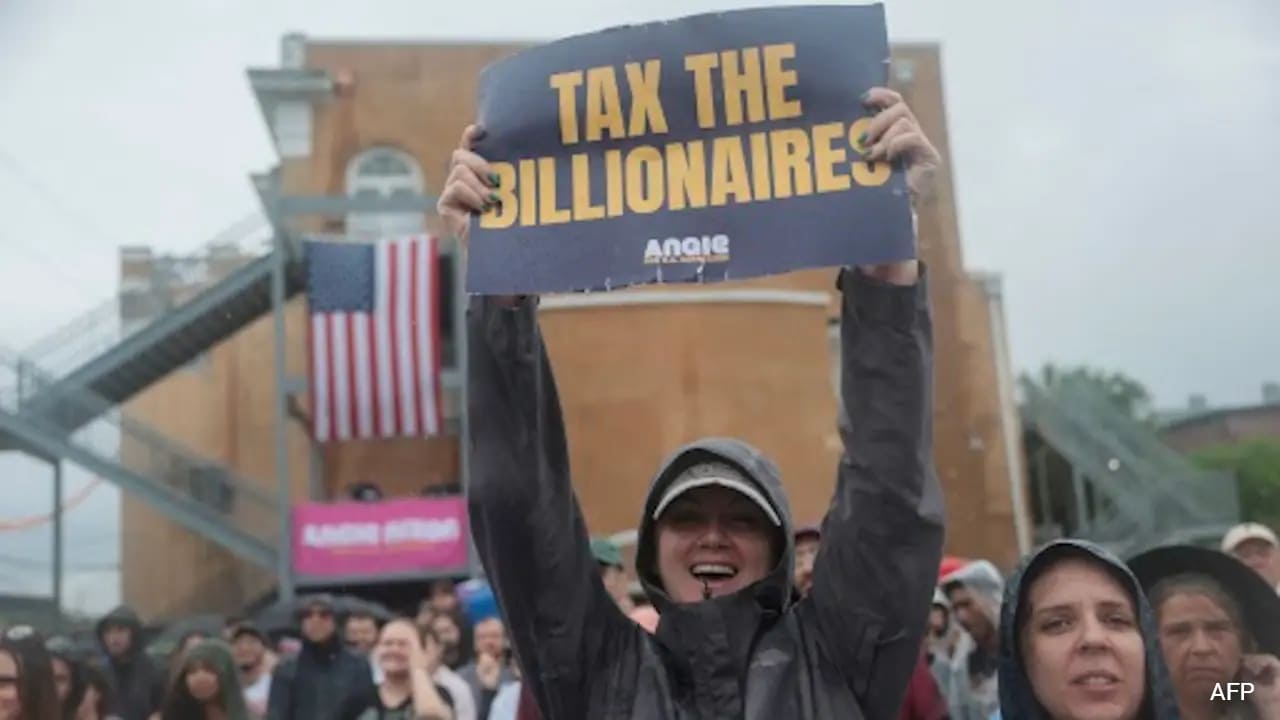
Recently, lawmakers confronted that exact proposition once again, debating and ultimately rejecting a proposed one-time 5% wealth tax aimed squarely at California's billionaires. On paper, the rejection reads like a dry procedural footnote in state fiscal policy. In reality, it was the climax of an existential tug-of-war over the soul of the world’s fifth-largest economy—a quiet drama pitting immediate social relief against the fragile, invisible engines that pay the state's bills every single year. Additional reporting by Financial Times highlights similar perspectives on the subject.
To understand why California blinked at a windfall that promised tens of billions of dollars overnight, you have to step away from the legislative spreadsheets and look at the people caught in the crossfire.
The Classroom and the Corner Office
Consider a hypothetical teacher named Elena, who spends her days in a stucco elementary school in East Oakland. Every August, Elena buys glue sticks, notebooks, and dry-erase markers out of her own pocket because the district budget ran dry before the bell even rang for the first day of class. When she hears that a single 5% levy on the state's ultra-wealthy could theoretically generate upwards of $100 billion—enough to wipe out state deficits, subsidize affordable housing, and stock every classroom from Eureka to Chula Vista—the refusal of lawmakers to pass it feels like a personal betrayal. To Elena, 5% of a billion dollars is a rounding error on a yacht purchase. To her third-graders, it is air conditioning in September and a full-time reading specialist.
Now walk forty miles southwest, into the offices of a fictional software founder we will call Marcus.
Marcus started his company in a cramped Palo Alto apartment fifteen years ago, living on instant noodles while writing code until his eyes burned. Today, financial magazines list his net worth at $2.4 billion. Yet if you checked Marcus’s personal checking account, you wouldn't find $2.4 billion sitting in neat digital stacks. Almost every cent of his fortune is locked inside illiquid equity—shares of a company whose value rises and falls based on market sentiment, quarterly earnings, and the whims of institutional investors.
Under a traditional income tax, Marcus pays California when he sells stock or draws a salary, handed over at the highest top marginal rate in the nation—13.3%, stretching to 14.4% once uncapped payroll taxes are factored in. Under a one-time wealth tax, however, the state wouldn't wait for him to sell a share. It would send him a bill for $120 million based purely on what his company was worth on a single calendar day.
To pay that bill, Marcus would have to dump massive blocks of stock onto the open market, potentially tanking his company’s share price, triggering panic among employees whose retirement accounts depend on that exact stock, and diluting his own control over the business he built.
Or, Marcus could do something far simpler. He could hire a moving van.
The Fragile Architecture of the Golden State
This is the unspoken reality that haunts every fiscal debate in Sacramento, a vulnerability baked deep into California’s tax code. Unlike states that rely heavily on broad sales taxes or steady property levies, California built its budget on a razor-thin pinnacle. According to analyses from the state’s nonpartisan Legislative Analyst’s Office, the top 1% of earners routinely account for between 40% and 50% of all personal income tax revenue collected in the state.
Think of California’s state budget as an inverted pyramid balancing on its sharpest point.
At the wide top sit Medi-Cal healthcare programs, the University of California system, wildfire suppression fleets, and K-12 public schools. At the tiny tip down below stand a few thousand high-income households and a couple hundred billionaires. When tech stocks boom and initial public offerings flood Silicon Valley with cash, money cascades down into the state treasury, creating historic surpluses. When the Nasdaq stumbles, revenue evaporates overnight.
Lawmakers who ultimately killed the 5% billionaire levy weren't necessarily defending private jets or Beverly Hills mansions. Many of them were staring directly at that inverted pyramid, terrified of what happens if the tip decides to pack its bags for Austin, Miami, or Seattle.
History offers plenty of warnings for those willing to look. When France enacted its notorious 75% super-tax on high earners in 2012, the policy became a masterclass in unintended consequences. Revenue fell drastically short of projections as executives, athletes, and entrepreneurs shifted residency across borders, forcing Paris to quietly abandon the experiment just two years later. Closer to home, California has already watched high-profile departures make headlines over the past several years—names like Elon Musk, Larry Ellison, and Charles Schwab shifting corporate headquarters or personal residences out of state.
Even if only twenty of California’s two hundred billionaires packed up and left in response to a 5% wealth seizure, the state wouldn't just lose the one-time levy. It would permanently forfeit billions in recurring annual income taxes, capital gains taxes, philanthropic endowments, and local investment capital for decades to come.
You cannot shear a sheep twice if it walks across the state line.
Why a "One-Time" Tax Never Feels Like Just Once
Ask any economist or tax attorney why the proposed 5% levy triggered such visceral pushback, and they will point to two words buried in the bill’s title: one-time.
In theory, a one-time assessment is clean, surgical, and finite. Pay the fee, clear the ledger, move on. In practice, nobody who builds or manages massive wealth believes a government stops at one slice once the knife is already out.
I remember sitting across from a mid-tier venture partner in Menlo Park a few winters ago as rain lashed against the café windows. He wasn't a billionaire—not even close—yet his hands tightened around his coffee mug whenever Sacramento tax proposals came up in conversation. "It’s never about the number on the page today," he told me quietly, watching traffic blur past on El Camino Real. "It’s about predictability. If the state tells you today that your unrealized paper wealth belongs partially to them because of an emergency, what happens during the next emergency? And the one after that?"
His fear exposes the psychological tripwire inside wealth taxation. Income taxes operate on a clear social contract: you earn a dollar, you keep most of it, and you give a known percentage to maintain the roads, courts, and schools that made earning that dollar possible. A wealth tax rewrites that contract retroactively. It taxes assets that have already been taxed when earned, or assets that exist purely as theoretical valuations on paper.
Worse still is the nightmare of valuation itself. How do you accurately appraise a privately held biotech startup, a sprawling vineyard in Napa Valley, an art collection, or intellectual property patents on a single afternoon in December? Wealthy taxpayers inevitably hire armies of appraisers and tax litigators to argue their assets are worth half of what the state claims. The state hires its own armies of auditors to fight back. Years vanish into courtrooms while administrative costs eat away at the very revenue meant to fund public classrooms.
Even the legal footing remains treacherous. Critics of the proposal pointed immediately to constitutional hurdles—both at the state level, where Proposition 13 and subsequent voter initiatives erected strict guardrails around property and wealth assessments, and at the federal level, where the boundaries of taxing unrealized gains remain fiercely contested in the courts. Passing the measure would not have delivered a check to Elena’s school in Oakland next autumn. It would have delivered a decade-long legal war.
The Invisible Ecosystem Beneath the Headlines
Still, dismissing the frustration of working Californians as mere envy misses the emotional core of why this proposal gained traction in the first place.
Walk through downtown Los Angeles or take the BART train through the East Bay, and the wealth gap isn't an abstract statistic in an economic white paper. It is visible on every street corner. Tent encampments sit in the shadows of gleaming tech campuses. Public transit agencies beg for emergency bailouts while private helicopters ferry executives from Silicon Valley to wine country in twenty minutes. Teachers commute two hours each way from Tracy or Stockton because they can no longer afford a starter home within forty miles of the classrooms where they teach.
When ordinary families watch their grocery bills, utility rates, and housing costs climb relentlessly while billionaire fortunes swell by tens of billions during market rallies, calling for a 5% contribution feels less like radicalism and more like basic fairness.
That tension—between moral urgency and economic gravity—is what makes California’s fiscal tightrope so agonizing to watch. The proponents of the 5% tax saw an undeniable truth: extreme concentration of wealth strains the fabric of a democratic society. Where they stumbled was in assuming capital behaves like land—fixed in place, incapable of fleeing, waiting patiently to be harvested.
Capital doesn't work like soil. It works like water. Put up a wall in one place, and it immediately seeks the path of least resistance somewhere else.
Even before a single dollar of a wealth tax could be collected, the mere threat of it alters behavior. Founders incorporate new ventures in Delaware and headquarter them in Texas. Angel investors quietly shift their primary residences to Nevada, counting days on calendars to ensure they spend fewer than 183 nights inside California borders. Family offices redirect philanthropic grants and seed funding toward ecosystems where the rules of the game feel settled.
The damage doesn't announce itself with a dramatic press conference. It shows up five years later as the startup that wasn't founded in San Francisco, the research lab that opened in Boston instead of San Diego, the tax revenue that quietly stopped arriving at the Franchise Tax Board in Sacramento.
Beyond the Binary Trap
By rejecting the one-time 5% billionaire tax, California lawmakers avoided a sudden shock to the state's fragile revenue engine, yet they left the underlying crisis completely unresolved.
Because the truth is uncomfortable for both sides of the political divide. California cannot tax its way out of structural volatility by repeatedly squeezing the same narrow slice of ultra-wealthy residents, nor can it pretend that a budget swinging wildly between massive surpluses and crippling deficits is sustainable over the long haul.
Real fiscal reform in the Golden State requires the kind of unglamorous courage that rarely wins viral headlines. It means broadening the tax base so state services aren't held hostage every time tech stocks dip. It means building genuine rainy-day reserves during boom years instead of locking in permanent spending programs on temporary windfalls. And it means fixing the housing, permitting, and energy bottlenecks that drive up the cost of living for teachers like Elena—so working people don't need a billionaire bailout just to afford rent near their jobs.
Until Sacramento confronts those structural cracks, the ghost of the wealth tax will keep returning every time the budget turns red.
Late in the afternoon, the Pacific wind usually shifts, pushing the fog back out past the Marin Headlands until the Golden Gate Bridge emerges again, sharp and rust-red against the water. The towers never actually moved, of course. They were there the whole time, holding up the span.
California’s lawmakers just chose not to test how much weight those towers can bear before the cables snap.