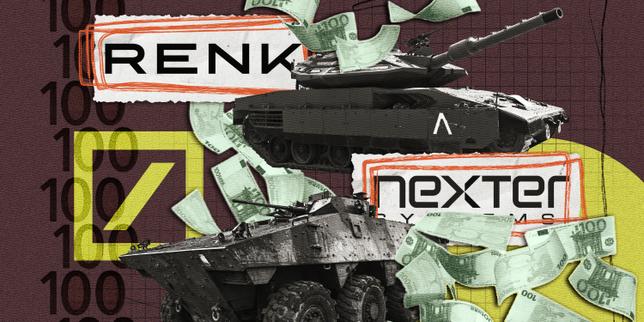
Deutsche Bank is not a rogue arms dealer. It is a utility reacting to state pressure.
The November 2026 "Inside Deutsche Bank" investigation sparked a wave of outrage over how Germany's largest lender maneuvered around internal risk gates and export restrictions to finance defense contractors. Headlines framed it as a story of cynical bankers bending rules for profit while watching headlines.
That framing is lazy. Worse, it gets the causality backward.
I have sat in corporate finance and structured credit meetings for years. I have seen banks blow millions on compliance overhauls only to get whiplash when political priorities flip overnight. When Berlin reforms its debt brake to exempt defense spending above 1% of GDP, when NATO members push defense budgets toward 3.5% of GDP, and when the European Investment Bank expands intermediated liquidity for defense supply chains with Deutsche Bank as a first partner, the state is not lecturing banks to step back. It is leaning on them to step in.
Calling Deutsche Bank's structuring "contortions" misses the actual mechanic. Commercial banks do not invent geopolitical demand. They price risk, match balance sheets, and route capital through legal wrappers that governments themselves write and enforce.
The Lazy Consensus Around Defense Banking
The standard media critique goes like this: a massive bank claims to have strict ethical and reputational guidelines, yet dealmakers find legal loopholes to fund defense suppliers connected to conflict zones while internal compliance flags the optics.
That narrative feels neat because it gives readers a villain and a moral compass. In real-world capital markets, it is mostly theater.
First, commercial banks operate inside statutory boundaries set by legislators and export-control authorities, not inside activist press releases. If a transaction is legally permissible under export licenses and domestic law, a bank's credit committee treats legality as the floor, not a suggestion. Internal memos worrying about reputational risk do not prove secret lawlessness. They prove that large institutions run two parallel tracks: strict legal compliance on one side, and media-damage management on the other.
Second, moral outrage treats defense financing as if it were a discretionary hobby rather than an industrial necessity. Global military expenditure reached a record USD 2.9 trillion in 2025, and European NATO budgets are projected to climb past EUR 1.6 trillion by 2035. Public budgets alone cannot bankroll rearmament, missile defense, drones, and industrial capacity at that scale. Either commercial balance sheets and capital markets fund that industrial base, or governments rely on state-directed credit and foreign suppliers.
How Capital Actually Moves Through Defense Supply Chains
Critics imagine a clean line: a bank hands a bag of cash to a tank maker, and a shell lands on a battlefield. Real corporate banking rarely looks like that.
Balance Sheet Limits and Syndication
A single commercial bank cannot carry endless concentrated exposure to one sector without tripping internal risk limits or regulatory capital rules. That is why institutions adjust targeted exposure limits upward when strategic priorities shift—such as when Deutsche Bank's board raised targeted defense limits by 40% to meet surging demand—and still rely on syndication, guarantees, and co-financing with public institutions like the European Investment Bank.
Dual-Use Parts and Sub-Tier Suppliers
Most of the money moving through European and global defense ecosystems does not go to final assembly lines under a glowing neon sign labeled "WEAPONS." It goes to precision machining shops, avionics firms, software vendors, logistics operators, and raw-material suppliers making dual-use components.
A circuit board, sensor housing, or propulsion valve might serve a commercial satellite, an industrial turbine, or a military drone. Tracing end-use down three tiers of subcontractors is an accounting nightmare. Any journalist or activist who pretends a bank can police every downstream bolt in a global supply chain is ignoring how industrial manufacturing works.
Legal Structuring vs. Evasion
When deal teams structure credit facilities, letters of credit, or special-purpose vehicles around export rules, critics call it "contortions." In corporate finance, structuring around statutory definitions is standard practice across every regulated industry—from energy and shipping to telecoms and agriculture.
Imagine a scenario where a mid-sized German engineering firm builds ruggedized power systems sold to European utilities and allied militaries. An export-control rule restricts direct transfers to certain jurisdictions, while domestic procurement pushes rapid expansion of sovereign defense readiness. A corporate banker has to structure covenants, ring-fence restricted cash flows, and verify licenses before releasing funds. To an outsider reading leaked emails out of context, that legal architecture looks like sleight of hand. Inside a credit desk, it is how you keep a loan compliant without freezing legitimate industrial credit.
The Real Questions Readers Should Be Asking
People typing questions into search bars about Deutsche Bank and arms deals usually ask the wrong ones.
- "Why does Deutsche Bank still finance weapons makers?" Because sovereign governments demanded rearmament while capping direct fiscal deficits, and major banks sit at the center of corporate lending, trade finance, and capital markets. Asking why a universal bank serves a major state-backed sector is like asking why a freight carrier hauls steel.
- "How do banks get around arms restrictions?" Usually they do not "get around" the law; they test the edges of policy ambiguity, dual-use definitions, and corporate structures. When regulators or courts draw a hard line, banks adjust—or pay massive fines when their controls lag behind the law, as Deutsche Bank learned painfully in past compliance failures.
- "Can banks enforce strict ethical rules on defense?" Only up to the point where those rules collide with national security policy, shareholder returns, or client defection to rival lenders. A bank that unilaterally starves domestic defense suppliers while governments push strategic autonomy quickly becomes a political target in its own home market.
What Actually Works Instead of Performative Outrage
If you care about accountability in defense finance, moralizing at a single Frankfurt bank is a waste of breath. Watch the levers that actually move money:
- Follow export licenses and sovereign guarantees, not just bank memos. A commercial lender rarely moves billions into sensitive defense hardware without state export approvals, sovereign buyers, or public guarantee backstops. That is where political accountability lives.
- Demand strict end-use covenants on dual-use lending. Push lawmakers and supervisors to require verifiable end-use tracking on syndicated loans and export credit rather than vague corporate ESG pledges that collapse the moment a war breaks out.
- Separate headline panic from balance-sheet reality. When a leak hits and a bank's stock drops 6% on day one, separate immediate market repricing from proven legal violations. Investigations surface uncomfortable internal debates; they do not automatically prove illegality.
Where My Contrarian Take Can Burn Me
Being contrarian has real downsides, and I will not pretend otherwise.
Defending the mechanics of defense financing can sound like excusing human suffering or downplaying real compliance failures. It is not. Banks have repeatedly failed to catch bad actors, ignored red flags, and prioritized fees over judgment—and those failures deserve harsh scrutiny when controls break down.
There is also a structural risk in leaning heavily into defense lending right now. Geopolitical shifts can reverse export rules overnight, sanctions regimes can freeze counterparties without warning, and public sentiment can swing back hard if conflicts widen or fiscal fatigue bites. A bank that expands defense exposure aggressively during a boom can still get burned by regulatory whipsaw or reputational blowback later.
None of that changes the core reality. Blaming one bank for playing a role governments actively expanded does not fix oversight—it just lets politicians hide behind banking headlines.
Le Monde investigation into Deutsche Bank leaks
This short video explains the scale of the leaked Deutsche Bank documents and how internal compliance failures were uncovered, providing helpful context on the investigation behind the arms financing claims.


