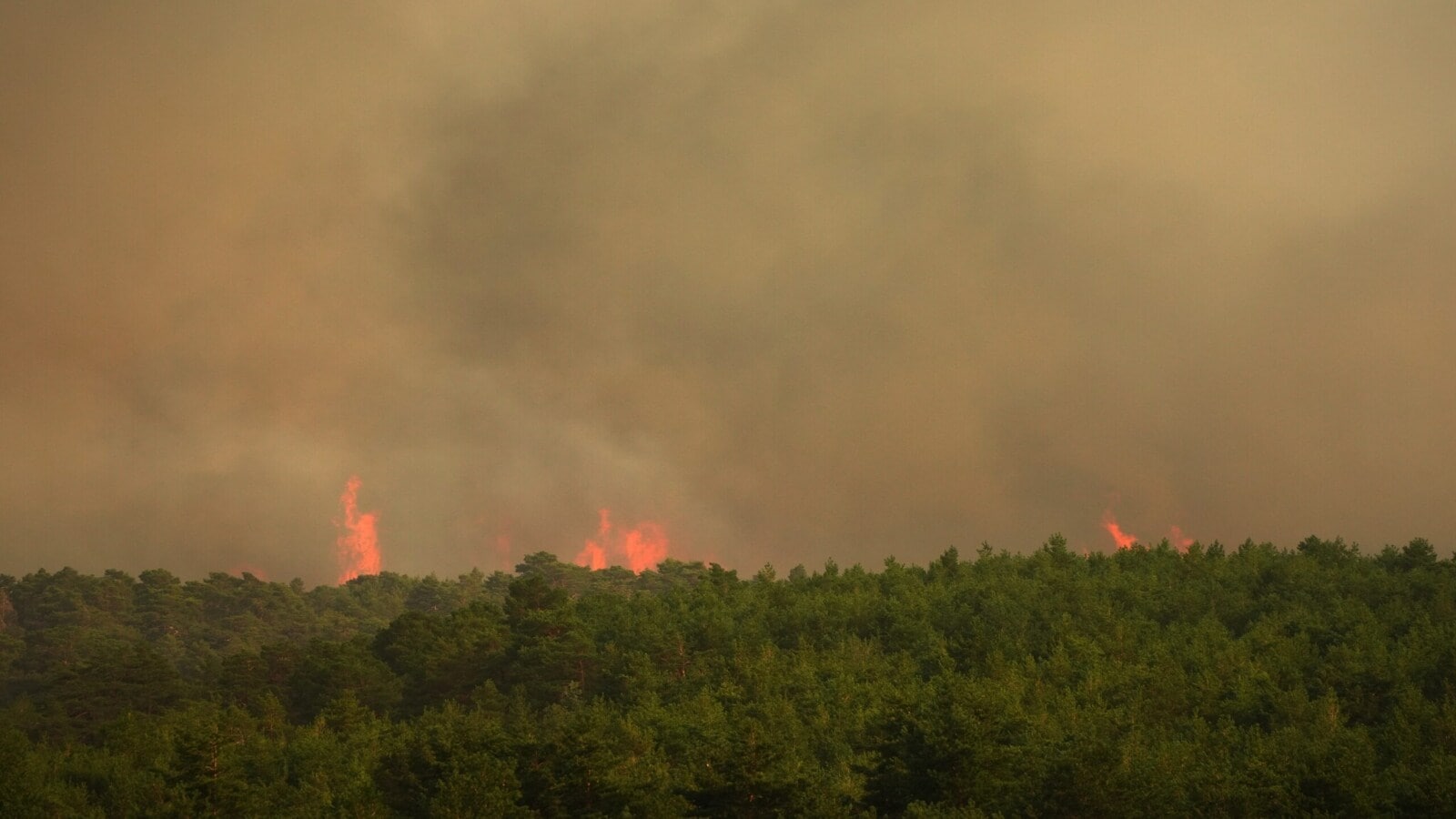
Blaming oil companies for a burning forest in Portugal feels morally satisfying. It gives activists a clear villain, a neat narrative, and a target for punitive lawsuits. It also completely ignores the reality of land management, ecology, and physics.
When 350.org and allied groups demand that the fossil fuel industry foot the bill for Europe's escalating wildfire crisis, they are selling a comforting fiction. They want you to believe that atmospheric carbon dioxide is the sole architect of every charred hectare from the Peloponnese to the Pyrenees. If we just tax Exxon or BP enough, the Mediterranean will magically revert to a damp, temperate Eden.
I have spent years watching policy analysts chase carbon accounting ghosts while actual rural communities burn to the ground. The lazy consensus runs deep: burn less coal, save the pine trees. But anyone who has spent a day walking through an abandoned southern European woodlot knows the truth has nothing to do with tailpipe emissions and everything to do with demographics, bureaucracy, and neglect.
The Physics of Fuel Load Versus Atmospheric Carbon
Let us clear up a fundamental misconception right away. Climate change creates the weather that helps fires spread, but it does not create the fuel.
Think of a forest like an indoor fireplace. Global warming is the dry match and the low humidity. But if the hearth is crammed ten feet deep with dry brush, dead timber, and unmanaged undergrowth, the match is secondary. The fuel is the primary hazard.
Europe's wildfire problem is fundamentally a fuel load problem, not an emissions ledger problem. For decades, rural depopulation across Southern Europe has emptied the countryside. Traditional land management practices—small-scale grazing, clearing underbrush, selective logging, and controlled burning by local shepherds and farmers—vanished. They were replaced by strict conservation edicts drafted in Brussels air-conditioned boardrooms that banned touch-and-go human intervention in the name of letting nature "re-wild."
Nature did re-wild. It re-wilded into a dense, uninterrupted powder keg.
When environmental lawyers argue that fossil fuel companies caused these fires because their carbon output raised summer temperatures by one degree Celsius, they are committing a category error. A one-degree temperature bump does not start a fire. A discarded cigarette, an unmaintained power line, or an arsonist starts the fire. And the reason that fire detonates into a mega-blaze is because the forest floor has not seen a grazing goat or a controlled burn since the fall of the Berlin Wall.
Follow the Money and the Legal Theater
The campaign to extract climate reparations from energy majors for wildfire damage is a masterpiece of public relations, but it is policy malpractice.
Imagine a scenario where a court actually buys the activist argument. Shell and TotalEnergies are ordered to pay ten billion euros into a European wildfire recovery fund. Does that money rebuild the stone walls that terraces hillsides? Does it clear the dense pine and eucalyptus monocultures planted during mid-century forestry programs? Does it deploy goats back onto abandoned scrublands?
No. The money gets sucked into administrative bloat, bureaucratic impact studies, and endless legal appeals. Meanwhile, the eucalyptus trees—which are literal oil-bombs packed with volatile resins—continue to choke the Portuguese landscape.
The fossil fuel industry deserves plenty of criticism for its historic obfuscation of climate science. I am not here to run defense for oil conglomerates. But weaponizing a complex ecological crisis to score points in a global litigation strategy does active harm. It misdirects capital away from the unsexy, gritty work of actual adaptation.
If you want to stop Europe from burning, you have to talk about forestry economics. And nobody wants to fund forestry economics because you cannot put a catchy hashtag on a balance sheet showing brush clearance metrics.
The Eucalyptus Trap and Forestry Economics
Let us look at the data that activists conveniently omit. A massive share of the devastating fires in Portugal and Spain do not rip through ancient, biodiverse wilderness. They burn through commercial plantations of eucalyptus globulus and maritime pine.
These species are industrial cash crops. Eucalyptus grows fast, produces cheap pulp for paper, and burns with terrifying ferocity because its bark peels in long strips that carry burning embers across firebreaks.
For half a century, rural landowners planted eucalyptus because traditional farming ceased to be economically viable. Small farmers could not compete with subsidized industrial agriculture elsewhere in the European Union. So they abandoned their land, or they planted fast-returning eucalyptus to squeeze a few Euros out of poor soil.
When these plantations catch fire, the blame belongs to agricultural market distortions and poor timber policies. Yet 350.org would rather pretend that a remote coal plant in Germany caused a eucalyptus grove in Leiria to explode into flames. It is a convenient delusion that shields EU agricultural policy from well-deserved scrutiny.
Real Adaptation Versus Virtue Signaling
If European leadership actually cared about stopping wildfires instead of signaling climate virtue, they would enact radical, unglamorous reforms tomorrow morning.
- Subsidize Grazing, Not Abandonment: Pay shepherds and smallholders to put livestock back onto marginal lands. Goats and sheep are the most efficient brush-clearers ever invented. They eat the fine fuels that feed ground fires before those fuels can ladder up into the canopy.
- Legalize and Scale Prescribed Burns: Europe’s risk-averse bureaucracy has criminalized or tied up controlled burning in so much red tape that foresters can only clear land in winter windows that keep shrinking. We need thousands of low-intensity, managed burns every spring and autumn. Smoke in October is the price of keeping your village standing in August.
- Break Up Monocultures: Ban the planting of highly volatile invasive species near population centers and mandate structural firebreaks containing native deciduous trees like oak and chestnut, which resist fire far better than resinous conifers.
These solutions cost money, require political courage, and demand that bureaucrats trust local land managers instead of distant algorithms.
Suing an oil company requires none of those things. It requires a press release, a filing fee, and an audience that prefers a simple villain to a hard truth.
The woods are dry because we forgot how to tend them. Write all the checks you want; until we put boots on the ground and goats in the brush, the continent stays on fire.