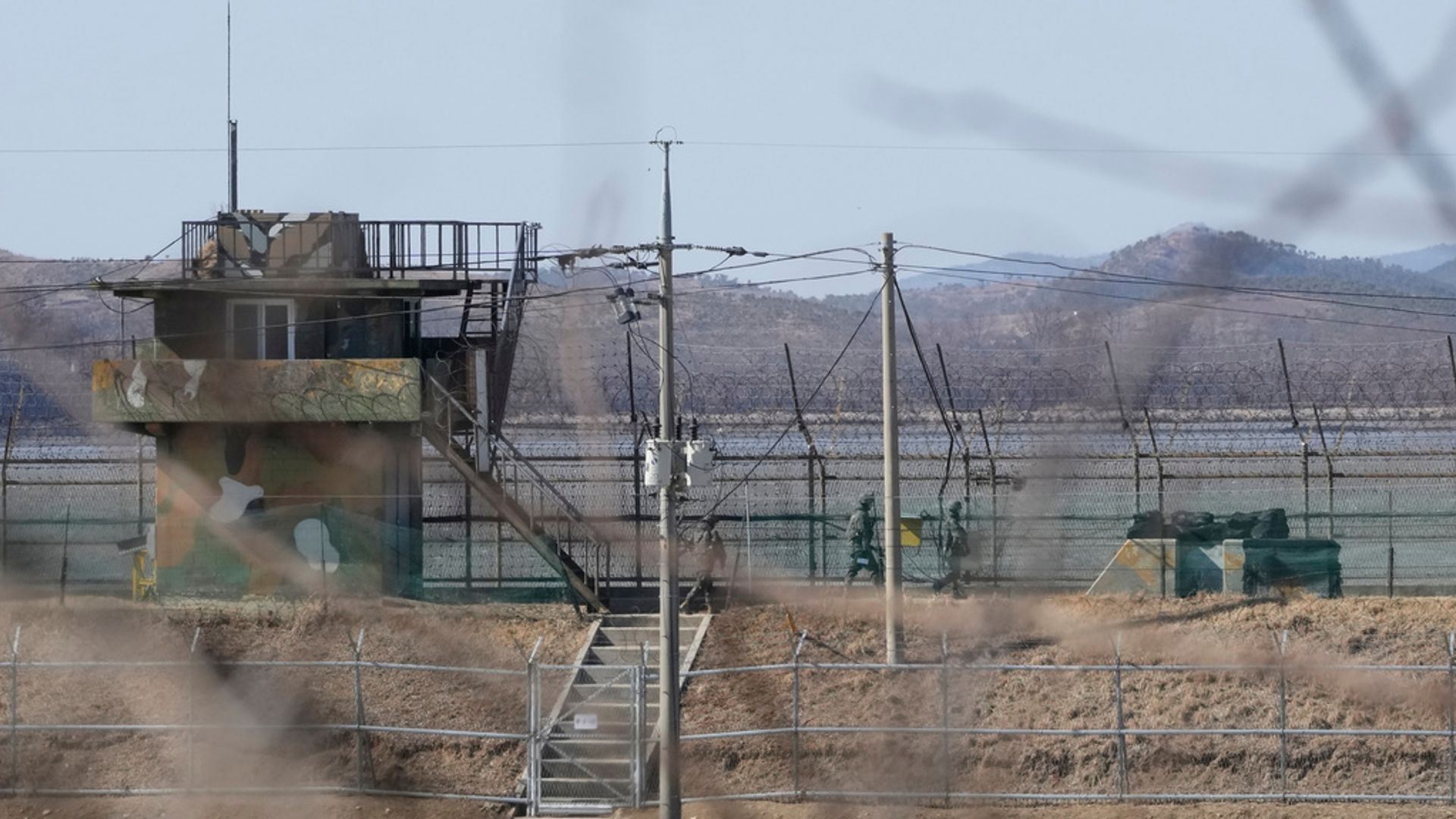
Three South Korean soldiers stepping onto active ordnance inside a supposed buffer zone triggers the predictable media reflex. Headlines flash, politicians issue mandatory statements of deep regret, and armchair strategists scream about escalation. Everyone wants to talk about metal triggers, explosive force, and rusted iron buried beneath thirty years of overgrown brush.
They are arguing about the wrong century. You might also find this related coverage interesting: What Most People Get Wrong About World Leaders Gathering at the United Nations.
Focusing on the physical shell casing in the dirt misses the entire architecture of modern border security. I have spent years tracking military logistics and regional security frameworks across East Asia, and the obsession with tactical border accidents masks a much larger strategic blindness. The explosive device did not malfunction because of bad weather or a rogue trigger. It detonated because the underlying paradigm of static containment is fundamentally broken.
Static borders do not contain risk. They accumulate it. As highlighted in recent reports by Associated Press, the results are widespread.
The Myth of the Sealed Frontier
The standard narrative treats the Demilitarized Zone as a museum piece frozen in 1953, a razor-wire scar holding two ideological tectonic plates apart. The media loves this framing because it requires zero imagination. A patrol steps off the path, an old munition goes off, and the public gets a brief reminder that an armistice is not peace.
Strip away the theater and look at the actual mechanics.
When you leave millions of unmapped explosives in the ground for half a century, nature does not respect your ceasefire lines. Frost heaves move the earth. Heavy monsoon rains shift topsoil. Roots wrap around detonators. A static barrier left to rot in the mud transforms into an unpredictable organic hazard field. The military establishment calls these security assets. Anyone looking at the maintenance logs knows they are liabilities ticking on a geological timer.
Blaming an isolated incident on operational error or poor visibility ignores the fact that keeping active ordnance in a dynamic environment guarantees attrition. If you leave loaded weapons in a schoolyard for seventy years, children will eventually get hurt. Pretending the DMZ is anything other than a decaying hazard zone is professional malpractice.
Why Perimeter Defense is Dead
Military traditionalists love perimeter defense because it gives them a line to draw on a map. You put up fences, sow the dirt with mines, and declare the perimeter secure. It is a comforting illusion that belongs in the era of trench warfare and horse cavalry.
Modern conflict does not respect lines on a map, and it certainly does not care about your minefields. Cyber infiltration, drone surveillance, underground tunneling, and electronic warfare have rendered physical perimeter defenses largely theatrical. Yet defense budgets continue to funnel billions into maintaining dead zones like the DMZ, treating physical concrete and buried explosives as primary deterrents while asymmetric threats bypass them entirely.
Consider the economics of maintenance. Clearing a single kilometer of legacy minefields takes months of painstaking, high-risk engineering work, often yielding fragments of rusted shrapnel rather than strategic intelligence. Governments treat this cleanup as a secondary chore, preferring to leave the hazard in place because removing it requires political capital and financial investment that yields no immediate propaganda value.
The result is a grim math problem. Every year the hardware stays in the dirt, the probability of an incident approaches one hundred percent. When it finally happens, leadership acts surprised, as if physics were negotiable.
The Uncomfortable Truth About Risk Transfer
Let us talk about who actually absorbs the cost of this institutional laziness.
It is never the generals sitting in climate-controlled command bunkers in Seoul. It is not the defense contractors padding their margins on perimeter monitoring gear. It is the nineteen-year-old conscript whose boots hit the dirt because standard operating procedure hasn't changed since his grandfather was in kindergarten.
Armies are notoriously bad at unlearning old habits. The moment a military institution designs a barrier, that barrier becomes permanent dogma. To admit that a legacy minefield is obsolete is to admit that decades of strategic doctrine were built on a flawed foundation. So instead of modernizing the approach, commands issue more safety briefings, buy better medical kits for frontline medics, and tell patrols to watch their step.
That is not risk management. That is passing the buck to the lowest-ranking personnel in the chain.
If leadership were serious about preventing future injuries, they would stop treating border management as a static engineering problem and start treating it as an active data and mobility challenge. Automated sensors, persistent aerial surveillance, and remote-controlled clearance units exist right now. They are expensive, yes, but they do not bleed when a seasonal mudslide shifts an unmapped explosive into a footpaths.
The Cost of Looking Backward
The recent explosion will fade from the front pages within a week. The politicians will quiet down, the unit will receive new patrol guidelines, and the dirt will settle back over the remaining millions of hidden detonators.
Nothing will change because the system prefers tragic inevitability over radical modernization. Maintaining the status quo requires no difficult conversations about budget reallocations, technological overhauls, or admitting past errors. It just requires a fresh batch of conscripts willing to walk the line.
Until leadership stops romanticizing static borders and starts dismantling the literal landmines of twentieth-century thinking, these incidents are not anomalies.
They are features of the system.