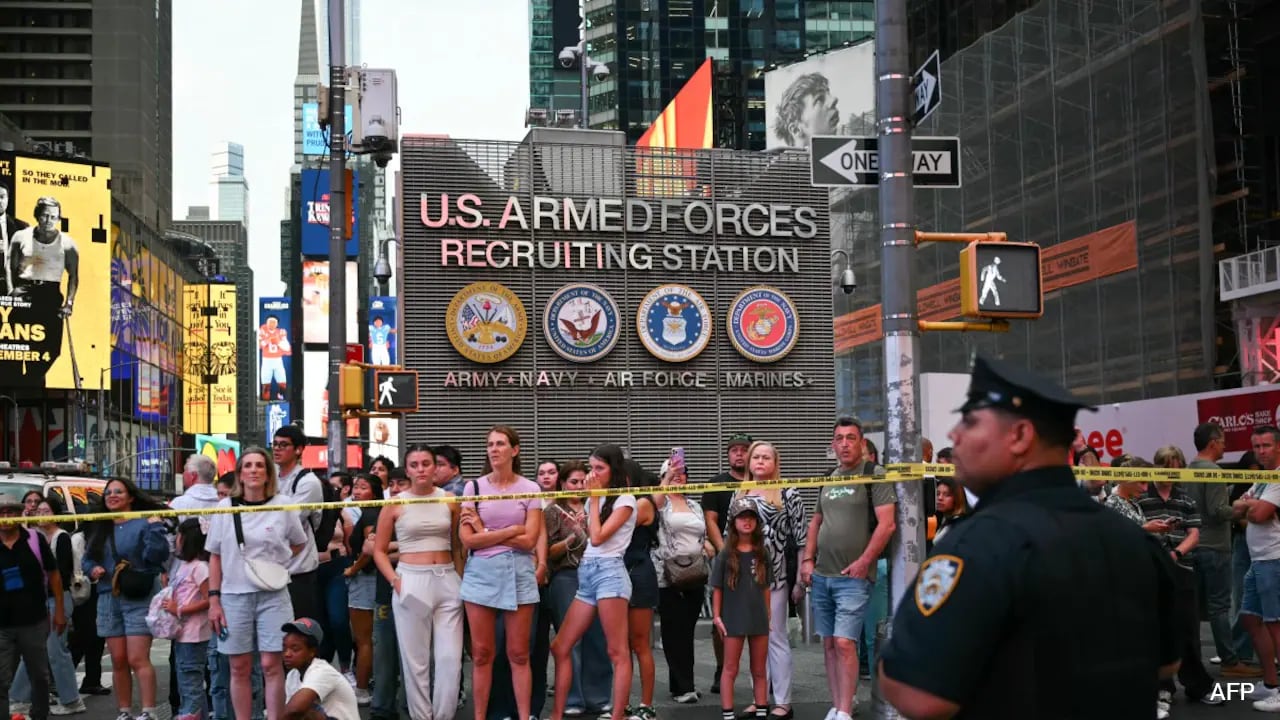
Another bloody sidewalk. Another frantic round of press briefings. Another round of media outlets treating a catastrophic public safety failure as a simple script about police use of force.
The lazy consensus following the Times Square knife attack frames the tragedy through the usual political binary. Critics scream about officer response, while defenders wave bodycam footage like a scorecard. Both sides completely miss the point. Learn more on a connected issue: this related article.
Focusing on whether the final seconds of a psychotic episode warranted lethal force is like arguing about the band playing as the ship goes down. The system broke long before a 49-year-old woman pulled two kitchen knives out of a shopping bag outside a police substation.
The Myth Of The Quick Fix
When a violent episode erupts in the middle of the most heavily policed intersection on earth, standard analysis breaks down. The knee-jerk reaction demands either more de-escalation training or heavier enforcement. More analysis by Reuters highlights related views on this issue.
This assumes modern urban violence functions as a rational choice problem. It does not.
Police commissioner statements confirmed the assailant had a documented history with law enforcement and severe psychiatric vulnerabilities. She spent minutes telling officers she would rather kill them than drop her weapons, marching forward despite multiple electronic control weapon deployments.
When a person reaches that tier of cognitive detachment, standard street-level intervention is nothing more than a coin toss with human lives. Expecting patrol officers to act as psychiatric stabilization units in the middle of a crowded tourist hub is institutional cowardice.
Where The Public Safety Model Fails
Municipal leaders love to project competence by deploying badges to every corner. Statistically, Times Square is saturated with law enforcement. Yet a pair of kitchen knives still turned a Monday afternoon into a morgue.
Why? Because policing is a lagging indicator of social decay.
- The Treatment Gap: Active intervention happens only after a violent crime or explicit threat materializes. Preventive safety infrastructure for chronic psychiatric cases is virtually non-existent on the streets.
- The Containment Fallacy: Shuffling individuals with severe mental health histories through emergency rooms and brief holds creates an illusion of care without structural stability.
- The Training Mirage: No amount of tactical communication drills will bridge the gap when an individual's reality is entirely divorced from yours.
Imagine a scenario where municipal budgets shifted fifty percent of reactive street resources upstream into mandatory, community-anchored stabilization programs that could intercept individuals before they pack a shopping bag with blades. We do not try it because prevention lacks the immediate photo opportunity of a press conference.
Stop Asking The Wrong Questions
The public debate routinely gets trapped behind garbage inquiries. People ask whether the cops should have used a different tool or if the suspect could have been cornered differently.
Those are questions for an after-action report, not a roadmap for survival.
The brutal truth is that cities like New York have built a system that forces police to act as the cleanup crew for a completely collapsed mental health safety net. Every time we reduce a structural catastrophe to a debate over split-second trigger decisions, we guarantee the next headline.
Until cities stop treating acute psychiatric failure as a criminal justice issue to be managed at the end of a barrel or a baton, the asphalt will keep running red while politicians read from the exact same cue cards.
Stop arguing about the seconds on the bodycam. Fix the years that led up to them.