Betrayal.
In the pressurized, hyper-tribal ecosystem of modern American politics, there is no sin quite as unforgivable as breaking ranks when the cameras are rolling. You can miss a committee hearing, you can fumble a talking point on Sunday morning television, and you can even lose a primary by twenty points—party loyalists will eventually forgive you, pat you on the back, and find you a soft landing at a K Street consulting firm. What you cannot do is walk across the aisle, extend an open hand to the enemy, and tell the people who funded your career that the other side might actually have the right person for the job. In similar news, read about: Forget the Media Circus Around Matt Canavan and James Ashby Because the Real Threat to the Coalition is Already Inside the House.
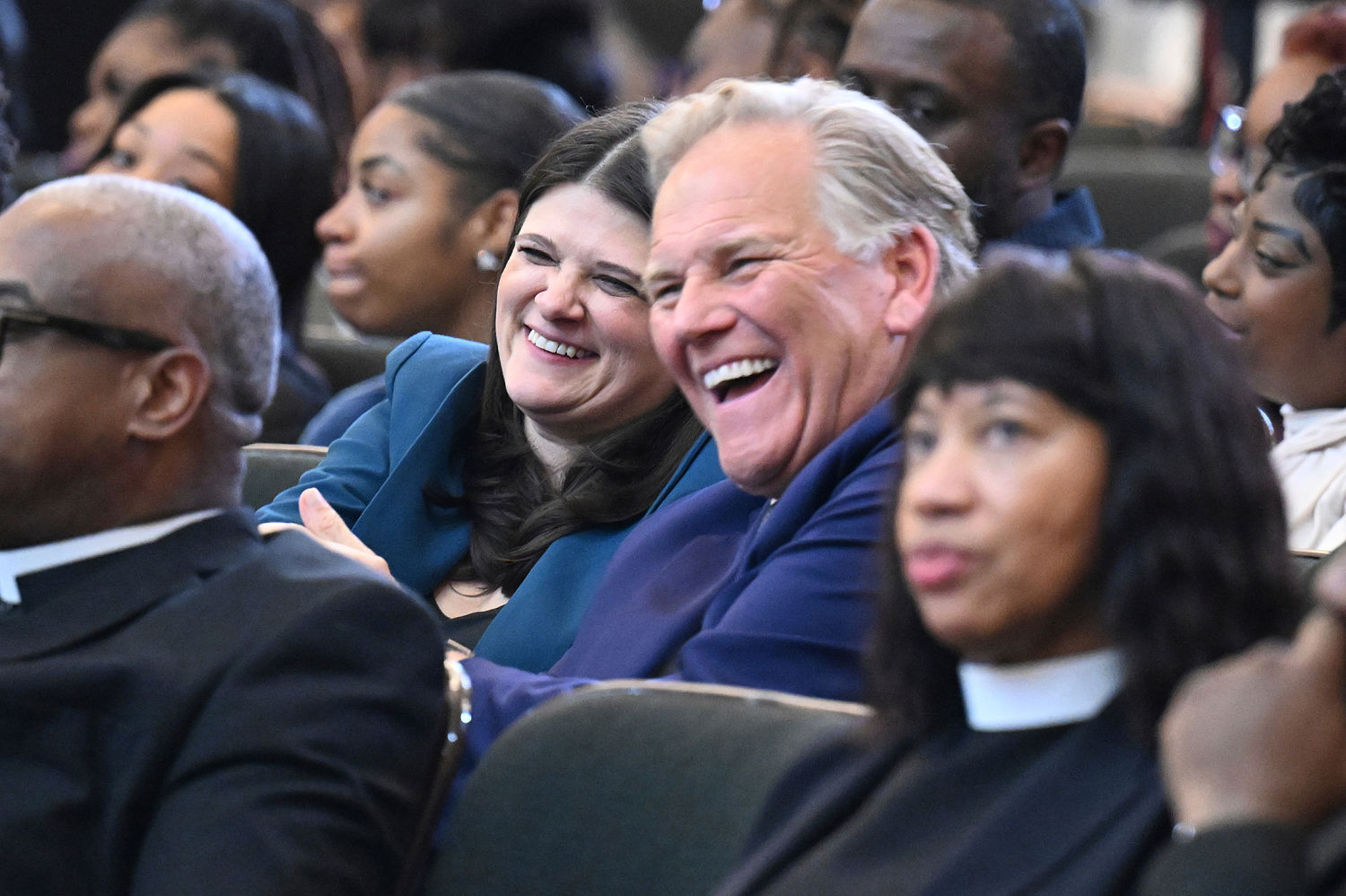
Yet, when the rumors began swirling around Washington and Oakland County that Democratic Representative Haley Stevens was seriously discussing switching her endorsement to Republican Mike Rogers, the collective gasp from Lansing to Capitol Hill could practically be heard over the hum of the Detroit assembly lines.
To understand why a single political endorsement—or even the mere suggestion of one—can detonate like a grenade inside a state party apparatus, you have to step away from the sterile cable news chyrons and look at the cold, hard concrete of southeastern Michigan. You have to smell the burnt coffee in the union halls of Pontiac and feel the November wind whipping off Lake St. Clair, carrying with it the quiet desperation of families who have watched their economic certainty evaporate over three decades. The New York Times has analyzed this critical topic in great detail.
The Architecture of a Political Earthquake
Let us be completely transparent about what is happening here, because political journalism has a terrible habit of burying the human pulse beneath layers of pundit jargon. Haley Stevens is not a fringe figure. She first rode into Congress during the 2018 blue wave, flipping a historically Republican suburban district that had once belonged to Dave Trott, and she did it by positioning herself as the ultimate pragmatic Democrat—a former Obama administration auto-rescue task force alumna who understood manufacturing, supply chains, and the existential dread of a plant closure.
Mike Rogers, on the other hand, is pure Republican establishment pedigree. A former FBI special agent, a seven-term congressman who chaired the House Intelligence Committee, and a seasoned political operator who knows every back road in Livingston and Oakland counties. For years, Stevens and Rogers occupied neatly segregated universes on the Michigan political map, separated by an ideological trench that neither dared to cross without heavy rhetorical artillery.
So when whispers emerged that Stevens was entertaining the unthinkable—lending her hard-won political capital to Rogers rather than toeing the strict Democratic line—the immediate reaction from party insiders was disbelief, quickly followed by fury.
Consider a hypothetical voter to see why this hits so hard. Let’s call her Elena, a fifty-four-year-old automotive engineer living in Troy. For the last eight years, Elena has dutifully written fifty-dollar checks to ActBlue every October, driven her neighbors to the polls in the pouring rain, and defended Democratic economic policies at Thanksgiving dinner tables while her brother-in-law ranted about inflation and border security. To Elena, a vote for Haley Stevens was a vote for a specific moral and political firewall. If Stevens suddenly turns around and tells Elena that Mike Rogers is the steady hand Michigan needs, the ground beneath Elena’s feet doesn't just shift; it liquefies.
Why would any sane politician risk incinerating their own base?
The Invisible Calculus of Survival
Politics, at its core, is rarely about ideology; it is about survival, leverage, and the quiet terror of becoming irrelevant. When you strip away the soaring speeches about democracy and the soul of the nation, every member of Congress is essentially a small business owner trying to keep their franchise afloat in a wildly volatile market.
To grasp the logic behind Stevens’s reported deliberation, we have to look at the structural reality of Michigan’s political geography. Redistricting in Michigan—thanks to an independent citizens commission that redrew the maps prior to the 2022 cycle—shattered old safe harbors and forced incumbents into brutal, unfamiliar territory. Suddenly, representatives who had spent years cultivating specific neighborhoods found themselves campaigning in towns where nobody knew their name, pleading for votes from independents who view both major parties with equal disdain.
I remember standing outside a grocery store in Royal Oak during a crisp October afternoon a few cycles back, watching a local campaign volunteer try to hand a glossy flyer to a man loading groceries into the trunk of a rusted-out pickup truck. The man didn't yell. He didn't wear a red hat or wave a blue flag. He simply looked at the flyer, looked at the volunteer, and said, "You people don't fix the roads, you don't lower my electric bill, and you spend all day screaming at each other on my TV. Why should I care whose name is on the yard sign?"
That exhaustion is the single most powerful force in American politics today, and politicians like Haley Stevens feel it in their marrow.
When a Democrat in a purple-tinted state starts eyeing a Republican like Mike Rogers—particularly in the context of high-stakes statewide races or shifting congressional coalitions—they are reading a specific set of tea leaves. They are looking at internal polling that never makes it to the front page of the Detroit Free Press. They are seeing the erosion of working-class support among union households that once voted Democratic as automatically as they breathed. They are calculating whether the brand they have worn for a decade has become an anchor rather than a sail.
Think of a political party like an aging cargo ship taking on water in a rough sea. For the first few hours, the crew stays at their posts, bailing furiously and shouting encouragement because that is what loyal sailors do. But if the captain refuses to change course and the hull begins to groan, there comes a terrifying, silent moment when individual officers start eyeing the lifeboats—not out of malice, and not because they suddenly love the ocean, but because drowning for a stubborn captain doesn't actually save the ship.
What the Pundits Miss About Mike Rogers
If you only consume national media, Mike Rogers is easily reduced to a caricature: another suit-and-tie Republican navigating the treacherous waters of a party reshaped by populism. That caricature is lazy, and it completely misses why someone like Stevens could even plausibly rationalize crossing the aisle to back him.
Rogers spent fourteen years representing Michigan’s 8th District before stepping away from Congress in 2015. During his tenure, he built a reputation—even among skeptical Democrats—as an institutionalist who took national security seriously and understood the gritty mechanics of appropriations. He wasn't a bomb-thrower who went on cable news to insult his colleagues' patriotism; he was a former FBI agent who treated legislation like an investigation, gathering intelligence, building quiet coalitions, and delivering federal dollars back home.
In an era where political discourse has degraded into middle-school taunts and performative outrage, competence has become an exotic currency.
When Stevens weighs the pros and cons of aligning with Rogers, she isn't suddenly embracing the entire Republican platform. She isn't abandoning her stances on reproductive rights, clean energy manufacturing, or labor protections. Rather, she is making a cold-eyed distinction between ideological purity and functional governance—or, depending on how cynical you feel today, between party loyalty and personal political longevity.
Let’s look at the actual numbers that haunt Michigan strategists at three in the morning. Michigan is a state decided by margins thinner than a coat of paint. In 2016, the presidential race was decided by just 10,704 votes out of nearly 4.8 million cast. Even when Democrats swept statewide offices in 2022, the underlying county-by-county data revealed massive vulnerabilities in Macomb County and the rural-suburban fringes where blue-collar voters have been drifting rightward for over a decade.
For a politician whose entire career depends on threading that needle, standing rigidly on one side of a crumbling bridge feels less like courage and more like suicide.
The Anatomy of Backlash
Of course, logic rarely survives first contact with political tribalism. The moment news of Stevens’s discussions leaked into the public bloodstream, the machinery of partisan enforcement kicked into overdrive.
It is fascinating—and deeply unsettling—to watch how quickly a political party turns on one of its own. Within hours of the initial reports, anonymous Democratic operatives were whispering to reporters that Stevens had "lost her bearings," that she was "playing footsie with the opposition," and that any formal endorsement of Rogers would trigger an immediate, well-funded primary challenge from her left flank.
Consider the sheer hypocrisy embedded in that outrage. Every election cycle, Democrats spend millions of dollars begging moderate Republicans—the Liz Cheneys, the Adam Kinzingers, the disillusioned suburbanites of Oakland County—to put country over party and endorse Democratic candidates. When a Republican crosses the aisle, they are hailed as profiles in courage, visionary statesmen willing to sacrifice their careers on the altar of bipartisanship.
Yet the instant a Democrat contemplates the exact same maneuver in reverse, the vocabulary changes overnight. Courage becomes treason. Bipartisanship becomes naivete. Pragmatism becomes betrayal.
I find myself torn watching this unfold, and if you are honest with yourself, you probably feel that same knot in your stomach. On one hand, there is something deeply appealing about a representative who refuses to be owned body and soul by a party committee—someone willing to look at a candidate from the opposing party and say, "I disagree with him on half the issues in the book, but on the things that keep my constituents awake at night, I trust him to pick up the phone."
On the other hand, politics is a team sport with real-world consequences for millions of vulnerable people. Endorsements are not harmless pleasantries exchanged over coffee; they are transfers of power. When a sitting Democratic member of Congress endorses a Republican, she isn't just offering a personal compliment. She is handing him a shield against attacks on his record. She is giving undecided suburban mothers permission to pull the lever for him. She is signaling to major donors that the race is already over, starving the opposing Democratic candidate of the oxygen they need to survive.
The Ghost of Joe Lieberman and the Price of Crossing Over
History is littered with the political corpses of lawmakers who thought they were big enough to transcend party labels, only to discover that the middle of the road is the quickest place to get run over.
In 2008, Democratic Senator Joe Lieberman—a man who had been his party’s vice-presidential nominee just eight years earlier—walked onto the stage of the Republican National Convention to endorse John McCain. Lieberman genuinely believed he was acting out of principle, prioritizing national security over partisan orthodoxy. The result? He became a man without a country, stripped of his committee seniority in all but name, despised by the progressive base that had once championed him, and tolerated by Republicans only for as long as he remained useful to their news cycle.
Before him, there was Zell Miller, the fiery conservative Democrat from Georgia who delivered a blistering keynote speech at the 2004 Republican convention, severing ties with the party he had served for decades. Even further back, in 1972, former Texas Governor John Connally led "Democrats for Nixon," a move that eventually saw him switch parties entirely, only to flame out spectacularly in his own presidential bid eight years later, winning a single delegate despite spending twelve million dollars.
The lesson of American political history is brutal and unambiguous: parties have long memories, and they rarely reward defectors once the election is over.
If Haley Stevens follows through and formally backs Mike Rogers, she will immediately enter that treacherous no-man’s-land. She will walk into Democratic caucus meetings in the basement of the Capitol and feel the sudden drop in room temperature. Staffers who used to return her calls within five minutes will suddenly be "tied up in meetings." Fundraising invitations will dry up, replaced by primary challengers eager to paint her as an ideological turncoat who sold out the party at a moment of maximum peril.
And what will she get in return from Republicans? A warm press release, forty-eight hours of praise on conservative talk radio, and an opponent in the next general election who will still spend millions of dollars trying to unseat her anyway.
What This Actually Means for the Rest of Us
So why should anyone outside the tight little circle of Michigan political junkies care whether Haley Stevens endorses Mike Rogers?
Because this moment is a flare shot up into the dark sky, illuminating a profound fracture in how democracy functions right now. We have spent the last twenty years sorting ourselves into airtight ideological echo chambers. We live in neighborhoods where everyone has the same yard signs, we watch news networks engineered to validate our preexisting anger, and we treat political disagreement not as a difference of opinion, but as evidence of moral rot.
In that environment, the mere discussion of cross-party endorsement becomes a radical act—a glitch in the matrix that forces us to confront an uncomfortable truth: maybe the rigid binary we have been sold is failing us.
Look at the real problems facing families from Detroit to Grand Rapids. Bridges are crumbling, auto workers are terrified that the transition to electric vehicles will gut their pensions, small businesses are suffocating under healthcare costs, and young people are leaving the state in droves because they cannot afford a starter home. None of those problems care whether the solution carries a "D" or an "R" next to its name.
When a politician like Stevens starts exploring an alliance with someone like Rogers, she is implicitly admitting that the standard partisan playbook has run out of answers. Whether her motives are noble bipartisanship or cold-blooded political self-preservation almost doesn't matter. The signal is the same: the old coalitions are dying, and nobody knows what is going to replace them.
Still, there is an undeniable tragedy in watching trust evaporate in real time. Think back to Elena, our hypothetical engineer in Troy, sitting at her kitchen table scrolling through the news on her phone. She didn't ask to become a pawn in a high-stakes game of legislative chess. She just wanted to believe that the person she sent to Washington meant what she said on the campaign trail. When politicians treat endorsements like poker chips to be traded behind closed doors, they don't just alienate their base—they confirm the darkest suspicion of every cynical non-voter in America: that the whole thing is just an insider's game, and the rest of us aren't even invited to the table.
The Quiet Before the Verdict
In the end, political loyalty is a fragile currency, easy to spend and nearly impossible to mint once it has been devalued. Whatever Haley Stevens ultimately decides—whether she pulls the trigger on a historic endorsement of Mike Rogers or quietly backs away from the ledge under intense pressure from her colleagues—the damage to the illusion of party unity has already been done.
The whisper alone was enough to crack the facade.
Somewhere in a dimly lit diner off Woodward Avenue tonight, two old friends who have voted differently since the Reagan administration are sitting across from each other over lukewarm coffee, folding a newspaper between them, suddenly wondering if the lines they drew in the sand forty years ago still mean anything at all.