The ink on a permanent residency card has a distinct smell when it is fresh from the federal printing office. It smells like security. For millions of immigrants, that small piece of plastic—the vaunted Green Card—is not just a document. It is an unshakeable promise. It means you have crossed the finish line. You pay taxes, you build homes, you bury your roots deep into American soil, and, most importantly, you are guaranteed the right to return home after traveling abroad.
Until the air changes. Until an invisible microbe thousands of miles away rewrites the rules overnight.
When news broke that federal authorities were extending Ebola-related travel restrictions to include lawful permanent residents, a collective shiver ran through the diaspora. Suddenly, the absolute certainty of a Green Card began to feel fragile. The policy shift serves as a stark reminder that in times of global health crises, the line between citizen and resident can blur in ways that leave families stranded in limbo.
The Weight of the Restricted Zone
Consider the mechanics of the policy. The directive channels all air passengers arriving from or transiting through designated Ebola-outbreak countries to a select handful of major U.S. airports equipped with enhanced screening facilities. Initially, these protocols targeted foreign nationals on temporary visas. The extension to Green Card holders marks a profound shift in risk management.
Medical screening at the border is an imposing gauntlet. Travelers are subjected to visual inspections, temperature checks, and detailed physical questionnaires tracking every movement over the prior 21 days—the maximum incubation period of the virus.
Public health officials defend the strategy as an essential firewall. Ebola is a merciless pathogen. It destabilizes entire healthcare systems, boasts a high mortality rate, and demands aggressive containment. From a epidemiological standpoint, the virus does not check passports. It does not care if a traveler has a temporary tourist visa or a permanent residency card. The biological threat remains identical. Therefore, the screening must be identical.
But the bureaucratic execution of this logic creates an agonizing human bottleneck.
When Home Becomes Out of Reach
Picture a scenario that played out in dozens of variations across international terminals this week.
A permanent resident—let us call her Mariam—travels back to West Africa to care for an ailing parent. She is a nurse in Ohio. She has lived in the United States for twelve years. Her children are American citizens sleeping in a suburban bedroom in Columbus. She tracks the outbreak news with a professional’s caution, steering clear of affected medical zones, practicing immaculate hygiene, and counting down the days until she can return to her routine.
At the departure gate, the ground shifts. The airline staff, parsing complex federal directives under threat of massive fines, flag her permanent resident status. Under the updated regulations, her routing is no longer valid. She cannot board her direct flight to her home state. Instead, she must be rerouted through a designated screening hub thousands of miles out of her way, facing indefinite delays, potential mandatory quarantine cycles, and the very real possibility of being denied boarding altogether if a temperature reading ticks up by a fraction of a degree due to simple travel exhaustion.
The psychological toll of this vulnerability is immense. When you hold a Green Card, you live with the understanding that you are fully integrated into the fabric of American society. You are not a guest. To discover that a public health emergency can instantly recategorize you as an external threat is a jarring awakening. It exposes the underlying truth of permanent residency: it is permanent only until national security or public health priorities dictate otherwise.
The Friction Between Science and Bureaucracy
Public health policy is always a balancing act between civil liberties and collective safety. The science behind tracking an Ebola outbreak is rigorous. Contact tracing, symptom monitoring, and early isolation are the only proven methods to halt a domestic chain of transmission before it starts.
The friction arises when science is filtered through immigration enforcement mechanisms.
Historically, epidemiologists have warned that overly restrictive travel measures can backfire. When returning residents fear that honesty on a health questionnaire or arriving from a specific region will result in detention, forced quarantine, or the jeopardization of their legal status, the incentive to bypass the system grows. Fear drives symptoms underground. It turns a manageable public health tracking exercise into a game of evasion.
The current federal mandate attempts to mitigate this by framing the restrictions not as a ban on entry, but as a mandatory funneling system. Green Card holders are technically allowed back into the United States. However, the operational reality of restricted flight paths, canceled bookings by risk-averse commercial airlines, and the looming threat of prolonged isolation means that for many, a funnel operates exactly like a wall.
The Fragmented American Household
The ripple effects of the policy extend far beyond the individual traveler at the airport gate. They tear through the architecture of modern, mixed-status immigrant families.
In millions of households, a citizen spouse waits for a permanent resident partner. Citizen children wait for parents who went abroad for a funeral, a business trip, or a medical emergency. When a travel restriction suddenly encompasses Green Card holders, it injects a corrosive element of doubt into these families.
The logistics of daily life begin to fracture. Mortgages still need to be paid. Jobs are put at risk when a two-week trip turns into a multi-month ordeal of rerouting and health clearances. The legal community has scrambled to advise clients, but the guidance remains frustratingly fluid. The administration’s directives are issued with executive speed, leaving immigration attorneys and civil rights advocates racing to interpret the fine print while their clients remain stuck in transit.
This policy expansion signals a broader trend in how modern nations manage borders during ecological and biological crises. The traditional definition of citizenship as the ultimate arbiter of belonging is being reinforced with aggressive clarity.
The Sound of the Terminal
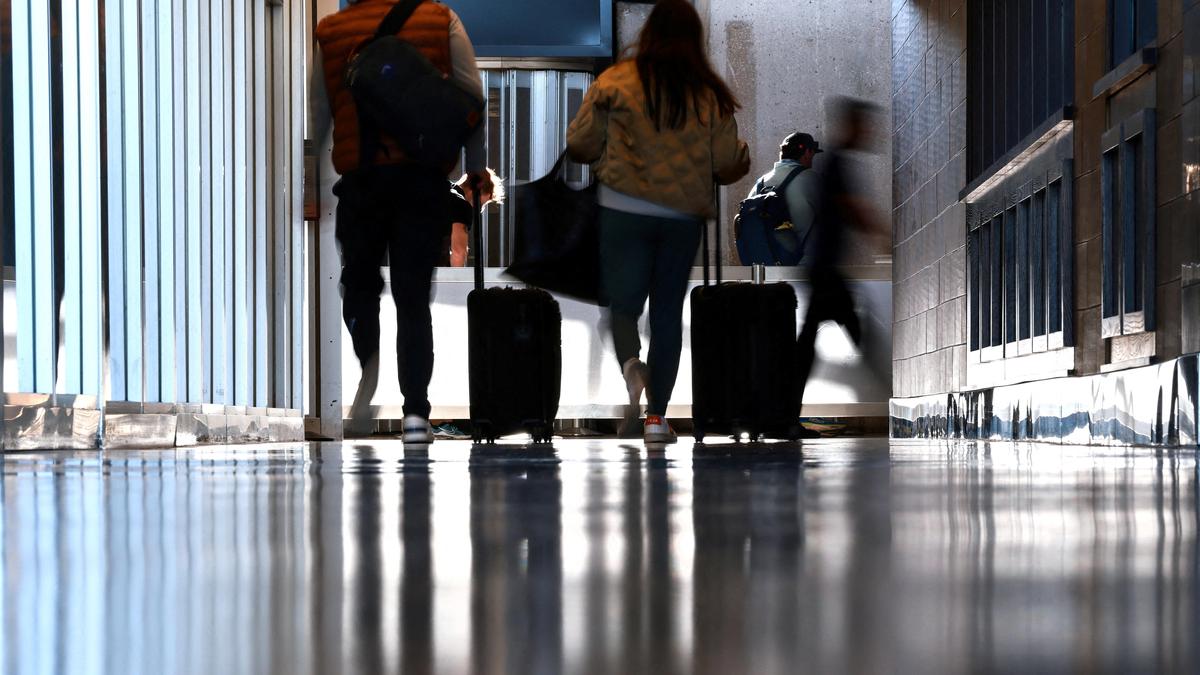
Step into the international arrivals terminal at a designated screening hub today and the atmosphere is heavy. The usual kinetic energy of an airport—the joyful reunions, the rushed business travelers, the families dragging oversized suitcases—is punctuated by pockets of profound stillness.
In those quiet corners, people wait. They wait for public health officers in protective gear to review their travel histories. They wait for digital thermometers to flash a green light. They wait to find out if their years of building a life in America are enough to grant them passage through the final security door.
A permanent resident stands at the counter, handing over a passport and a green plastic card. The customs officer looks at the document, looks at the screen, and looks back up. In that brief silence, the entire weight of a chosen homeland hangs in the balance.