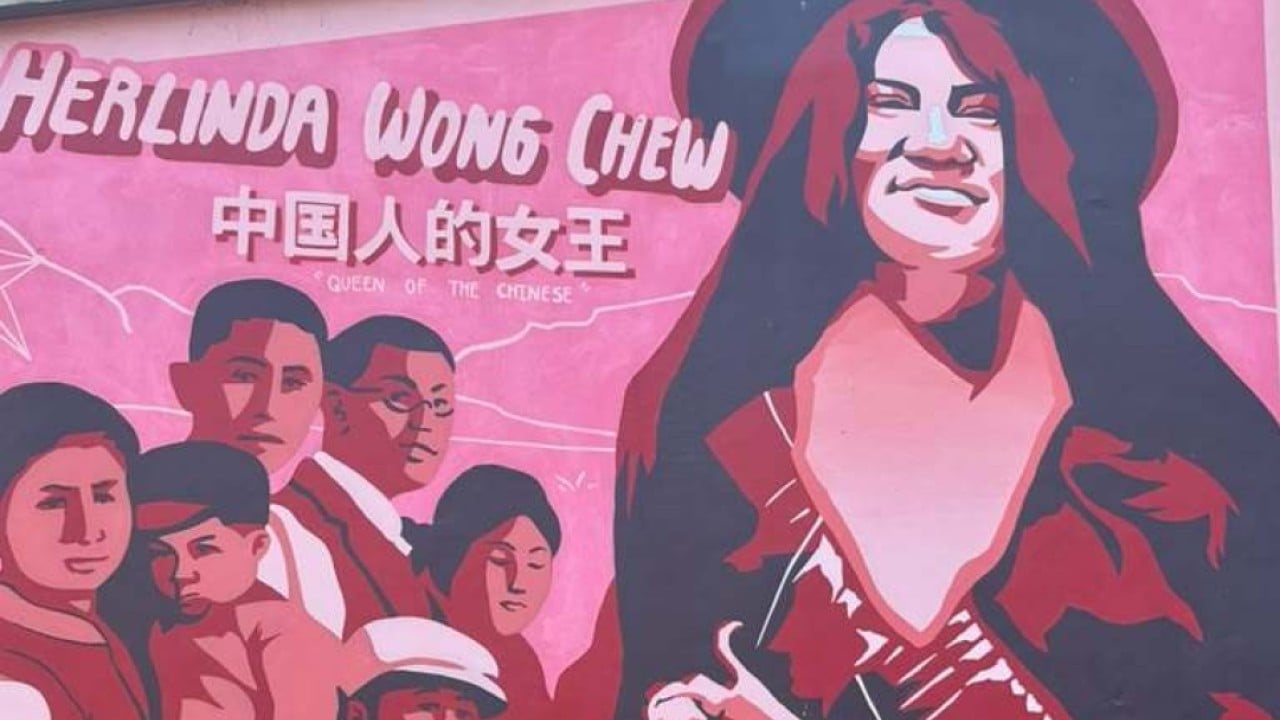
Chew Tin Low—known to late nineteenth-century federal authorities as the "Queen of the Chinese"—did not merely smuggle migrants across the Rio Grande; she engineered an asymmetric cross-border logistics enterprise that systematically defeated the early enforcement apparatus of the United States government. To understand the mechanics of the US-Mexico borderlands between 1882 and 1910, analysts must strip away romanticized frontier narratives and examine the structural economics of regulatory arbitrage. When Congress passed the Chinese Exclusion Act of 1882, it created an immediate, artificial supply shock in North American labor markets while simultaneously constructing a porous, under-resourced enforcement perimeter. Low, operating out of El Paso, Texas, and Ciudad Juárez, Chihuahua, recognized that this legislative asymmetry turned geographic proximity into a high-margin financial asset.
Standard historical accounts reduce figures like Chew Tin Low to colorful anomalies—local curiosities operating on the margins of Wild West towns. This framing misses the operational reality. Low functioned as a vertically integrated broker who controlled recruitment, transit, legal coaching, and local institutional compliance. Her network exploited the jurisdictional friction between two sovereign states with divergent economic incentives: a United States bent on racialized labor restriction, and a Porfirian Mexico actively subsidizing foreign capital and Asian labor to build its northern rail and mining infrastructure.
The Structural Economics of the 1882 Exclusion Shock
The operational blueprint of transborder smuggling networks emerged directly from legislative design flaws in Washington. Prior to 1882, Chinese laborers entered the United States primarily through Pacific ports like San Francisco to construct western railroads and work in extractive industries. The Exclusion Act abruptly terminated legal entry for skilled and unskilled Chinese laborers for ten years—a ban subsequently extended by the Geary Act of 1892 and made permanent in 1902.
This legislation created three immediate market distortions that Low capitalized upon:
- Inelastic Labor Demand: Western agricultural, mining, and railroad conglomerates still required cheap, reliable labor. Restricting legal supply drove up the black-market clearing price for successful entry into the American interior.
- Exempt-Class Loopholes: The 1882 statute exempted specific categories from exclusion, including merchants, teachers, students, diplomats, and travelers, alongside native-born US citizens of Chinese descent. Proving membership in an exempt class required documentary verification—a process vulnerable to fabrication and coaching.
- The Southern Perimeter Vacuum: Federal enforcement resources concentrated overwhelmingly on Pacific maritime ports of entry. The 1,954-mile US-Mexico border lacked physical barriers, integrated communications, or dedicated customs manpower.
Mexico’s Porfirio Díaz administration accelerated this dynamic. Seeking to modernize northern Mexico and counterbalance American economic dominance, Díaz negotiated treaties of amity and commerce with Qing Dynasty China in 1899. Chinese immigrants arrived legally at Mexican Pacific ports such as Manzanillo, Mazatlán, and Guaymas, then traveled north via the newly completed Mexican Central Railway directly to Ciudad Juárez. Juárez became a staging ground—a low-cost, legally permissive holding zone sitting directly across a shallow river from the United States rail hub of El Paso.
Anatomy of the Chew Tin Low Logistics Network
Chew Tin Low’s rise to prominence in El Paso during the 1890s depended on controlling every node of the migration supply chain. Rather than operating as a simple river guide, she managed a multi-stage processing pipeline that minimized detection risk and maximized capital extraction from migrants and their sponsoring labor syndicates.
Stage 1: Staging and Identity Manufacturing in Ciudad Juárez
Migrants arriving in Juárez from Mexican port cities possessed legal Mexican residency or transit papers, rendering them untouchable by US Treasury agents while south of the Rio Grande. Low’s operatives utilized safe houses in Juárez to strip migrants of identifiable markers of recent maritime arrival.
This phase centered on documentary and behavioral assimilation. Migrants were outfitted in Western clothing or attire common to local Mexican laborers. More importantly, Low’s network facilitated the acquisition of fraudulent documentation. These included counterfeit merchant certificates, forged native-born birth affidavits originating from San Francisco (where the 1906 earthquake later destroyed municipal birth records, inadvertently validating thousands of paper claims), and Mexican naturalization papers.
Stage 2: Tactical River Crossing and Spatial Dispersion
The physical crossing between Juárez and El Paso represented the highest-risk bottleneck, yet the geography heavily favored the smuggler. During dry months, the Rio Grande could be crossed on foot in dozens of locations outside the direct line of sight of the Santa Fe Street Bridge customs house.
Low utilized localized intelligence to time crossings during shift changes or periods when the small contingent of Chinese Inspectors—a specialized federal force created to enforce the Exclusion Acts—was occupied with rail inspections. Once on the US side, migrants were immediately dispersed into El Paso’s established Chinatown or moved out of the city via freight trains bound for Chicago, New York, or California. Concentrating migrants in a single safe house created a single point of failure; rapid dispersion neutralised the efficacy of local raids.
Stage 3: Legal Coaching and Jurisdictional Defense
If federal inspectors apprehended a migrant within the border zone, Low’s operation shifted from covert logistics to overt legal warfare. Under early exclusion enforcement protocols, detainees were entitled to hearings before a US Commissioner to determine their right to remain in the country.
Low retained prominent local attorneys in El Paso and coached witnesses to corroborate claims of prior US residency or merchant status. Because federal inspectors struggled with language barriers and lacked centralized biometric tracking—photographic identification on certificates of residence only became mandatory after the Geary Act of 1892, and fingerprint indexing did not exist—the burden of disproving a coherent, corroborated oral testimony fell heavily on the prosecution. Low understood that the US judicial system’s evidentiary standards could be weaponized against its own immigration statutes.
Institutional Friction and the Enforcement Deficit
The longevity of Chew Tin Low’s enterprise exposes a fundamental principle of border governance: enforcement mechanisms fail when local economic incentives contradict federal mandates.
In the late nineteenth century, El Paso’s municipal economy depended on cross-border trade, rail transit, and cheap service labor. Local law enforcement and business elites frequently viewed federal Chinese Inspectors as outside agitators disrupting commercial equilibrium. Federal agents operated with severe resource constraints:
- Manpower Scarcity: At the turn of the century, fewer than a dozen federal inspectors patrolled hundreds of miles of riverfront stretching from El Paso to Brownsville.
- Transport Asymmetry: Smuggling syndicates utilized local guides intimately familiar with arroyos, river bends, and private ranch lands, whereas federal officers relied on predictable road networks and limited horse patrols.
- Corruption and Complicity: Low maintained transactional relationships with local officials, rail conductors, and interpreters. In an environment where federal salaries were low and smuggling profits were substantial, institutional capture at the tactical level was routine.
When federal authorities finally mounted sustained campaigns against Low—resulting in high-profile arrests, indictments for conspiracy to violate exclusion laws, and intense press coverage dubbing her the "Queen of the Chinese"—they were reacting to a system that had already embedded itself into the regional infrastructure. Even when individual operators were prosecuted or deported, the underlying structural arbitrage remained intact.
Methodological Limitations in Historical Reconstruction
Analyzing covert nineteenth-century networks requires separating verified operational records from sensationalized period journalism. Primary evidence regarding Chew Tin Low derives largely from two biased repositories:
- Federal Treasury and Immigration Bureau Files: These documents capture arrests, deportation hearings, and inspector surveillance reports. While operationally detailed, they reflect enforcement blind spots—authorities documented the failures of the smuggling network (apprehensions) far more thoroughly than its successes.
- Borderland Print Media: Newspapers such as the El Paso Herald and El Paso Times covered Low extensively, often employing orientalist tropes and hyperbole. Journalists exaggerated her absolute control over every Chinese resident in the region to construct a compelling villain narrative, obscuring the reality that multiple competing syndicates, family associations (tongs), and independent operators shared the corridor.
Exact financial ledgers for Low’s operation do not exist. Consequently, precise profit margins remain educated hypotheses derived from known smuggling fees of the era—which ranged from $50 to over $200 per migrant depending on the destination and documentation package—weighed against estimated overhead for safe houses, rail bribes, and legal retainers. What remains empirically indisputable is the throughput: between 1890 and 1910, tens of thousands of Chinese migrants entered the United States via the Mexican perimeter, transforming El Paso into the primary overland breach point in the exclusion regime.
The Institutionalization of Modern Border Surveillance
Chew Tin Low’s operational success directly triggered the modernization of American border enforcement. Federal administrators realized that static port-of-entry inspections were obsolete against an adaptive, networked adversary exploiting a contiguous land border.
To close the El Paso-Juárez loophole, the federal government initiated a series of structural escalations:
- Creation of the Mounted Guard: In 1904, the Bureau of Immigration established a dedicated force of mounted Chinese Inspectors along the Mexican border. This unit—comprising roughly 75 officers patrolling on horseback—was the direct institutional precursor to the US Border Patrol, formally established twenty years later in 1924.
- Biometric and Documentary Standardization: Authorities tightened the evidentiary rules for exempt-class merchants and native-born citizens, demanding photographs, detailed physical descriptions, and cross-referenced port records to neutralize the fraudulent paper trade.
- Extraterritorial Diplomacy: Recognizing that enforcement at the river line was too late, Washington pressured the Mexican government to restrict Chinese immigration at Pacific ports and deployed undercover Treasury agents inside Mexico to map smuggling networks before migrants reached Juárez.
The trajectory of Chew Tin Low demonstrates that border enforcement regimes never emerge in a vacuum; they evolve reactively to dismantle specific logistical innovations engineered by illicit networks. Low identified a legislative blind spot, built a vertically integrated enterprise to exploit it, and forced the United States government to invent the modern border patrol apparatus to shut her down.
Strategic Takeaway for Regulatory and Risk Analysts
For contemporary policy architects, supply-chain security analysts, and regulatory strategists, the El Paso smuggling corridor offers an enduring operational lesson: prohibition without perimeter symmetry creates high-margin monopolies for the most adaptable intermediaries.
When designing compliance frameworks or evaluating cross-border risk, analysts must map the entire regulatory gradient rather than focusing solely on domestic enforcement nodes. Whenever a high-demand market is sealed off by unilateral restriction while an adjacent jurisdiction maintains open access, illicit logistics networks will inevitably consolidate around the friction point. Effective risk mitigation requires neutralizing the intermediary's value proposition—either by harmonizing cross-border regulatory standards to eliminate the arbitrage spread, or by deploying continuous, intelligence-led surveillance across the entire transit corridor rather than relying on static checkpoints.