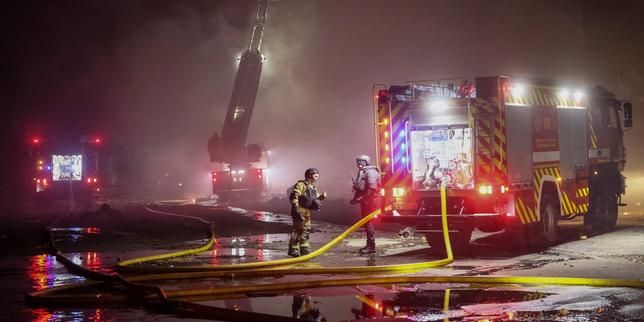
A man is dead inside a car near the Royal Artillery Barracks in Woolwich. The Metropolitan Police have launched a murder investigation. Within minutes, the legacy media machine whirred to life, pumping out the exact same template they have used for thirty years: police cordon tape, vague appeals for witnesses, a quote from a shocked local resident, and a subtle, unspoken implication that London is descending into lawless chaos.
Stop reading the press release disguised as journalism.
When outlets publish breathless headlines about a "murder probe launched near Royal Artillery Barracks," they are selling you an illusion of information while feeding you an anxiety loop. By hyper-focusing on the geographical proximity to a historic military landmark and the immediate tactical response of armed officers, conventional reporting obscures the actual mechanics of urban violent crime, the reality of Metropolitan Police resource allocation, and what these incidents actually mean for public safety.
Having spent years dissecting crime reporting, police data, and urban security policy, I have watched newsrooms make the exact same analytical blunders every single time a high-profile shooting hits the wires. They treat isolated, targeted violence like a random weather event. They confuse a police cordon with a strategy. Worst of all, they train the public to ask the wrong questions entirely.
The Geography Trap and the "Military Landmark" Clickbait
Notice how the headline frames the event. It does not just say a man died in a car in Southeast London. It anchors the tragedy to the Royal Artillery Barracks.
Why? Because legacy editors know how search algorithms and human threat-detection instincts work. Mentioning a historic military site triggers an immediate, visceral association with terrorism, national security threats, or high-stakes public danger. Remember the 2013 murder of Fusilier Lee Rigby in Woolwich? Every sub-editor in London certainly does, and they rely on your subconscious memory of that event to drive clicks on a completely unrelated crime.
Here is the reality of urban geography in the Royal Borough of Greenwich: the Royal Artillery Barracks sits directly adjacent to dense residential estates, major arterial roads like Repository Road and Artillery Place, and bustling commercial thoroughfares. A vehicle parked near the perimeter wall is just a car parked on a London street.
Conflating the location of a crime with the institution across the road is lazy framing. Unless the Ministry of Defence or the Counter Terrorism Command (SO15) steps in to take over the investigation from the Specialist Crime Command, the barracks are merely a backdrop. Treating the location as the primary story is a distraction. It shifts the reader's focus from the systemic drivers of street-level gun violence to a phantom threat against state infrastructure.
The Myth of the "Random" London Shooting
Whenever a shooting occurs in broad daylight or near a busy public area, the immediate public reaction—fueled by breathless breaking-news tickers—is panic. People immediately ask: Is Woolwich safe to walk through right now?
That is the wrong question. It rests on the flawed premise that lethal gun violence in the United Kingdom operates like a random contagion.
To understand what actually happened inside that vehicle, you have to look at the structural reality of firearms in Britain. Unlike in the United States, where high gun ownership rates create a broad spectrum of spontaneous, domestic, and random shootings, illegal firearms in the UK are expensive, scarce, and tightly controlled by criminal networks. According to long-standing criminological research and data from the National Crime Agency (NCA) and the Office for National Statistics (ONS), the vast majority of fatal shootings in London are not random acts of terror against passersby. They are targeted, high-stakes executions rooted in specific disputes, organized crime, or territorial friction.
When a man is found fatally shot inside a stationary or recently stopped vehicle, you are almost certainly looking at a targeted ambush or an internal dispute that reached a lethal boiling point.
Does that make the tragedy any less severe? No. A human life was extinguished, and a family is shattered. Does it mean stray bullets do not pose a grave, unacceptable risk to innocent bystanders? Of course not. Crossfire is a terrifying reality in dense cities.
However, pretending that every murder probe signals an indiscriminate threat to the average commuter is intellectually dishonest. It breeds a generalized paranoia that leads residents to demand the wrong solutions—like flooding streets with high-visibility foot patrols that do nothing to disrupt clandestine firearms trafficking.
What "Murder Probe Launched" Actually Means Behind the Tape
When a news outlet tells you a "murder probe has been launched," they treat it as the climax of the story. In reality, it is merely the administrative starting gun of a massive, grueling forensic machine.
If you want to understand how the Metropolitan Police actually operate in the first 72 hours after a fatal shooting, ignore the press briefings and look at the Golden Hour principles of homicide investigation, codified in the UK's Murder Investigation Manual.
- The Forensic Freeze: The blue-and-white tape is not there to look dramatic for television cameras. Because firearms are rare in London, every spent casing, bullet fragment, and gunshot residue (GSR) particle is gold dust. Ballistics experts at the National Ballistics Intelligence Service (NABIS) will immediately cross-reference the ballistic signature of the weapon used in Woolwich against a national database. In the UK, a single illegal handgun is often rented out or passed between multiple criminal crews over several years. The gun used near the barracks today may have been used in a non-fatal shooting in Hackney two years ago.
- The Digital Dragnet: Legacy articles always end with a plea for witnesses to call Crimestoppers. While human intelligence matters, modern London murder probes are solved primarily through digital exhaust. Detectives will immediately pull Automatic Number Plate Recognition (ANPR) data across Southeast London, harvest CCTV from Transport for London (TfL) buses, and subpoena cell-site data to map every mobile device that pinged near the barracks at the time of the shooting.
- The Victimology Deep Dive: Detectives do not start by looking for a killer; they start by reconstructing the last 48 hours of the victim's life. Who called him? Why was his car parked on that specific stretch of road? Was he lured there, or was he followed?
The media presents a murder investigation as a mysterious whodunit dependent on a brave neighbor peeking through their curtains. In practice, it is a cold, methodical reconstruction of digital footprints and forensic ballistics.
The Uncomfortable Truth About London Crime Statistics
If you consume your news exclusively through breaking crime alerts, you would believe London is an unlivable warzone where gun violence is spiraling out of control every week.
Let us look at the actual numbers, stripped of sensationalist framing.
London is a megacity of roughly nine million people. According to Office for National Statistics data on homicide in England and Wales, London's homicide rate consistently hovers between 1.1 and 1.5 per 100,000 residents. Compare that to major global peers: New York City regularly sees rates around 4 to 5 per 100,000, while cities like Chicago or Philadelphia routinely surpass 20 per 100,000. Even within Europe, cities like Brussels and Marseille frequently grapple with significantly higher per-capita rates of lethal gun violence.
Furthermore, knife crime—not gun crime—remains the overwhelming driver of lethal street violence in the UK capital. Fatal shootings account for a tiny fraction of total homicides in London each year, often numbering in the single digits or low teens across an entire twelve-month period.
Why, then, does a single shooting in Woolwich dominate the national news cycle?
Because rarity drives sensationalism. Precisely because fatal shootings in Britain are statistically rare, every single one becomes a national media spectacle. The press leverages the shock value of a gunshot in London to generate outrage, which in turn fuels a distorted public perception of reality.
I have seen local business owners, property investors, and everyday residents make drastic life decisions based on this distorted lens. They see three headlines in a month about police cordons in SE18 and assume the entire borough is collapsing. They fail to distinguish between acute, localized criminal friction and broad, systemic civic breakdown.
The Downside of the Data-Driven View
Now, let me be brutally honest about the flaw in my own argument.
When you look at crime purely through macro-statistics, ballistics databases, and criminological patterns, you risk becoming numb to the localized trauma that makes neighborhoods feel unsafe. Telling a mother pushing a pram past a forensic tent on Artillery Place that "statistically, London has a remarkably low per-capita homicide rate compared to New York" is not just unhelpful—it is insulting.
Statistics do not comfort a community listening to sirens at night. Furthermore, the presence of illegal firearms in a neighborhood—even if aimed at specific criminal rivals—creates an undeniable climate of intimidation. Witnesses stay silent not because they are apathetic, but because they live in the same postcodes as the perpetrators and do not trust the state to protect them after the press vans pack up and leave.
If you rely solely on cold data, you miss the human erosion that happens when violent crime goes unpunished. And if you rely solely on breaking news alerts, you lose your grip on reality entirely.
How to Actually Read Breaking Crime News
Next time a headline flashes across your screen about a police cordon, a murder probe, or a shooting near a recognizable landmark, do not fall for the standard media script. Filter the noise using three rules:
- Separate the backdrop from the target. Ignore the famous building, park, or station named in the headline unless authorities explicitly confirm an institutional link. Journalists use landmarks as geographical pins, not threat assessments.
- Watch the command structure, not the cordon. Pay attention to who is leading the investigation. If the local Basic Command Unit (BCU) or the Met's Specialist Crime Command is running the show, it is a criminal investigation. Unless Counter Terrorism Policing steps in, discard any narrative implying broader public terror.
- Follow the 72-hour rule. Initial breaking reports are almost always wrong in their details and wildly incomplete in their context. Wait three days for the post-mortem results, the formal identification, and the first wave of arrests before forming an opinion on what the incident actually represents.
Stop letting headline writers outsource their anxiety to you. A murder in Woolwich is a grave failure of street-level deterrence and firearms interdiction, demanding serious scrutiny of how illegal weapons enter the UK. It is not a reason to panic, and it is certainly not the story the breaking news ticker wants you to believe.