The wind in Epuyén doesn't just blow; it whispers through the high grass and rattles the windows of clinics where the air feels suddenly too heavy to breathe. In this corner of Argentine Patagonia, the beauty of the landscape—the jagged peaks and the crystal-clear lakes—masks a biological enigma that has baffled investigators for decades. We are talking about hantavirus, a name that carries a weight of dread in the rural valleys, and a recent uptick in cases has reignited a chillingly familiar debate.
Officials in Buenos Aires and local health authorities in Chubut are currently locked in a struggle with a phantom. The latest reports are unsettlingly vague. Despite the sophisticated tools of modern virology, the Argentine government has been forced to admit a frustrating truth: they cannot yet confirm exactly how the latest victims were infected. For another perspective, consider: this related article.
To understand why this matters, you have to look past the sterile laboratory reports and into the kitchen of a small farmhouse.
Imagine a woman named Elena. She is not a statistic; she is the person who sweeps the grain dust from her shed and welcomes her neighbors for tea. She lives in the shadow of the mountains. One morning, she wakes up with what feels like a mild flu. Her muscles ache. Her head throbs. Within forty-eight hours, she is struggling for air, her lungs filling with fluid as her own immune system turns into a battlefield. Further analysis on this matter has been provided by World Health Organization.
This is the visceral reality of Hantavirus Pulmonary Syndrome (HPS). It is swift. It is brutal. And for the families watching through the glass of an isolation ward, the "origin of contagion" isn't a bureaucratic talking point. It is the difference between a tragic accident and a community-wide threat.
The Mouse and the Shadow
For years, the narrative was simple. We were told the virus lived in the Oligoryzomys longicaudatus, the long-tailed pygmy rice rat. If you breathed in the dust of their dried droppings while cleaning an old cabin, you were at risk. It was a disease of the environment, a bridge crossed between the wild and the domestic.
But then came the 2018-2019 outbreak in Epuyén. That event shattered the old certainties. It suggested something much more terrifying: the virus might have learned to jump from human to human.
When the Argentine Ministry of Health speaks today about the inability to confirm the "origin of contagion," they are dancing around this specific ghost. Is the current case a "spillover" from a rodent, or is it the start of a chain of human transmission? The distinction is everything. If it's the former, you clean your sheds and set traps. If it's the latter, you stop hugging your children. You stop attending funerals. You stop being a community.
The science is messy because nature is messy. We want a clear villain and a clear map. Instead, we have "inter-human transmission suspected but not confirmed." It is a phrase that offers no comfort to those on the ground.
The Biology of Uncertainty
Why is it so hard to pin down?
Viruses are masters of disguise. When a hantavirus enters the human body, it targets the endothelial cells—the lining of your blood vessels. Unlike many other viruses that kill the cells they inhabit, hantavirus makes them "leaky." Your blood vessels begin to seep fluid into the surrounding tissue. In the lungs, this is catastrophic. It is like drowning from the inside out while standing in a dry room.
The diagnostic window is agonizingly small. By the time a patient shows enough symptoms to be tested, the trail of where they were and who they touched two weeks prior has grown cold. Was it the woodpile? Was it the birthday party? Was it the person coughing in the seat behind them on the bus?
Health officials are currently pouring over genetic sequences, looking for mutations that might explain a more aggressive spread. They are checking the "viral load" in the respiratory secretions of the afflicted. But the data moves slower than the fear. In the vacuum left by official confirmation, rumors grow. People stop visiting the local shops. The economy of a small mountain town can wither as quickly as a lung under siege.
The Human Cost of "Undetermined"
There is a specific kind of exhaustion that settles over a medical team in these regions. I have seen the look in the eyes of rural doctors who have to tell a family that they don't know how their loved one got sick. It isn't just a lack of information; it's a failure of the safety net we all assume exists. We assume that if we follow the rules—wash our hands, vent our rooms, keep the rats away—we will be safe.
When the "origin of contagion" remains unconfirmed, the rules break.
The Argentine authorities are being cautious, and perhaps rightfully so. To declare human-to-human transmission prematurely could trigger a panic that isolates the region and destroys livelihoods. But to delay the warning could lead to more empty chairs at dinner tables. It is a tightrope walk performed over an abyss of public health consequences.
Consider the logistics of a quarantine in a place where the nearest neighbor is five miles away, but the town's social life revolves around the shared mate gourd. The tradition of passing the straw from person to person is the heartbeat of Argentine social fabric. It is an act of trust and intimacy. In the face of an unconfirmed contagion, that straw becomes a potential delivery system for a killer.
The current situation isn't just about a virus; it's about the fragility of our relationship with the natural world and each other. We are living in an era where the boundaries between species are thinning. As we push further into the forests and the climate shifts the habitats of rodents, these "invisible guests" find new doors into our lives.
A Silence in the Valley
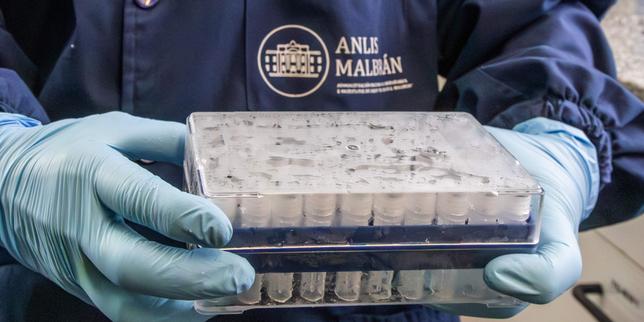
The labs in Malbrán will eventually provide an answer. They will sequence the proteins and map the lineage of this specific strain. They will tell us if it was a rat in a barn or a breath in a crowded room. But until that day comes, the residents of the Andean valleys live in a state of hyper-vigilance.
Every sneeze is a cause for a second glance. Every sighting of a mouse is reported with a tremor in the voice. The "En Direct" reports from the government provide updates on numbers—three cases, five cases, zero deaths—but they fail to capture the psychological toll of the unknown.
Nature does not care about our need for certainty. It operates on a timeline of millions of years of evolution, testing our defenses and finding the gaps in our knowledge. Our only real weapon isn't just the microscope; it is the transparency of information and the courage to admit when we are vulnerable.
As the sun sets over the peaks of Chubut, the light turns a bruised purple. The air grows cold, and families retreat inside, shutting their doors against the wind. They are waiting for a word that hasn't come yet. They are waiting for the science to catch up to their lives.
The most dangerous thing about an unconfirmed origin isn't the virus itself. It is the way the uncertainty forces us to look at our neighbors not as friends, but as vectors. It turns a community into a collection of islands, each one held in a breath of terrifying, silent anticipation.