Darkness does not merely exist; it presses. It has weight, temperature, and a distinct, metallic smell of wet earth and crushed slate. When the walls of a subterranean passage give way, the shift is rarely a cinematic explosion. More often, it is a heavy, sighing collapse—a quiet redistribution of tons of ancient debris that erases the boundary between a workspace and a tomb.
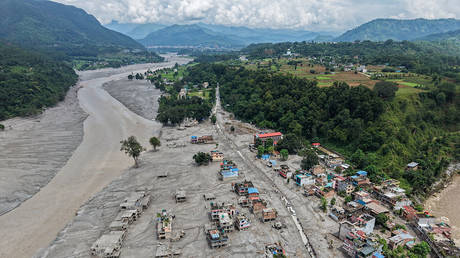
In the mountainous folds of Nepal, where engineering projects burrow deep into the unstable heart of the Himalayas to carve out hydroelectric tunnels and transit routes, the threat of a cave-in is a constant, breathing shadow. When men and machines are swallowed by the mountain, the initial panic gives way to a colder, more agonizing phase: the wait.
For decades, the global playbook for trapped-miner rescue was crude, dangerous, and painfully slow. You dug from the outside, moving mountains with spoons while time bled away. You prayed that the pockets of trapped air—known to rescue workers as survival envelopes—were large enough to sustain human lungs through hours that felt like decades. But physics is indifferent to prayer.
Then came the voice from Australia.
Dr. Alistair Vance has spent thirty years studying the strange, brutal physics of crushed earth. Sitting in a quiet Brisbane office cluttered with seismic sensors and core samples, he looks less like a high-stakes rescue consultant and more like a retired geologist who has spent too much time arguing with rocks. Yet, when the phone rings from Kathmandu, his demeanor shifts instantly. He is the man governments call when the mountain refuses to give its prisoners back.
Hope, Vance insists, is not a passive emotion. It is a calculated variable.
To understand why survival remains possible days or even weeks after a tunnel collapse, one has to abandon the Hollywood myth of immediate suffocation. In reality, human beings are astonishingly resilient survival engines, provided the initial impact misses vital organs and the crushing weight doesn't seal them in an airtight coffin poisoned by carbon monoxide.
Consider a hypothetical scenario, modeled precisely on the 2023 tunnel incidents in Uttarakhand and recurring structural failures across Himalayan infrastructure projects. Ten workers are trapped three hundred meters underground. A massive rockfall seals the southern portal, while a smaller secondary slide blocks the northern exit. They are cut off.
At first, there is screaming. The terror spikes the heart rate, burning through precious oxygen at an alarming rate. But within an hour, a grim biological discipline takes over. The men huddle together. They find a damp corner where a fractured pipe still weeps potable water. They turn off their headlamps to conserve the failing lithium batteries, plunging themselves into absolute, velvety blackness.
This is where Vance’s methodology enters the dark.
For years, rescue teams treated a collapsed tunnel as a monolithic block of stone. Vance treats it as a porous sponge. Through the use of micro-seismic listening devices and high-resolution ground-penetrating radar—technology originally developed to map subterranean oil reserves—his teams can pinpoint acoustic signatures. A tap of a steel rebar against a rock face travels through the earth like a telegraph wire.
When an Australian geotechnical advisory group assists Nepalese disaster response units, they are not just guessing where to drill. They are reading the acoustic pulse of the mountain. Every faint scratch, every rhythmic thud of a boot against stone, tells a story about air circulation and structural integrity.
The primary enemy in these depths is not hunger. A human body can survive weeks without food. The enemy is the invisible accumulation of exhaled carbon dioxide, pooling invisibly in low-lying pockets because it is heavier than oxygen. Without directional ventilation, a trapped crew can lose consciousness from hypercapnia long before starvation sets in.
This is why modern rescue architecture relies so heavily on rapid-deployment narrow-bore drilling. By shooting a pilot hole—often no wider than a soda can—straight through hundreds of meters of slate and soil, rescue teams can accomplish two vital miracles simultaneously. They introduce a lifeline of compressed air to flush out the poison, and they drop down polyethylene tubes carrying high-calorie liquid gels, electrolytes, and audio-visual communication lines.
The moment a trapped worker hears a human voice crackling through a tiny plastic tube pushed through the heart of a mountain, the psychological landscape transforms.
Despair has a physical weight. It anchors the limbs, slows the circulation, and invites the cold to set in. Hearing a voice from Sydney or Kathmandu shouting encouragement through a crude speaker is an electric shock to the survival instinct. It breaks the sensory deprivation. It proves that the outside world has not forgotten them, that excavators are screaming on the surface, that steel drill bits are eating their way through the rock, inch by agonizing inch.
Yet, the danger does not recede simply because contact has been made.
The geology of the Himalayan range is notoriously fickle. Unlike the stable granite shields of Canada or Western Australia, the young, folded mountains of Nepal are composed of fractured shales, phyllites, and loose alluvial deposits. They are mountains that are still growing, still shifting, still sliding toward the plains. When you drill into a compromised tunnel, you risk triggering a secondary collapse. Every vibration from a rescue rig is a roll of the dice.
This is where the intersection of Australian engineering expertise and local Nepalese grit creates a unique synergy. Local rescue workers, men who grew up navigating these treacherous slopes and understand the fickle temperament of the terrain better than any computer model, work side by side with international geotechnical specialists. They read the weather. They watch the monsoon rains swell the surface streams, knowing that water seepage can liquefy clay layers and turn a stable pocket into a sliding trap.
It is a slow, agonizing war fought with hydraulic jacks, micro-cameras, and sheer human stubbornness.
When the final barrier finally gives way—when the last slab of stone is pried apart and a beam of blinding, unfiltered daylight cuts into the subterranean gloom—the rescue is rarely a triumphant sprint. It is a careful, weeping extraction. Blankets are draped over shoulders unaccustomed to the sun. Eyes squint against a world that suddenly feels too wide, too bright, too loud.
They walk out smelling of damp earth and stale sweat, carrying with them a quiet, permanent transformation. They have looked into the throat of the earth and refused to stay there.
Somewhere in a Brisbane laboratory, a computer screen blinks with new seismic data, preparing for the next inevitable call. And in the high valleys of the Himalayas, the mountains continue their slow, majestic rise, indifferent to the fragile, fierce persistence of the life crawling beneath their roots.