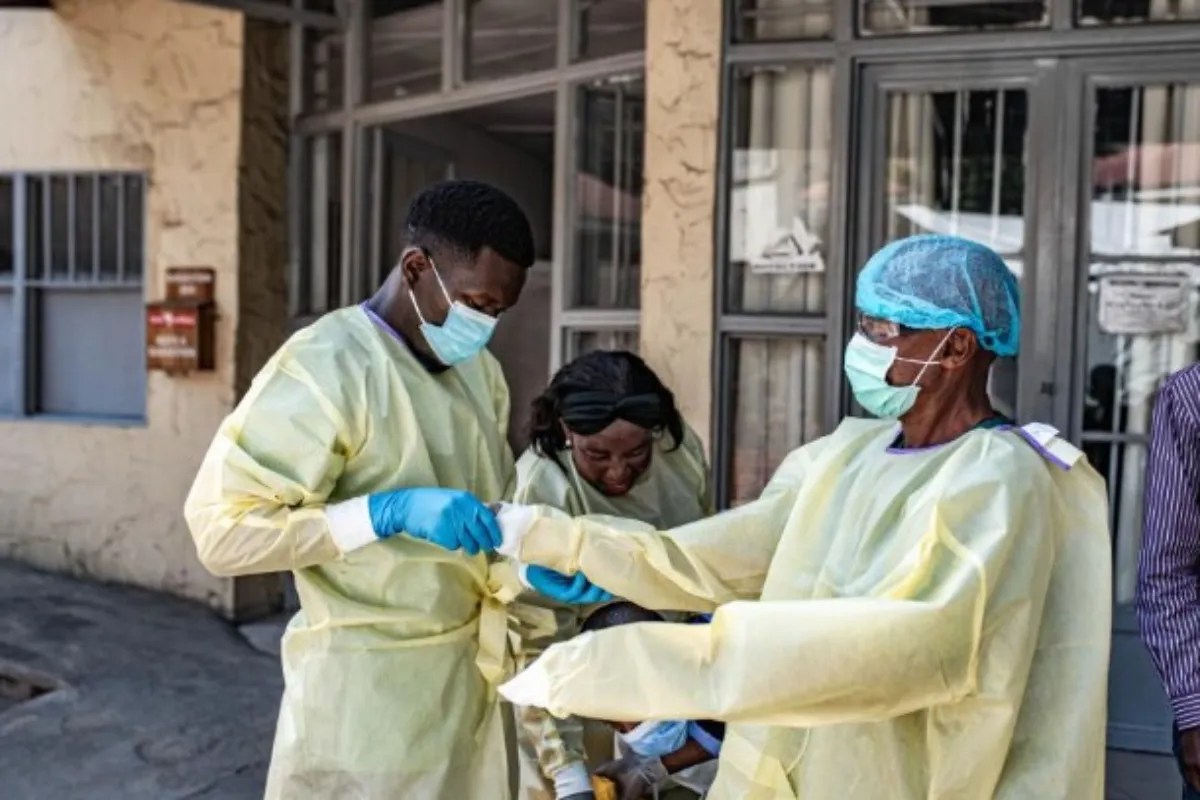
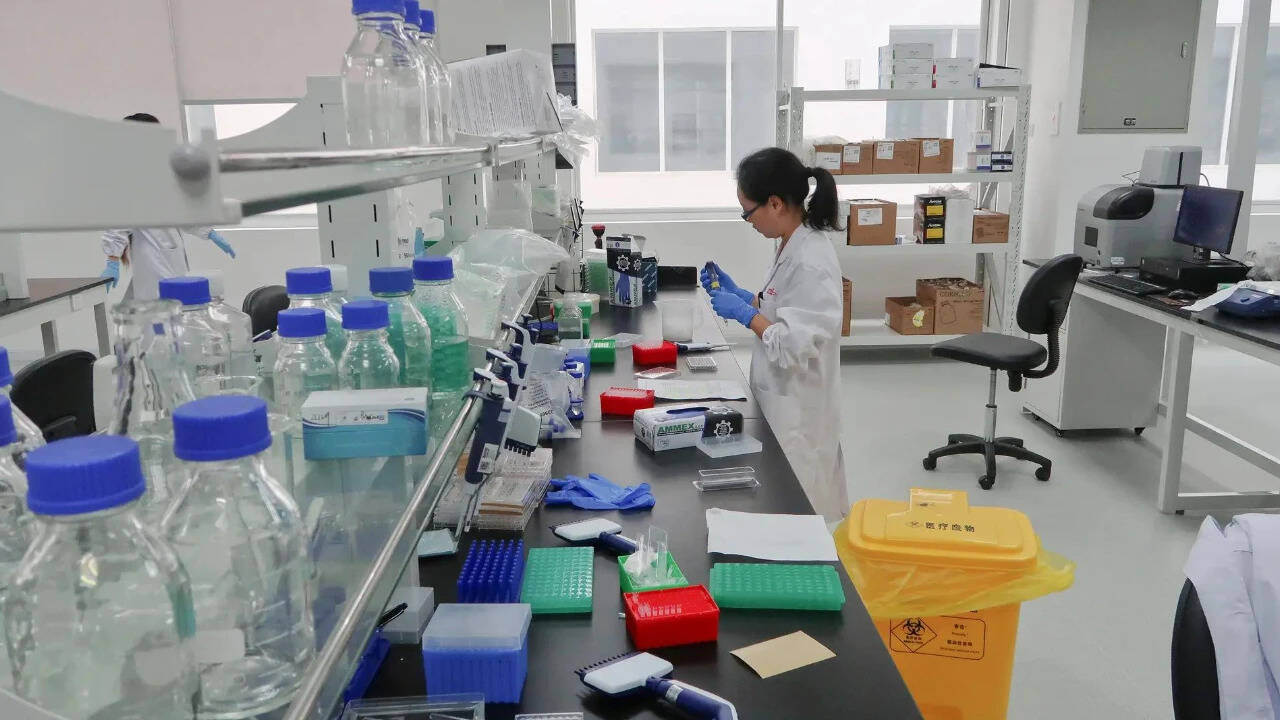
In the high, thin air of the Andes, a mountain climber named Elias noticed something strange. It wasn't the altitude that stole his breath, but a sense of dread that began as a faint ache in his lower back. Within forty-eight hours, his lungs were drowning in a fluid his own body had produced. He wasn't a victim of a fall or a frostbite-induced infection. He was a casualty of a shadow that has begun to stretch across thirteen nations, a ghost in the machinery of our modern, interconnected world.
We often think of pandemics as loud. We picture sirens, crowded city squares, and the frantic hum of digital dashboards. But the Hantavirus doesn't work like that. It is a quiet, rural predator. It lives in the dust of an old barn, in the insulation of a vacation cabin, and in the microscopic droppings of a deer mouse or an oligoryzomys longicaudatus. When you sweep a floor that has been left untouched for a season, you aren't just cleaning. You are kicking up a cloud of viral particles that have been waiting for a host.
The Geography of a Ghost
The map is changing. What was once considered a localized concern—restricted to the Four Corners region of the United States or specific pockets of the Argentinian wilderness—is now a growing international ledger. Cases have surfaced across a jagged line of thirteen countries, including the United States, Canada, Argentina, Brazil, Chile, Panama, and Bolivia.
The virus doesn't care about borders. It cares about habitat.
As our summers grow longer and our winters lose their teeth, the rodent populations that carry this pathogen are exploding. They are moving into areas where they were once rare, driven by a search for water and food. When a drought hits the scrublands, the mice move toward the green, irrigated lawns of suburban developments. They bring the virus with them.
Consider the mechanics of the infection. Unlike the flu, which travels through a cough in a crowded subway, Hantavirus Pulmonary Syndrome (HPS) is a solitary tragedy. You breathe it in while moving boxes in a garage. You inhale it while hiking through a trail where the brush is thick. It enters the lungs and begins a silent takeover of the endothelial cells—the lining of your blood vessels.
The vessels begin to leak.
The lungs, meant to be filled with life-giving air, become reservoirs for plasma. This is why the mortality rate is so chilling. In some outbreaks, nearly forty percent of those infected do not survive. It is a high price to pay for a weekend spent tidying up a shed.
The Thirteen Names on the List
The spread into thirteen countries isn't just a statistic; it’s a warning about ecological imbalance. In the United States, the Sin Nombre strain remains the primary threat, haunting the Southwest but appearing as far north as Washington and as far east as New York. In South America, the Andes virus adds a terrifying layer of complexity: it is the only strain known to occasionally jump from person to person.
- United States: The historical epicenter of the 1993 outbreak.
- Canada: Increasing cases in the prairie provinces.
- Argentina: Home to the Andes strain, where family clusters have been documented.
- Brazil: Seeing a rise in agricultural regions.
- Chile: Often linked to the "colilargo" mouse in rural tourism spots.
- Panama: A persistent presence in central provinces.
- Bolivia: Outbreaks often tied to seasonal harvests.
- Paraguay: Rising incidents in the Chaco region.
- Uruguay: A growing concern for local health authorities.
- Peru: Recent spikes in the Amazonian fringes.
- Ecuador: Sporadic but lethal cases in high-altitude communities.
- Venezuela: Monitoring focused on rural farming belts.
- Costa Rica: Emerging reports in tropical zones.
These countries share a common thread: the intersection of human expansion and wild frontier. When we build deeper into the woods, we aren't just gaining a view. We are entering a prehistoric dialogue between rodents and the viruses they have carried for millennia.
The Illusion of the Common Cold
Elias, the climber, thought he had the flu. That is the trap. The first five days of a Hantavirus infection are indistinguishable from a dozen minor ailments. There is the fever. There are the muscle aches in the large groups—the thighs, the back, the shoulders. You might feel a bit of nausea or a sudden chill.
You take an aspirin. You go to bed. You wait for it to pass.
But while you sleep, the virus is replicating. By the time the "cardiopulmonary stage" begins, the shift is violent. One moment you are tired; the next, you are gasping for air as if a weight has been placed on your chest. There is no cure. There is no specific pill to swallow or injection to take that will stop the process. Doctors can only provide "supportive care," which is a clinical way of saying they keep your heart beating and your blood oxygenated with machines, hoping your immune system can win the race before your lungs give up.
This uncertainty is the hardest part for families to bear. They watch through glass partitions as a healthy, vibrant person is tethered to a ventilator because of a microscopic speck of dust.
The Invisible Stakes of a Clean House
We are taught to fear the things we see: the jagged tooth, the speeding car, the dark alley. We are not taught to fear the smell of old paper or the sight of a tiny, dark dropping on a basement shelf.
The defense against this thirteen-country spread isn't a wall or a travel ban. It is a change in how we interact with the quiet corners of our lives. Prevention sounds mundane until you realize it’s the difference between life and a sudden, suffocating end.
If you find yourself in a space that hasn't seen the light of day in months, do not reach for a broom. A broom is an agitator. It launches the virus into the air you breathe. Instead, you use bleach. You soak the area until the dust is heavy and wet, anchored to the floor where it can do no harm. You wear gloves. You wear a mask. You treat the mundane task of spring cleaning with the caution of a bomb squad.
It feels paranoid. It feels like overkill. Until you remember the thirteen countries and the forty percent.
The Balance of the Wild
There is a temptation to see the mice as the enemy, to wish for a world scrubbed clean of the "long tail." But the surge in Hantavirus is a symptom of a larger fever. When we remove predators like owls, hawks, and snakes from a landscape, we give the rodents a kingdom. When we change the climate so that certain seeds or fruits are available year-round, we fuel a population boom that nature cannot check.
The virus is an indicator. It tells us when we have pushed too far into the wild, or when we have let the wild become unbalanced around us.
Elias eventually walked out of the hospital, though his lungs felt like they were made of glass for a year afterward. He still climbs, but he no longer sleeps in abandoned cabins. He carries a small bottle of bleach in his kit. He looks at the world differently now—not as a series of facts on a map, but as a delicate web where a single breath in the wrong place can change everything.
The map will likely continue to grow. More names will be added to the list of thirteen. We cannot stop the mice from being mice, and we cannot stop a virus from doing what it has done for ten thousand years. We can only change how we move through their world.
The next time you open a door to a room that has been closed for a long time, stop. Look at the dust dancing in the shafts of sunlight. It looks beautiful, almost ethereal. But remember that beauty can be a mask. Take a breath of fresh air while you still can, then reach for the bleach, and keep the mask on.