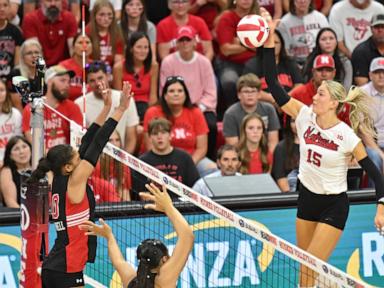
Media networks operate under strict yield management constraints, continuously seeking undervalued inventory categories that exhibit high structural affinity with desirable audience demographics. When Fox Sports committed to broadcasting thirty-five women's college volleyball matches, featuring eight linear broadcast windows on its primary network, it executed a calculated portfolio expansion. This move directly challenges incumbent rights holders by testing whether regional collegiate fandom can be aggregated into a national linear television product without the presence of a single, transcendent individual superstar.
The Arbitrage Playbook in Sports Media Economics
Traditional sports broadcasting logic dictates that audience acquisition requires either legacy equity or generational marquee athletes. Women's college basketball capitalized on distinct individual drawing cards during its recent scaling phase. Volleyball presents a structural divergence. Its monetization thesis relies entirely on institutional loyalty, regional density, and concentrated program brands rather than singular player identification.
- Institutional Brand Equity: Programs such as Nebraska, Texas, and Wisconsin command dedicated local followings that translate into stable baseline household ratings.
- Geographic Aggregation: Matches are curated to capture high-density population corridors across the Midwest and Texas, transforming localized collegiate rivalries into cross-regional broadcast events.
- Inventory Cost Efficiency: Securing tier-one matches for primary broadcast slots at competitive rights fees yields high return margins compared to saturated professional leagues.
Evaluating this strategy requires examining the distribution channels. Allocating twenty-seven matches to cable tiers like FS1 and FS2 while reserving eight prime windows for the flagship broadcast network establishes a functional funnel. Cable windows capture high-intent core enthusiasts, while broadcast slots test mass-market conversion thresholds among casual sports viewers tuning in via lead-in programming.
Structural Mechanics of Inventory Placement
The scheduling architecture reveals deliberate sequencing designed to maximize audience retention. Programming cannot simply occupy vacant calendar slots; it must exploit structural gaps in the autumn sports calendar.
The deployment of marquee neutral-site matchups during early-season tournaments—such as the AVCA First Serve and the Players Era Volleyball Showcase—functions as an initial market test. By placing top-ranked programs in high-profile venues like football stadiums or major entertainment arenas early in the autumn cycle, the network manufactures high-stakes narratives before conference play begins.
[Early-Season Neutral Sites] -> [High-Density Cable Distribution (FS1/FS2)] -> [Flagship Broadcast Windows (Fox)] -> [Conference Championship Finales]
This tiered progression mitigates financial exposure while building cumulative audience habituation. The inclusion of the inaugural Big Ten Volleyball Championship on Thanksgiving Eve further illustrates an expansion into vacant holiday viewing windows, capturing family-cohort viewership patterns that standard autumn sports programming typically misses.
Distribution Constraints and Risk Factors
Despite aggressive scheduling expansion, linear sports distribution faces inherent adoption ceilings. The absence of a national mainstream star creates a discoverability barrier for casual viewers who rely on individual athlete narratives to anchor their interest. Without a primary narrative focal point, promotional efforts must rely heavily on institutional storytelling, which carries higher creative friction.
Production quality and venue infrastructure also introduce variance. Translating an indoor arena environment into an optimal broadcast product requires specialized camera placement and audio engineering to capture crowd density and kinetic pace. Inconsistent arena acoustics or sub-optimal lighting arrays can diminish the visual parity between collegiate broadcasts and established professional leagues, directly impacting viewer retention past the initial ten-minute mark.
Capital Allocation and Strategic Execution
To sustain yield growth across multi-year broadcast commitments, network programmers must evaluate viewer migration patterns from cable tiers to primary broadcast slots. If primary window ratings exceed historical benchmarks set by alternative programming, rights acquisition models for non-revenue collegiate sports will undergo systemic pricing adjustments across the entire media ecosystem.
Prioritize cross-promotional integration during high-traffic weekend studio shows to drive top-of-funnel awareness toward upcoming cable windows, ensuring that secondary inventory achieves baseline profitability before secondary broadcast windows air.