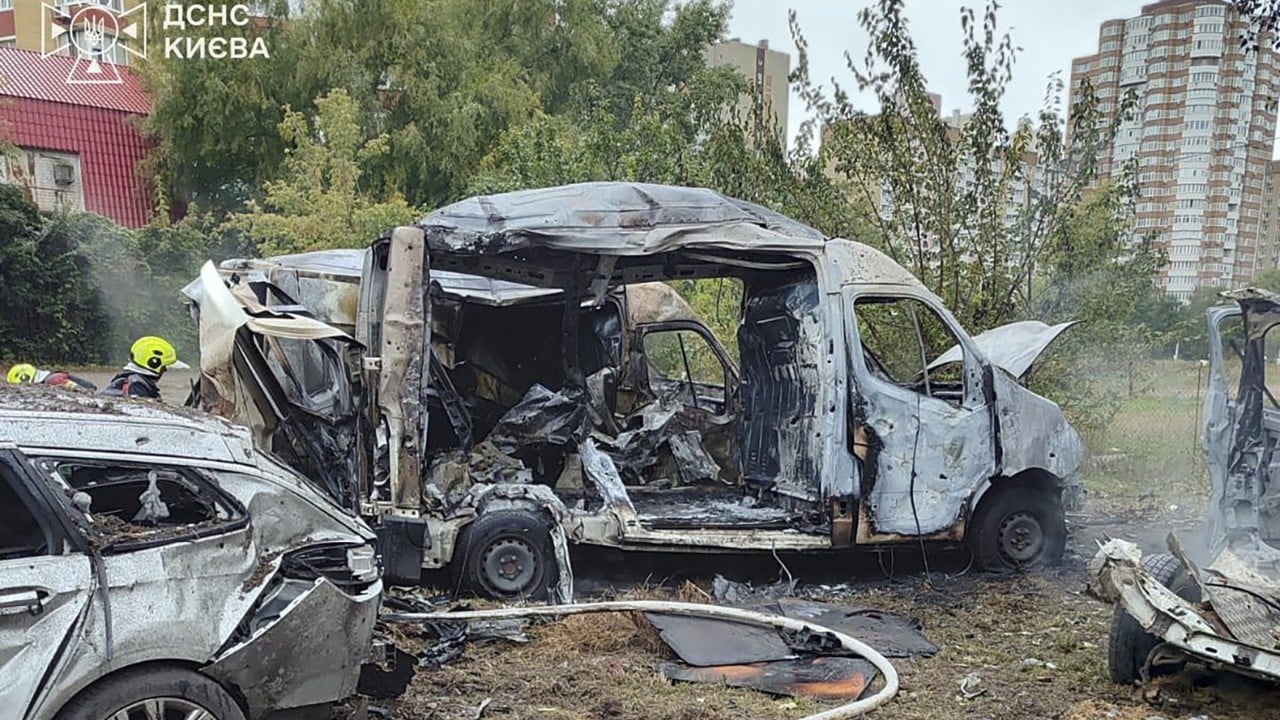
The Washington-brokered push for a Russia-Ukraine energy truce was designed as a low-risk diplomatic off-ramp, a clean partition of war objectives meant to stop the bleeding on power grids before tackling territorial sovereignty.
It is failing because the underlying mathematics of the front line make a sectoral ceasefire an asymmetric trap.
When American negotiators floated the immediate halt to strikes on critical power infrastructure, the pitch assumed both sides possessed equivalent vulnerabilities. They do not. For Kyiv, protection of the electrical grid is an existential matter of urban survival heading into winter, with millions facing blackouts after sustained Russian missile campaigns. For Moscow, the calculus is entirely financial. A moratorium on refinery strikes protects multi-billion-dollar petroleum export streams that directly fund the Kremlin's federal budget.
The Asymmetry of Modern Targeting
To understand why the proposed energy moratorium ran into immediate resistance in Kyiv, one must look at the physical architecture of the conflict. Ukraine’s strategic campaign against Russian oil refineries—waged primarily through long-range unmanned aerial vehicles—was designed to compress Moscow's refined product margins and squeeze fuel supplies for Russian mechanized units.
When Washington proposed freezing these attacks, Ukrainian military planners pointed out a glaring structural imbalance. Kyiv has virtually no domestic refining capacity left to offer as a reciprocal bargaining chip. Meanwhile, Russian long-range missiles and drones retain the capacity to cripple transformer stations, sub-stations, and thermal power plants across every major Ukrainian city.
Asking a nation under daily bombardment to stop degrading the economic engine of its invader in exchange for a verbal promise to spare power substations is not a compromise. It is a one-sided disarmament of Ukraine's primary asymmetric economic weapon.
The Sanctions Quid Pro Quo
Behind closed doors in diplomatic back-channels, the diplomatic maneuvering has moved past simple power grids and into the realm of global commodities. Russian officials have signaled that any formal adherence to an energy standstill is inextricably linked to broader economic concessions, chief among them the rollback of Western sanctions targeting Russian diesel exports and banking mechanisms.
This is where the White House initiative intersects with broader geopolitical anxieties. Ukrainian leadership has argued publicly and privately that easing restrictions on Russian fuel exports simply refills the Kremlin's war chest, providing the capital necessary to sustain high-intensity ground operations in the Donbas.
A temporary pause on refinery strikes that simultaneously unlocks global shipping lanes for Russian petroleum products creates a perverse incentive structure. Moscow gets immediate financial relief while retaining its military positions on the ground.
Strategic Realities on the Ground
Diplomacy requires recognizing when leverage does not match ambition. The structural incentives for compliance are broken because neither belligerent views a partial freeze as a step toward a durable settlement.
Moscow calculates that time, attrition, and the gradual degradation of Ukrainian urban infrastructure favor its long-term campaign. Kyiv calculates that surrendering its long-range drone campaign against Russian energy assets removes the few economic costs Moscow's domestic population actually feels.
Until these fundamental disparities in cost and capability are addressed, announcements of sectoral truces will remain diplomatic theater, fracturing upon first contact with the reality of the front line.
The Russia-Ukraine energy ceasefire proposal tests US policy toward the region
This video report examines the strategic implications and diplomatic hurdles surrounding the U.S.-backed energy truce proposal between Russia and Ukraine.