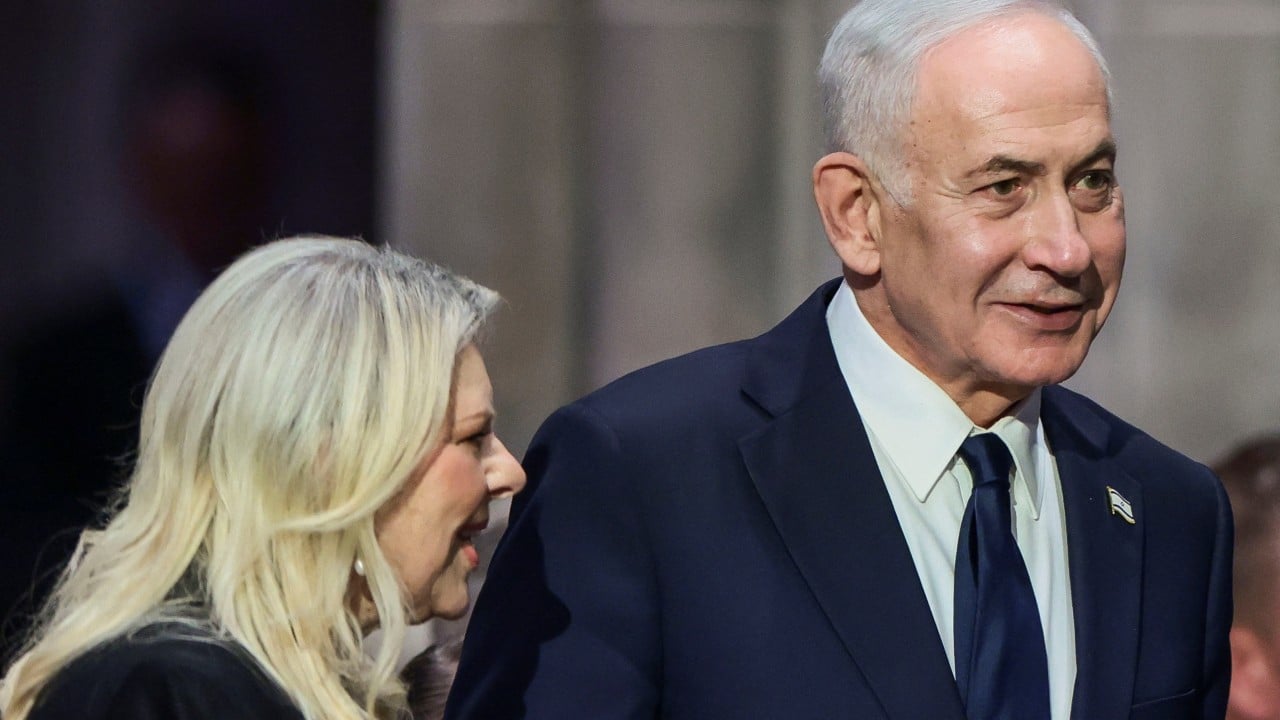
The marble halls of Washington do not echo with raised voices. Power prefers a quieter register. It speaks in the dry rustle of briefing notes, the click of a heavy mahogany door latching shut, and the measured cadence of diplomats who have spent decades learning how to hide their pulse. Yet, beneath the polished veneer of protocol, air can grow thin very quickly.
Imagine standing in the West Wing minutes before an anticipated summit. The air smells faintly of rain brought in on the coats of Secret Service agents and the sharp, bitter notes of freshly brewed black coffee. Outside, the press corps mills about under slate-gray skies, waiting for the symbolic handshake. Inside, the dynamic is entirely different.
Tension is not a loud beast. It is a tightening in the jaw. It is the way a veteran leader checks his watch not to tell the time, but to mark the passing of patience.
This was the atmospheric reality when Donald Trump hosted Benjamin Netanyahu at the White House for high-stakes talks centering on Iran. On paper, the agenda was clean. Strategic alignment. Regional security. Deterrence. But public optics and private friction rarely march in lockstep. Before the cameras even had a chance to capture the mandatory smiles, the friction was palpable.
Irritation.
It is a word diplomats avoid in press releases. They prefer words like "frank exchanges" or "robust discussions." But the truth leaks out through posture. A slightly averted gaze. A clipped answer to a reporter's shouted question. The unmistakable stiffness of two men accustomed to being the final authority in every room they enter, now forced to negotiate the narrow space where their ambitions collide.
To understand why a simple meeting carried such gravitational pull, we have to look past the podiums and examine the architecture of modern statecraft.
Statecraft is rarely about grand visions executed in straight lines. It is an exercise in managing competing clocks. On one side, you have the American political calendar—volatile, rhythmic, driven by domestic cycles and public exhaustion with endless foreign entanglements. On the other side, you have the existential timeline of the Middle East, measured in generations of conflict, where a single miscalculation can redraw maps overnight.
When Trump and Netanyahu met, these two clocks were ticking at violently different speeds.
For the Israeli prime minister, the Iranian nuclear program is not a policy debate. It is an immediate, breathing threat. Picture an air raid siren echoing through the hills of Jerusalem at dusk—a sound that strips away abstraction and leaves only survival. That is the internal landscape Netanyahu brings into every international negotiation. Every conversation about enrichment levels, sanctions waivers, or proxy networks is filtered through the lens of a nation that believes its back is perpetually against a demographic and geographic wall.
For Trump, foreign policy has always been transactional, performative, and grand-scale. Deals are meant to be struck, showcased, and crowned with a signature. The frustration arises when an ally refuses to neatly fit into the expected narrative arc of a successful transaction. Netanyahu is notoriously difficult to box in. He plays a long, stubborn game of strategic autonomy, often moving pieces on the board without waiting for Washington's permission or endorsement.
This creates a peculiar kind of diplomatic vertigo.
Think of two chess grandmasters who agree to play a match, only to discover they are playing completely different games. One is playing chess; the other is playing poker.
The irritation that bled into the public domain prior to those White House talks was the product of this exact mismatch. Trump wanted momentum. He wanted a clear trajectory that signaled strength and control ahead of domestic electoral tests. Netanyahu wanted ironclad commitments, zero daylight between allies, and no diplomatic openings that Tehran could exploit.
When those desires rubbed against each other behind closed doors, the sparks were inevitable.
We often forget that international relations are fundamentally human interactions driven by ego, fatigue, pride, and fear. Leaders do not make decisions in a vacuum of pure logic. They bring their frustrations, their political survival instincts, and their personal histories into the room.
Consider what happens when a superpower attempts to steer a smaller, deeply embattled ally. The superpower feels the burden of global hegemony and expects compliance in exchange for protection. The ally feels the existential weight of local geography and resents any attempt to dilute its sovereign right to self-defense.
Friction is the natural byproduct of that friction coefficient.
In the lead-up to the summit, anonymous leaks from administration insiders began to paint a picture of mounting exhaustion with the relentless pressure from Jerusalem. The messaging from Washington was clear: there are limits to American blank checks when the strategy risks dragging the region into a wider conflagration that neither the American public nor the White House wants to manage.
Yet, walking away is never simple. The web of intelligence sharing, military aid, and deep cultural ties binds the two nations together, no matter how sharp the words get behind closed doors.
When the doors finally opened and the two leaders faced the press, the masks went back on. The smiles were deployed. The handshakes were delivered with the right amount of practiced warmth for the evening news broadcasts.
Yet the air in the room still felt heavy.
Because everyone watching—from the seasoned reporters in the back row to the analysts in foreign intelligence bureaus watching from thousands of miles away—knew what had preceded the cameras. They knew that behind the polite talking points lies a volatile reality.
An alliance forged in shared values and strategic necessity, tested daily by leaders who refuse to blink.
The summit ended, as most do, with communiques and carefully chosen phrases designed to project unity to the world. But the underlying tension did not evaporate with the flashbulbs. It settled into the diplomatic ether, waiting for the next crisis to bring it surging back to the surface.
A quiet room. A heavy oak door. Two men staring across a table at maps that dictate the fate of millions, each wondering how much longer the other will hold the line.


