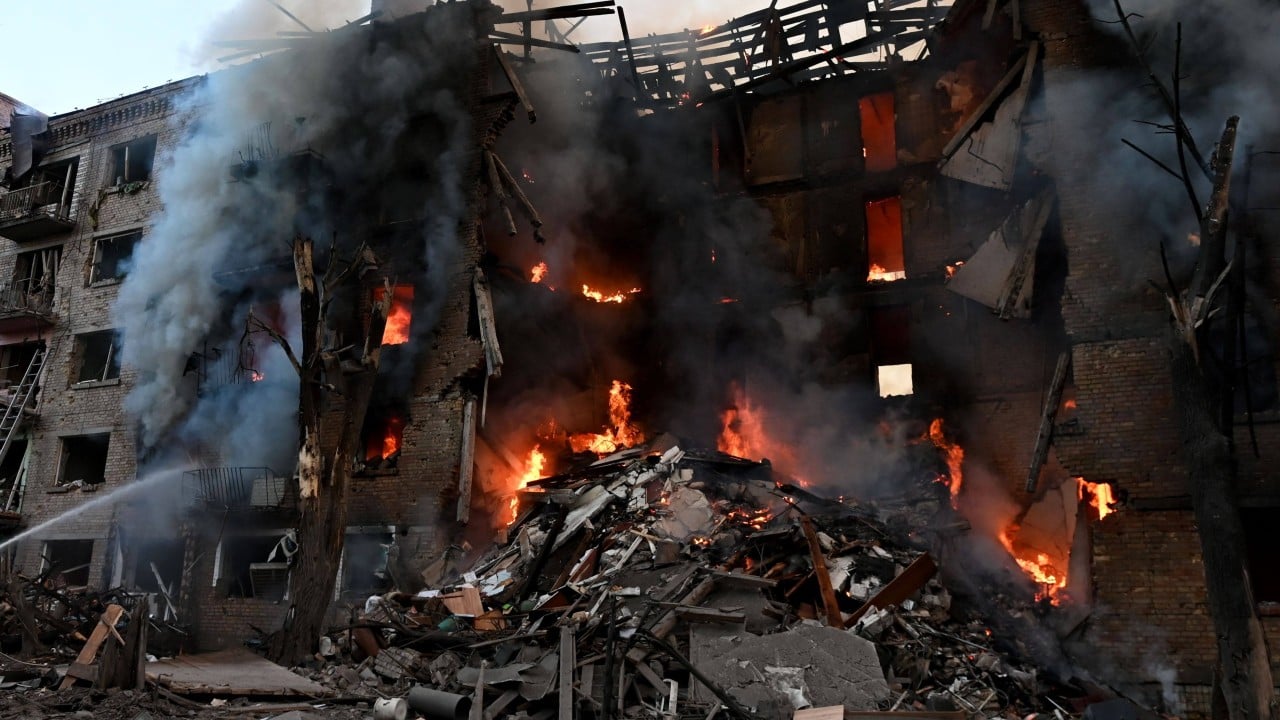
Ukraine has formally demanded an emergency meeting of the United Nations Security Council following a massive wave of Russian airstrikes targeting critical civilian infrastructure. The diplomatic maneuver aims to force a public reckoning over the bombardment, which paralyzed energy grids and left millions without power or water. While Kyiv uses these high-profile sessions to maintain international focus and document potential war crimes, the request highlights a fundamental, systemic flaw in modern geopolitics. The very nation launching the missiles holds absolute veto power over any collective enforcement action the Council might take.
This structural paralysis means the upcoming session will follow a predictable, theatrical script rather than producing a binding resolution. Russia will exercise its veto to block any condemnation, United Western allies will deliver sharp rebukes, and non-aligned nations will call for generic de-escalation. Yet, viewing these emergency meetings as entirely useless misinterprets their true function in contemporary statecraft. They are not mechanisms for immediate conflict resolution; they are battlegrounds for international law, strategic communication, and diplomatic containment. You might also find this connected coverage interesting: Washington Strategy of Maximum Pressure and the Iran Stalemate.
The Strategy Behind Symbolic Diplomacy
Kyiv understands the institutional limits of the UN. Requesting an emergency session is a calculated move designed to achieve specific diplomatic objectives outside the Council chamber.
First, it forces member states to state their positions on the record. Forcing a vote, even one destined to be vetoed, strips away ambiguity. It compels nations that attempt to maintain neutrality, such as China, India, or various states across the Global South, to either abstain or articulate complex justifications for their stance. This public positioning provides Western diplomats with leverage in bilateral negotiations, allowing them to pressure fence-sitting governments behind closed doors. As highlighted in detailed reports by Reuters, the effects are significant.
Second, the sessions serve as an official repository for evidence. The testimonies, photographic evidence, and technical data introduced during these meetings are permanently entered into the UN record. This body of evidence is vital for future legal proceedings before the International Criminal Court or any specialized tribunal established to investigate aggression. It converts immediate battlefield realities into permanent diplomatic facts.
Finally, the timing of these requests often correlates with domestic debates in Western capitals over military aid. By broadcasting the immediate, devastating impact of Russian strikes on a global stage, Ukraine reinforces the arguments of its allies who are pushing for advanced air defense systems, longer-range precision weapons, and fewer restrictions on striking targets inside Russian territory.
The Veto Trap and Historical Precedent
The current gridlock is not an anomaly. It is the logical outcome of a system designed in 1945 to prevent World War III by ensuring that no major global power could be forced into a collective military action against its will. The five permanent members—the United States, Russia, China, France, and the United Kingdom—were given the veto precisely to preserve a balance of power, not to enforce universal justice.
During the Cold War, the Soviet Union and the United States routinely used their veto power to shield themselves and their clients from UN intervention. The Council was paralyzed during the Vietnam War, the Soviet invasion of Afghanistan, and numerous conflicts across Africa and the Middle East. The current impasse over Ukraine is a continuation of this historical pattern, not a departure from it.
Security Council Veto Dynamics in Major Conflicts:
+------------------------+---------------------+-----------------------+
| Conflict               | Primary Veto User   | Outcome               |
+------------------------+---------------------+-----------------------+
| Vietnam War (1960s-70s)| United States       | Blocked UN Action     |
| Afghanistan (1979-89)  | Soviet Union        | Blocked UN Action     |
| Syria (2011-Present)   | Russia / China      | Blocked Sanctions     |
| Ukraine (2022-Present) | Russia              | Blocked Condemnation  |
+------------------------+---------------------+-----------------------+
When a permanent member is the aggressor, the Security Council cannot function as a collective security mechanism. This reality has forced a reassessment of alternative diplomatic pathways within the UN architecture.
Circumventing the Core Structure
Because the Security Council is locked down, diplomats are turning to alternative mechanisms to bypass the veto. The most significant of these is United Nations General Assembly Resolution 377A, widely known as the Uniting for Peace resolution.
Originally passed in 1950 during the Korean War, this mechanism allows the General Assembly to take up matters of international peace and security if the Security Council fails to act due to a lack of unanimity among its permanent members. While General Assembly resolutions are non-binding under international law, they carry immense political weight.
Votes in the General Assembly have repeatedly demonstrated Russia's diplomatic isolation, with overwhelming majorities condemning the invasion and demanding a full withdrawal. These votes do not stop missiles from flying, but they deny Moscow the international legitimacy it craves and complicate its efforts to build alternative economic and political alliances.
Beyond the UN, the real enforcement of international norms occurs through ad-hoc coalitions. The sanctions regimes, asset freezes, and military aid packages that sustain Ukraine are organized entirely outside the UN framework by bodies like the G7, the European Union, and the North Atlantic Treaty Organization. This shift represents a broader migration of global governance away from centralized, universal institutions toward agile, values-based networks of aligned states.
The Realities of Infrastructure Warfare
The Russian strikes driving Ukraine’s emergency request represent a specific strategic doctrine: the systematic degradation of an adversary's national willpower through the destruction of life-sustaining infrastructure. By targeting transformers, generation plants, and water pumping stations, the strategy attempts to induce a humanitarian crisis that forces a population to demand negotiations.
International humanitarian law explicitly prohibits targeting civilian objects. The Geneva Conventions outline that attacks must be limited strictly to military objectives, and any strike must satisfy the principles of distinction and proportionality. Russia frequently claims its targets are dual-use facilities connected to the military supply chain, a legal defense that Western legal scholars and human rights organizations reject as a pretext for terrorizing the civilian population.
The operational reality on the ground is that air defense systems, while highly effective, are facing a battle of economic attrition. A single sophisticated interceptor missile can cost millions of dollars, while the one-way attack drones used to saturate defenses cost a fraction of that amount. This cost asymmetry means that defensive measures alone cannot solve the crisis; Ukraine requires the capability to disrupt the logistics chains and launch sites deep within Russian territory that facilitate these waves of strikes.
The Long Road of Accountability
The diplomatic theater in New York appears completely detached from the cold, dark reality of a winter in Kyiv without electricity. This disconnect breeds cynicism, yet the international legal framework relies on these formal steps to function at all. Every emergency session, every drafted resolution, and every recorded vote builds the framework for eventual accountability.
History shows that international justice moves slowly, often taking decades to catch up with perpetrators of state-sponsored violence. The tribunals for Rwanda and the former Yugoslavia were only possible after significant political shifts occurred within those regions. By forcing the UN to confront these strikes in real time, Ukraine ensures that the documentation remains unassailable, preventing future political leaders from claiming ignorance or revisionist history.
The UN Security Council was never built to police its creators. Expecting it to halt the bombardment of Ukrainian cities misunderstands its architecture. The value of Ukraine's emergency demand lies not in the illusion of an immediate UN peacekeeping intervention, but in the systematic, public exposure of the system's limitations, forcing individual nations to choose between the preservation of established international borders or the acceptance of raw military power as the ultimate arbiter of sovereignty.


