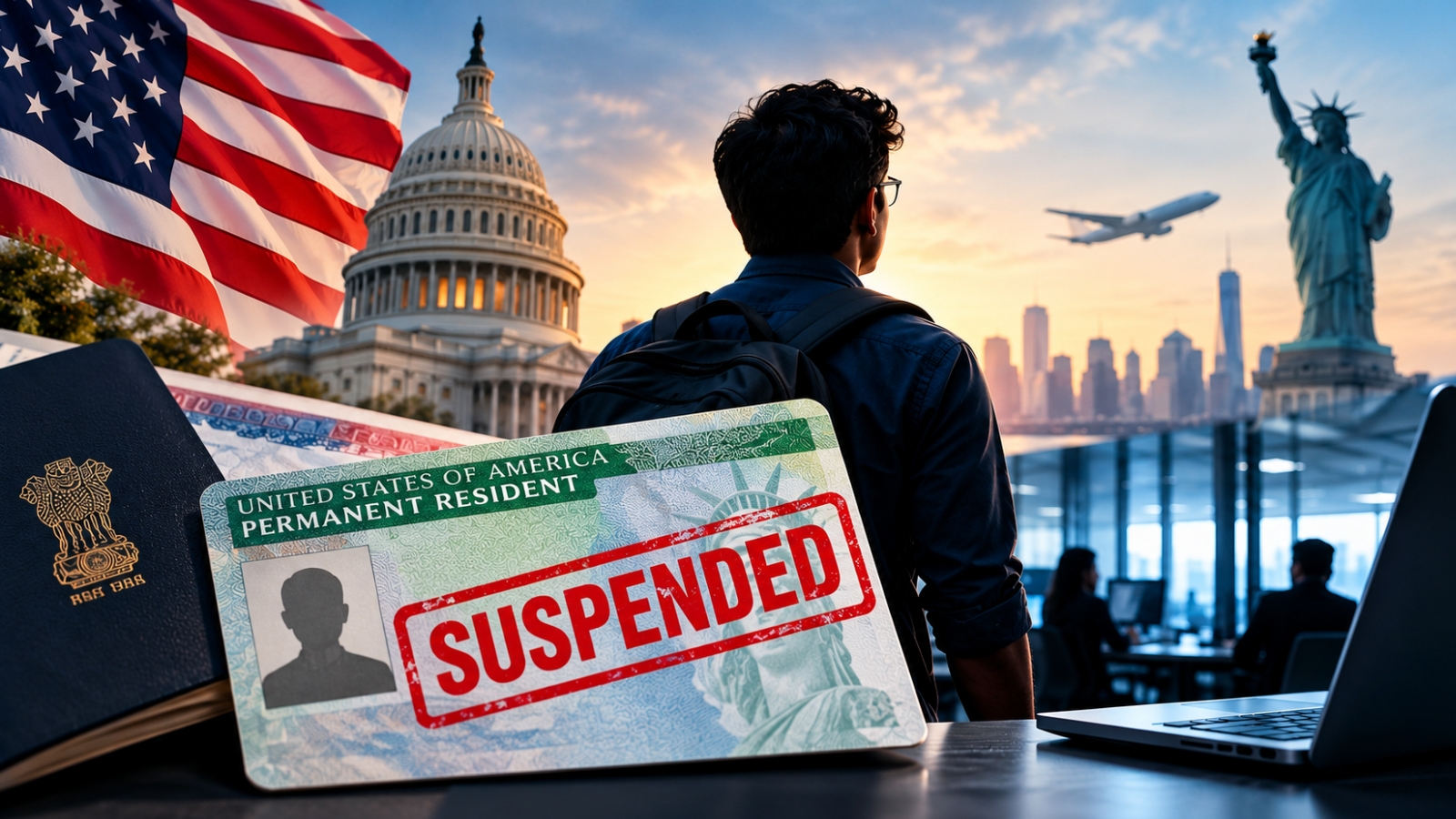
The announcement struck corporate boardrooms and immigration legal departments with the force of a sudden structural collapse. When the United States Department of Labor halted the processing of permanent labor certification applications for eight major technology and outsourcing firms—including Microsoft, Adobe, Cognizant, Infosys, Tata Consultancy Services, Wipro, HCL, and Capgemini—it exposed the fragile foundation upon which modern foreign-talent management rests. For thousands of high-skilled engineers, architects, and product managers, a routine administrative pathway to permanent residency transformed overnight into an indefinite perimeter wall.
This is not a temporary paperwork delay. It represents a fundamental shift in how the federal government scrutinizes corporate sponsorship, leaving thousands of workers stranded mid-journey in the notoriously protracted green card backlog. Recently making news lately: The Silicon Outsiders Who Just Reworked American Defense.
To understand the weight of this suspension, one must look past the press releases and examine the mechanics of the Permanent Labor Certification program, universally known as PERM. PERM is the mandatory first step for most employment-based green cards. An employer must test the domestic labor market, prove that no qualified U.S. workers are available for a specific role, and obtain certification from the Department of Labor before a preference petition can be filed with immigration services. When that machinery stops for a single company, the entire pipeline freezes. When it stops for eight behemoths that collectively sponsor thousands of foreign nationals annually, the shockwave alters labor mobility across the entire technology sector.
The immediate casualties are the individual employees whose priority dates are now frozen in administrative limbo. Consider a hypothetical software engineer named Rajesh, who has spent four years working at a major IT services firm in Redmond. Under normal circumstances, his employer-sponsored PERM application would establish his priority date, allowing him to eventually renew his H-1B visa indefinitely beyond the standard six-year limit. With the PERM processing halt targeting his employer, Rajesh faces the horrifying prospect of his H-1B clock running out before his labor certification can even be filed, let alone approved. Additional insights regarding the matter are detailed by CNET.
Panic triggers predictable reactions. Many workers are attempting hurried lateral moves to unaffected medium-sized tech firms or startups that still maintain active PERM programs. However, this flight is fraught with bureaucratic danger. Moving employers requires transferring an H-1B visa and restarting the grueling PERM process from scratch, throwing away years of accumulated priority dates for those who had not yet reached the I-140 approval stage. Furthermore, as the Department of Labor ramps up audits and investigations into corporate hiring practices, risk-averse employers are tightening their own internal sponsorship policies, making corporate migration far more difficult than it appeared a year ago.
The underlying rationale offered by federal regulators points toward active investigations into alleged program misuse, fraud, or willful misrepresentation. Under federal regulations, specifically provisions within 20 CFR 656.31, authorities hold the statutory power to suspend processing when an employer becomes the target of an ongoing fraud inquiry or criminal proceeding. Yet, the blanket nature of these actions against both massive product-led giants like Microsoft and Adobe and major IT services contractors reveals a broader regulatory hostility toward standard corporate sponsorship models. The government is signaling that the administrative privilege of importing and retaining global talent is subject to sudden revocation if compliance standards are even perceived to waver.
For the affected corporations, the suspension creates an immediate retention crisis. Tech talent is inherently mobile. Engineers who find their long-term residency prospects blocked by their current employer's regulatory penalty will inevitably look for exits. Some will seek employment with firms untouched by the current wave of suspensions. Others will explore self-petitioning routes, such as the EB-1A extraordinary ability green card or the EB-2 National Interest Waiver (NIW), which bypass the PERM requirement entirely.
Yet, pivoting to self-petitioning is an uphill battle. The evidentiary threshold for an EB-1A or NIW is exceptionally high, requiring documented proof of original contributions of major significance, extensive scholarly citations, or leadership roles in critical national industries like artificial intelligence or semiconductor manufacturing. Statistics from immigration adjudications show that approval rates for self-petitioned categories have faced tighter scrutiny and downward pressure, meaning that many engineers accustomed to relying on corporate sponsorship lack the independent publication records or media recognition required to succeed on their own.
The broader ecosystem is already adapting to this new reality. Immigration attorneys are fielding record volumes of consultations from workers desperate to evaluate their remaining legal options before their non-immigrant visa status expires. Human resources departments at unaffected companies are quietly auditing their own compliance frameworks, terrified of becoming the next name on the federal register. Meanwhile, the affected firms find themselves defending their compliance records in federal administrative loops with no publicly guaranteed timeline for resolution.
What remains clear is that the era of predictable, transactional employer-sponsored immigration is fracturing. The suspension of these eight companies serves as a warning shot to the entire industry. The machinery of global tech talent is no longer operating on autopilot, and the cost of administrative non-compliance has shifted from corporate balance sheets directly onto the careers of the workers who build the software powering the modern economy.
This video provides an overview of the recent federal actions and the specific companies impacted by the employment-based immigration suspensions.