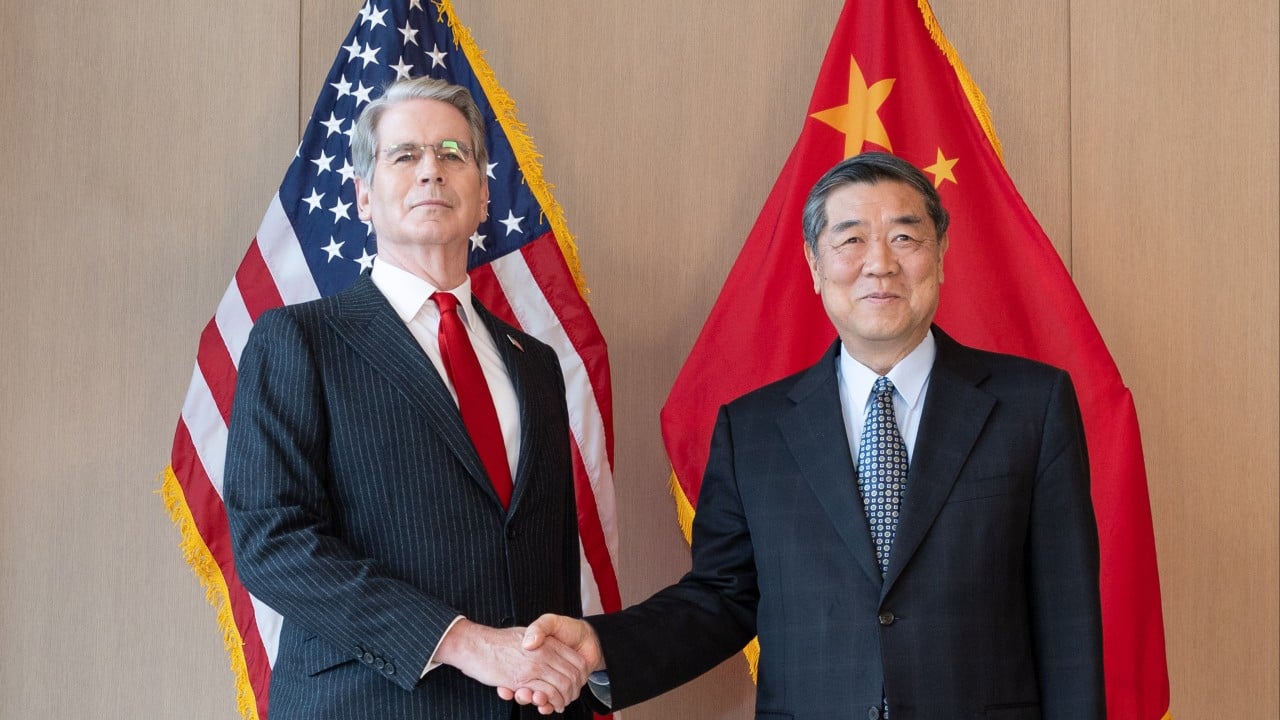
A dedicated diplomatic hotline between Washington and Beijing will not stop an automated global crisis. That is the uncomfortable reality behind bilateral diplomatic agreements intended to manage military and commercial artificial intelligence escalation. When algorithms interact at machine speed, human diplomats picking up a telephone receiver are reacting to a world that has already shifted beyond their control. Treaties built for ballistic missiles fail entirely when applied to autonomous systems designed to adapt, mutate, and execute decisions in milliseconds.
We are watching a replay of 20th-century arms control applied to 21st-century software. Policy makers love red phones. They look good on camera. They evoke the nostalgic tension of the Cold War, conjuring images of weary leaders talking down mutual destruction over secure wires. Yet that architecture relied on a fundamental human friction that no longer exists. Decisions took hours or days. Missiles sat in silos requiring physical keys turned by human hands. If you liked this piece, you should check out: this related article.
Artificial intelligence operates entirely without that friction.
The Ghost of the Cold War Red Phone
The original Moscow-Washington communications link was born from near-death experiences. After the Cuban Missile Crisis exposed the terrifying latency of telegram communication, both superpowers realized they needed a direct circuit to clear up misunderstandings before a stray radar blip turned into a thermonuclear exchange. It was an analog solution for an analog threat. For another look on this story, see the recent update from The Verge.
The underlying premise was simple. Humans commanded machines, and humans possessed the cognitive capacity to pause, reflect, and negotiate.
Today, software commands software. When two algorithmic trading engines trigger a flash crash, or when automated cyber-defense systems engage in autonomous retaliation against a perceived network intrusion, human operators are often reduced to spectators watching logs scroll across a monitor. By the time an analyst notices an anomaly, assesses its origin, wakes up a senior official, and requests a secure channel to a counterpart across the Pacific, the event has already concluded or cascaded into a secondary failure.
A telephone cannot save you from an event that happens in microseconds.
Why Machine Speed Breaks Traditional Diplomacy
Diplomacy requires verification, deliberation, and political cover. Algorithmic escalation requires none of those things.
Consider the mechanics of modern military networks. Both the United States and China are investing heavily in automated command-and-control frameworks. These systems ingest petabytes of telemetry data, satellite feeds, and intercepted signals to evaluate threats and recommend tactical responses in real time. When human-in-the-loop requirements are bypassed for the sake of speed—a necessity when defending against machine-speed attacks—the decision-making apparatus divorces itself from political oversight.
If an autonomous drone swarm operated by one power misinterprets a navigational correction by a commercial vessel or a patrol craft, an automated counter-system might launch a kinetic or electronic response before a human commander even realizes the asset has deviated from its flight path.
What does a diplomatic hotline achieve in that exact window?
Nothing. The hotline is designed for a crisis that unfolds over hours. Algorithmic warfare unfolds over fractions of a second. If Beijing calls Washington to demand an explanation for a defensive counter-strike, the caller is speaking to an administration that is just as surprised by the automated exchange as they are.
The Anatomy of an Algorithmic Flashpoint
To understand why diplomatic channels stumble, look at how software failures propagate across international borders.
Take a hypothetical scenario involving automated financial networks and critical infrastructure. Suppose a proprietary predictive algorithm deployed by a major financial institution misreads foreign currency shifts and automatically liquidates massive tranches of sovereign debt. Simultaneously, an automated risk-mitigation script in another nation interprets this sudden liquidity drain as a coordinated financial attack, automatically restricting cross-border data flows and freezing foreign assets.
Within minutes, automated logistics networks, power grid balancing software, and supply chain dispatchers react to the sudden data choke. The entire cascade happens entirely through automated APIs and machine learning feedback loops.
No general ordered an invasion. No president signed an executive order authorizing economic warfare. Code interacted with code, optimizing for narrow parameters while ignoring the geopolitical fallout.
When the diplomatic hotline finally rings, the officials on both ends are not negotiating a settlement. They are conducting forensic archaeology. They are trying to figure out which proprietary neural network hallucinated a threat three hours prior.
Bureaucratic Inertia and Strategic Distrust
Even if we strip away the technical latency, the human element inside the diplomatic corps remains deeply fractured by mutual paranoia.
Intelligence agencies in both Washington and Beijing view artificial intelligence development through an existential zero-sum lens. Every shared safety metric, every transparent test result, and every cooperative verification protocol is scrutinized for potential espionage vulnerabilities. If you invite foreign observers to inspect your safety guardrails, you expose your proprietary weights, your training data pipelines, and your architectural vulnerabilities.
Consequently, bilateral talks on artificial intelligence safety consistently degrade into public relations exercises. Both sides sign vague communiqués acknowledging the importance of responsible innovation while aggressively accelerating their own classified military deployments.
The incentive structure actively punishes transparency. If one nation unilaterally implements strict safety bottlenecks to appease international regulators while its strategic rival races ahead with unconstrained autonomous deployment, it risks strategic obsolescence. In a high-stakes geopolitical rivalry, fear outweighs caution every single time.
Redefining Crisis Management Beyond the Switchboard
If direct voice channels are inadequate, what actually works?
Security architects must look away from diplomatic switchboards and focus on technical circuit breakers. If we cannot stop an algorithmic conflict with a phone call, we must build systems that can stop themselves.
This requires mutual adoption of hard technical constraints. Automated systems must be hardcoded with mandatory decay functions, requiring periodic cryptographic handshakes from human authorities to maintain operational status. If the handshake fails or if telemetry indicates erratic cross-border escalation, the system must default to a localized safe state rather than escalating further.
Furthermore, nations must establish shared observability protocols. This does not mean opening up classified defense labs for complete inspection. It means creating standardized telemetry formats that allow rival systems to broadcast their operational intent and confidence scores to one another in real time, machine-to-machine.
An algorithm should be able to tell a rival algorithm precisely why it is taking a defensive posture before it executes that maneuver.
Until policy makers stop treating artificial intelligence like a diplomatic dispute and start treating it as an autonomous physical force operating outside human reaction times, every bilateral agreement is merely theater.
The red phone is dead. The code is already running.