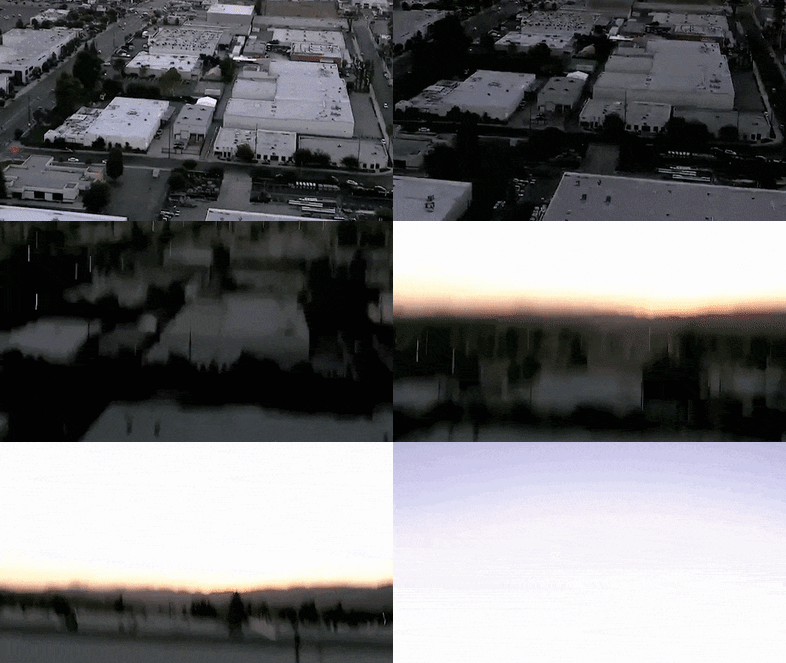
The red light on the studio camera glows. A local anchor freezes, their voice cracking as a breaking news bulletin interrupts the scheduled broadcast. Another news helicopter has gone down. In Los Angeles, the sky is a highway of rotating blades, where television stations compete for the best aerial shot of a freeway chase, a brush fire, or a celebrity pursuit. The romance of the Electronic News Gathering industry masks a brutal, high-stakes operational reality. Behind the live-streamed spectacle lies a volatile mix of saturated airspace, aging airframes, and unrelenting corporate pressure to feed the morning and evening news loops.
The Congested Skyline of Southern California
Los Angeles is not a normal city for aviation. It is a vertical puzzle box. Multiple commercial airports, municipal strips, military installations, and thousands of private aircraft crowd a basin hemmed in by mountains and the Pacific Ocean. Under Visual Flight Rules, pilots flying news choppers must navigate by sight, relying on eyes and instincts while sharing altitude with flight-training students, banner towers, police units, and corporate charters.
The air is crowded. It is loud. It is unforgiving.
When a breaking story erupts, every local station dispatches its bird. They converge on the exact same coordinate. They orbit tightly, circling a wreckage or a suspect vehicle at low altitude. The radio frequencies chatter with competing calls, position reports, and camera directions shouted from the ground. Air Traffic Control handles commercial arrivals at Los Angeles International or Burbank while news crews squeeze into uncontrolled airspace below, operating with minimal buffer zones. One miscalculated vector, one sudden downdraft off the Santa Monica mountains, and the margin for error evaporates entirely.
Financial Pressures and Maintenance Shortcuts
Safety costs money. Television newsrooms have spent the last two decades contracting under severe financial headwinds. Advertising revenue migrated to digital platforms. Ratings shrunk. Yet, maintaining a turbine helicopter or leasing one with a fully vetted crew remains an astronomical expense.
Stations face a constant temptation to cut corners where passengers cannot see. Airframe maintenance schedules are strict on paper, but the pressure to keep a ship operational during sweeps week or a major regional crisis can warp judgment. Older helicopters lack modern safety avionics standard in newer commercial fleets. Terrain awareness warning systems, advanced traffic collision avoidance technology, and crash-resistant fuel systems are expensive retrofits. When corporate parent companies demand year-over-year cost reductions, flight operations department budgets are rarely spared.
Consider the pilot and the photojournalist inside the cabin. They are often working under frantic deadlines, logging long hours without adequate rest, operating complex camera gimbals while simultaneously scanning for other aircraft. Fatigue is an unspoken hazard in aviation journalism. A tired pilot flying a thirty-year-old airframe over a densely populated neighborhood is a disaster engineered by spreadsheet metrics.
The Cognitive Toll of Live Aerial Reporting
The cognitive load placed upon an Electronic News Gathering crew defies conventional flight standards. While a commercial airline pilot focuses purely on navigation and passenger comfort, an ENG pilot must manage aircraft positioning, local wind shears, Federal Aviation Administration radio frequencies, and instructions barked from a news producer over an interruptible foldback audio feed. The photojournalist in the left seat acts as a tactical sensor operator, panning heavy optical lenses, adjusting stabilization, and calling out obstacles. This multi-tasking environment breeds tunnel vision. When the primary objective is capturing a compelling moving image for the broadcast feed, situational awareness regarding surrounding air traffic can quietly degrade.
The Addiction to Spectacle
Viewers tune in for the spectacle. A high-speed pursuit winding through surface streets or a wall of flames marching toward hillside homes demands visual scale. Ground cameras provide context, but helicopters provide omniscient perspective. This editorial addiction shapes newsroom priorities.
Assignment editors do not dispatch a helicopter because public safety requires it. They dispatch it because screens demand motion. The helicopter is an expensive insurance policy against low ratings. When a competing station puts a live aerial feed on air, the rest feel compelled to launch their own birds, doubling or tripling the aerial density over a localized emergency zone.
This mob mentality in the sky transforms a localized incident into a three-ring aerial circus. Pilots are forced to negotiate altitude blocks on the fly, jockeying for camera angles rather than maintaining optimal safety margins. The editorial imperative overrides common sense.
Regulatory Blind Spots and the Drone Resistance
The federal aviation authority sets the baseline rules, but enforcement in chaotic local news environments is reactive, not proactive. Regulations governing minimum safe altitudes contain broad exemptions for newsgathering and public safety operations. A news chopper can legally descend lower than standard commercial traffic if the pilot deems it necessary for reporting purposes.
This legal wiggle room places an immense burden of responsibility directly on the flight crew, who are simultaneously trying to satisfy a news director demanding a tighter shot. Oversight bodies investigate crashes after the wreckage cools, cataloging pilot error or mechanical failure while ignoring the structural incentives that pushed the crew into danger in the first place.
Uncrewed aerial systems, or drones, offer a viable alternative for much of what news helicopters attempt. Drones can hover near a scene, stream high-definition video, and place zero human lives at risk in the event of a mechanical failure. Yet, local stations cling to helicopters with stubborn inertia.
Speed and range remain the traditional arguments. A helicopter can cross the sprawling expanse of the Los Angeles basin in minutes, whereas a battery-powered drone has limited range and strict line-of-sight legal limits under current regulatory frameworks. Furthermore, the cultural cachet of the station-branded helicopter remains a powerful marketing tool. Painted in bright network colors, flying overhead with the station's call letters emblazoned on the tail boom, it acts as a permanent airborne billboard. Broadcasters are reluctant to surrender that brand visibility, even as the operational risks mount.
The physical mechanics of low-altitude flight over an urban sprawl introduce lethal hazards that rarely make the evening broadcast. Power lines, unmarked guy wires, and communication towers form an invisible web across suburban neighborhoods. At low speeds and low altitudes, an engine failure leaves a pilot with seconds to find a patch of asphalt or a stretch of grass wide enough for autorotation without clipping a rooftop or striking a vehicle. In a dense metropolis like Los Angeles, emergency landing zones are virtually nonexistent once you dip below pattern altitude.
Every time a news helicopter spins out of control or drops from the sky, industry executives express deep sorrow. They convene emergency meetings. They pledge renewed commitments to safety. Panels are formed, white papers are written, and operational guidelines are dusted off and updated.
Then the next big story breaks.
The red light on the studio camera glows. The assignment desk screams for live pictures. The rotors spool up, tearing into the smoggy Southern California dawn. The structural incentives that encourage risk have not changed, the airspace has only grown more crowded, and the clock is ticking down to the next unavoidable catastrophe.