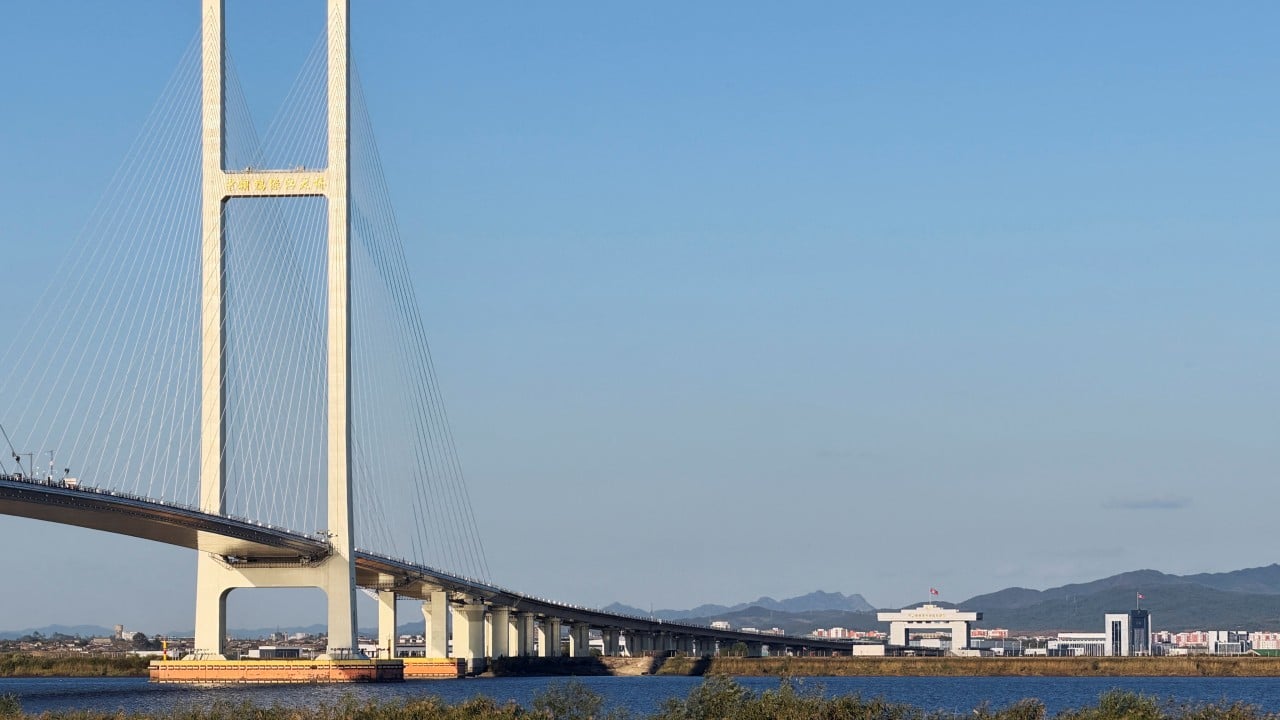
Engineering ambition rarely survives political paranoia. Twelve years ago, concrete and steel spanned the Yalu River, promising a new artery of commerce between Dandong and Sinuiju. The New Yalu River Bridge stood complete, anchored by multi-million-dollar toll plazas on both banks, yet the asphalt remained untouched. No trucks roared across its lanes. No container cargo shifted from Chinese industrial hubs to North Korean markets. The structure became a monument to diplomatic paralysis, a billion-dollar ghost bridge shrouded in bureaucratic fog while trade limped along older, overcrowded pathways.
Rumors of an imminent opening circulate with familiar weariness. Intelligence analysts and cross-border traders have heard these whispers before. Every few years, satellite imagery catches a flutter of activity, or a diplomatic delegation poses for photographs, and speculation surges. Yet, understanding why this concrete leviathan sat dormant for over a decade requires stripping away diplomatic boilerplate and examining the rigid architecture of control that governs the Dandong-Sinuiju corridor. You might also find this similar article useful: What Most People Miss About Police Assessing the Palestine Action Post by the National Security Adviser's Wife.
The Anatomy of a Ghost Bridge
The project began during a different economic climate. In 2011, Beijing and Pyongyang sought to upgrade economic ties, replacing the aging, narrow Sino-Korean Friendship Bridge built during the Japanese colonial era. The new crossing, located a few kilometers downstream, featured four lanes designed to handle heavy freight. China footed the vast majority of the bill, pouring roughly 350 million dollars into a structure meant to cement its economic leverage over its isolated neighbor.
Then construction finished. And nothing happened. As reported in recent coverage by NPR, the results are notable.
The primary barrier was never structural engineering. It was political infrastructure. North Korea lacked the internal network to receive the volume of cargo the bridge was built to discharge. Sinuiju, the landing point on the North Korean side, is a logistical bottleneck. Connecting a modern four-lane highway to a dilapidated, crumbling domestic transport grid makes little sense for a regime obsessed with controlling every kilogram of physical goods entering its territory. Pyongyang feared the economic spillover, the potential influx of unmonitored information, and the sheer administrative burden of managing a high-capacity customs checkpoint.
Furthermore, Beijing realized that an open bridge without reciprocal infrastructure meant carrying all the financial risk while receiving little structural utility in return. China built an immaculate customs facility on its side of the river, complete with sprawling asphalt lots and administrative buildings, but the North Korean side remained an empty field for years. Pyongyang simply did not build the connecting roads required to link the bridge to its national highway system.
Geopolitical Friction Points
Bilateral relations between Beijing and Pyongyang have rarely been a frictionless alliance of ideological brothers. They operate on a transactional axis defined by Chinese regional security interests and North Korean defiance. When Pyongyang pursued nuclear tests in defiance of international sanctions and direct Chinese warnings throughout the mid-2010s, Beijing found itself walking a diplomatic tightrope. Enforcing United Nations Security Council resolutions meant choking off bilateral trade, and leaving the New Yalu River Bridge unopened served as a subtle, non-verbal manifestation of Beijing's frustration.
Sanctions bite hard, but architectural stagnation bites silently. By keeping the bridge closed, Beijing maintained plausible deniability. Trade could continue through existing, easily monitored channels like the older Friendship Bridge or maritime ports, while the new crossing sat as a physical manifestation of stalled negotiations. North Korea, for its part, views external infrastructure projects with deep suspicion. Every foreign-built road or bridge represents a potential conduit for foreign influence, economic dependency, and subversion. Pyongyang's statecraft relies on insulation. Opening a high-capacity trade artery requires a degree of administrative exposure that North Korean leadership historically avoids unless backed into an economic corner.
The Economic Reality of the Frontier
Trade across the Yalu River is the lifeblood of North Korea's import economy. Despite sanctions, consumer goods, raw materials, and industrial inputs flow through Dandong, which handles a massive share of total bilateral commerce. Local traders in Dandong have spent more than a decade factoring the ghost bridge into their logistics models with bitter resignation. Warehouses were built near the approaches; real estate speculators bought up surrounding land expecting a boom that never materialized.
When trade was choked off entirely during the pandemic years, the bridge's irrelevance became absolute. North Korea sealed its borders tighter than at any point since the Korean War, treating the coronavirus not just as a public health threat, but as an opportunity to tighten total state control over foreign trade and internal movement. Even as global commerce resumed, Pyongyang maintained strict quarantines and state-managed trading monopolies, routing all transactions through designated quarantine disinfection stations rather than high-speed modern bridges.
For a border opening to be genuine, the operational mechanics must shift. North Korea must allow Chinese customs personnel deeper access, or establish joint inspection protocols that Pyongyang’s security apparatus typically rejects. Sovereignty, for the Kim regime, is non-negotiable, and sharing border administration with a dominant neighbor is viewed as a dangerous compromise.
The Calculus of Reopening
As whispers of an opening surface once again, analysts must separate diplomatic theater from operational reality. Economic desperation in Pyongyang provides a powerful incentive. North Korea’s reliance on Russian military cooperation has shifted regional dynamics, prompting Beijing to recalibrate its influence on the Korean Peninsula. China wants stability on its border, and leaving a multi-million-dollar asset idle while regional competitors deepen ties with Pyongyang creates an uncomfortable strategic vacuum.
Yet, a ribbon-cutting ceremony does not erase twelve years of systemic friction. Even if trucks eventually roll across the asphalt, the volume will likely be throttled by North Korea’s domestic economic capacity and bureaucratic red tape. The bridge was designed for a future of booming cross-border integration that Pyongyang ultimately rejected.
The structure stands as a testament to the limits of infrastructure diplomacy. Concrete and steel cannot bypass paranoia. Until the political architecture on the northern bank of the Yalu River matches the ambition of the engineering on the southern side, the New Yalu River Bridge remains an expensive monument to a partnership defined as much by mistrust as by proximity.


