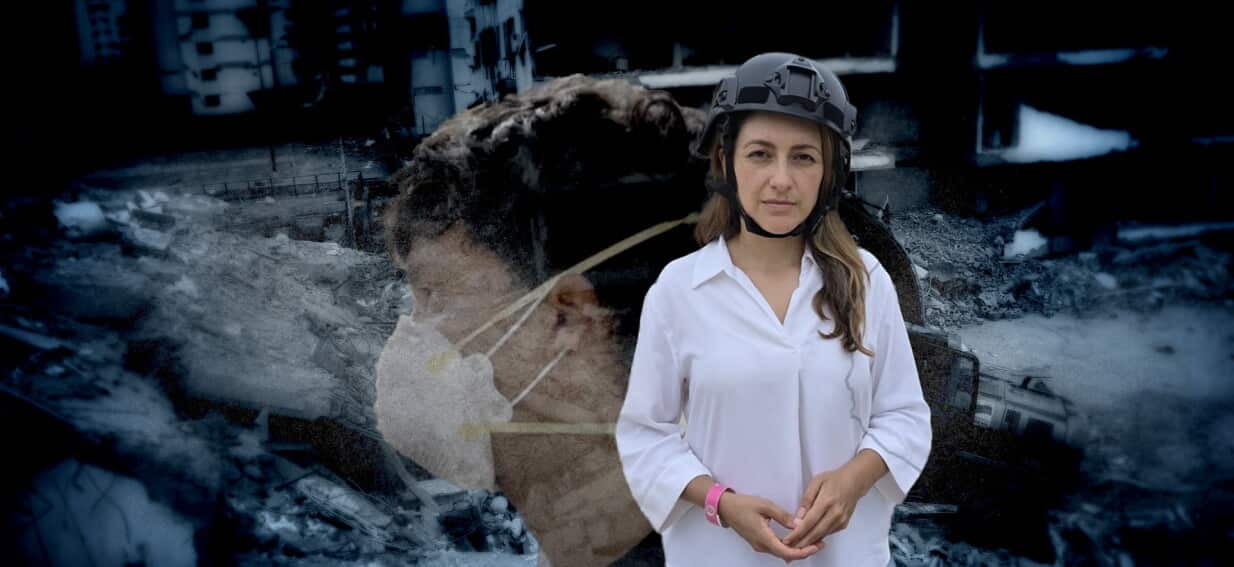
The catastrophic aerial bombardment that tore through the residential blocks of Kyiv and its surrounding suburbs, killing 24 people, was not a random act of wartime cruelty. It was a calculated, cold-blooded exercise in geopolitical leverage. On the eve of a highly anticipated NATO summit in Ankara, Russia deployed a massive wave of 68 missiles and 351 attack drones to exploit a critical, systemic vulnerability that Western allies have failed to fix. Ukraine successfully intercepted hundreds of slower targets, but every single Russian ballistic missile penetrated the capital's defense umbrella. Moscow wanted to send a message to the gathering heads of state, and they used the lives of sleeping civilians to deliver it.
This latest slaughter follows a nearly identical pattern from just four days earlier, when another massive barrage claimed 31 lives in the capital. The double-tap offensive exposes a terrifying reality on the ground. Ukraine has run out of the advanced ammunition required to stop Moscow's heaviest ordnance.
While political leaders prepare to debate defense spending percentages and diplomatic framework agreements in air-conditioned conference halls in Turkey, the immediate survival of Ukraine hinges on a much more stark, industrial calculation.
The Failure of the Interceptor Shield
For more than two years, the Western public has been reassured by reports of high interception rates over Kyiv. This success created a false sense of security. The technical reality of air defense is brutal, asymmetrical, and entirely dependent on continuous logistics.
Ukraine relies on a patchwork of systems, with the American-made Patriot system serving as the ultimate line of defense against high-speed targets. To stop a ballistic missile traveling on a steep, terminal trajectory, air defense teams must fire at least two interceptor missiles to guarantee a kill.
When Russia coordinates an attack involving dozens of ballistic missiles simultaneously, the math breaks down instantly.
During the early hours of Monday, the Ukrainian Air Force tracked 23 ballistic missiles and six hypersonic cruise missiles moving toward targets in Kyiv and the wider region. None were shot down. The failure was not a result of human error or radar malfunction. The batteries simply had nothing left to fire.
President Volodymyr Zelenskyy made this explicit in the immediate aftermath of the strikes, stating that the military faced an acute, exhausting shortage of Patriot interceptor missiles. Western warehouses contain thousands of these munitions, but they are tied up in national strategic reserves or trapped in bureaucratic export pipelines.
The physical destruction in Kyiv’s northern Podilsky district and the outer town of Vyshneve reflects this deficit. When a ballistic missile hits a modern high-rise apartment block, the kinetic energy alone is enough to tear the top five floors of a concrete structure completely in two.
Rescuers spent the day digging through smoking rubble while ammunition from a nearby secondary strike site continued to detonate into the afternoon. This is the direct cost of an empty magazine.
Shifting Ground in Washington and Moscow
The timing of this escalation aligns perfectly with a sudden shift in diplomatic momentum. Just hours before the missiles were launched, news broke of a lengthy phone call between Donald Trump and Vladimir Putin. The American president publicly suggested that a peace agreement is much closer than most observers realize, putting immense pressure on both combatants to secure the strongest possible position before formal talks begin.
Moscow views these aerial campaigns as a vital diplomatic tool. By demonstrating an ability to strike the Ukrainian capital at will, Putin intends to force Zelenskyy to the negotiating table under the worst possible terms. The Kremlin wants to show the incoming American administration that Western air defense assistance is ineffective, hoping to convince Washington that continuing the supply chain is a waste of resources.
It is a psychological operation executed with high explosives.
Yet, this show of supreme strength masks a deep and growing desperation within the Russian economy. Ukraine has spent the early summer months executing its own deep-strike campaign, using fleets of long-range attack drones to hit oil refineries and fuel depots deep inside Russian territory. These strikes have cut into Russia's domestic fuel refining capacity, forcing regional governors in places like Crimea to declare states of emergency and leading to visible fuel shortages at gas stations in Moscow.
The Kremlin’s current air offensive is an expensive, resource-intensive attempt to reassert dominance. Russia cannot sustain this rate of ballistic missile production indefinitely. They are burning through their strategic stockpiles to create a temporary window of absolute terror, banking on the calculation that Western political will will break before their own military industrial complex runs out of components.
The Production Bottleneck and Corporate Hesitation
The most damning aspect of the crisis is that it was entirely predictable. Defense analysts have warned for years that Western industrial capacity is completely unsuited for a high-intensity continental war.
A standard Patriot interceptor missile takes months to manufacture, requiring highly specialized solid-rocket motors and advanced guidance chips that are produced by a tiny handful of defense contractors.
Global Patriot Interceptor Annual Production vs. Ukrainian Consumption Rate
[█] Western Annual Production: ~500 units
[███████████] Estimated Ukrainian Requirement for Full Defense: ~2,500+ units
The global production rate for these interceptors sits at roughly 500 units per year, a number spread across multiple international buyers. During a single week of intensive bombardment, Ukraine can easily burn through ten percent of that global annual supply.
The math is irreconcilable.
Western governments have hesitated to issue the kind of long-term, multi-year procurement contracts that would allow defense corporations to build new factories and expand their assembly lines. Corporate executives refuse to invest hundreds of millions of dollars in expanding production capacity without ironclad guarantees that the demand will exist five or ten years down the road.
This structural timidness has left Ukraine to bear the consequences. While the European Union issues statements declaring that air defense reinforcements are urgently required, those promises do not magically materialize on the launch rails.
The NATO summit in Ankara will feature plenty of rhetoric about unwavering solidarity, but the only metric that matters to a resident sleeping in a Kyiv subway shelter is the number of shipping crates arriving at Polish logistics hubs.
The Illusion of a Quick Peace
The narrative coming out of Washington suggests that a deal can be struck quickly, a clean diplomatic solution that freezes the conflict lines and brings an end to the dying. This perspective ignores the fundamental mechanics of the Russian state apparatus.
Putin has tied his regime's survival to the total subjugation of Ukraine, and every gap in Western resolve acts as an invitation to push further.
If the Ankara summit concludes with nothing more than vague promises of future support and minor adjustments to defense spending targets, Russia will view it as a green light to continue its campaign against Ukraine's urban centers. The current strategy of targeting residential infrastructure is designed to break civilian morale before the onset of autumn, making the city uninhabitable by systematically destroying the municipal power grid and housing stock.
The tragedy in Kyiv is a stark reminder that defense policy is not an academic exercise. When a state lacks the basic industrial capacity to defend its skies, its civilian population pays the price in blood. The dead in Podilsky and Vyshneve were victims of Russian aggression, but they were also victims of a Western alliance that prefers the comfort of political theater to the hard, gritty reality of industrial mobilization.
The conference rooms in Turkey are warm, but the concrete under the rubble in Kyiv is growing very cold.