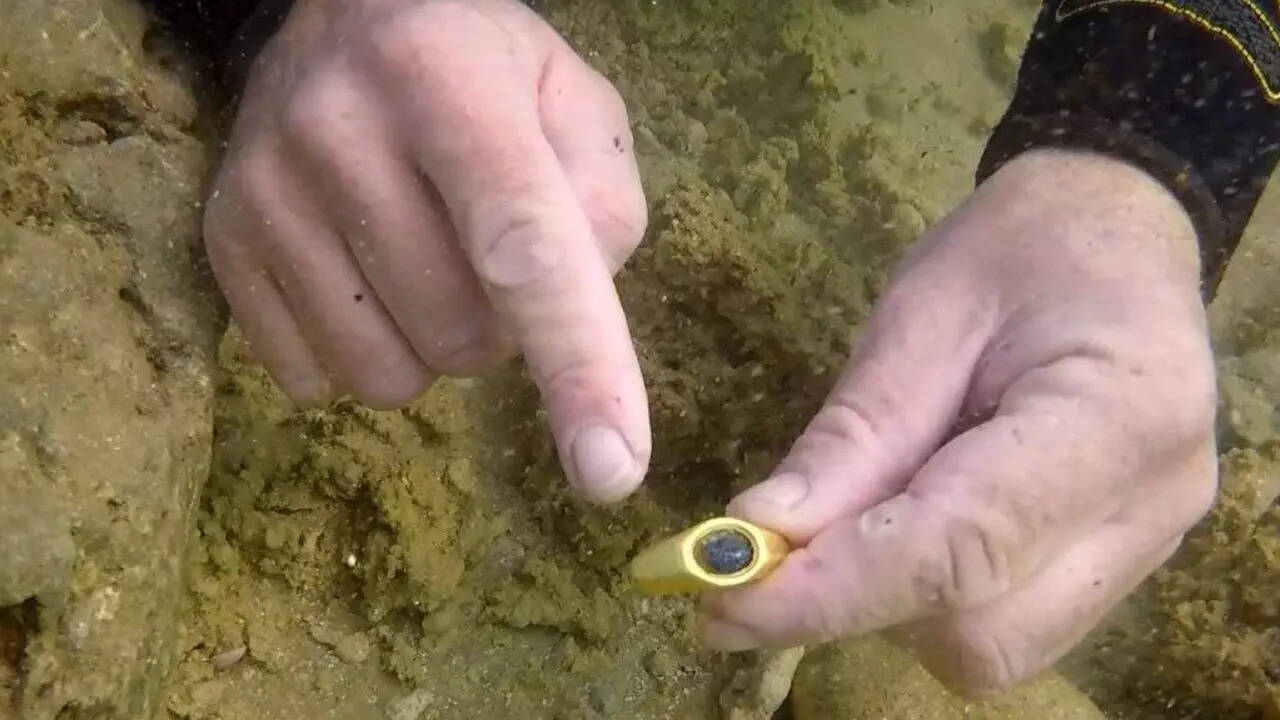
The Mediterranean floor is not merely a graveyard of wooden ribs and oxidized copper. It is a high-stakes, underwater vault holding a fractured history of global trade. While hobbyists and clickbait headlines focus on the "shock" of finding gold coins, they miss the cold reality of the deep. Thousands of ancient vessels rest in the silt, but the majority are not chests of bullion. They are time capsules of mundane commerce—amphorae of rancid fish sauce, lead ingots, and rotting grain—that provide a far more valuable, albeit less shiny, map of how the modern world was built.
Finding these sites used to be a matter of luck for sponge divers. Today, it is a technological arms race involving autonomous underwater vehicles (AUVs) and side-scan sonar that can map the seabed with terrifying precision. However, the more we find, the more we realize that the greatest threat to these ruins isn't the salt water or the passage of time. It is a toxic mix of bureaucratic inertia, the black market for antiquities, and the astronomical cost of ethical recovery.
The Myth of the Sunken Payday
Everyone wants to find the Mother Lode. The narrative of the "treasure hunter" has been romanticized by decades of cinema, suggesting that a single find can retire a crew for life. The reality is far grimmer. Under current international maritime law, specifically the 2001 UNESCO Convention on the Protection of the Underwater Cultural Heritage, the commercial exploitation of shipwrecks for trade or speculation is strictly prohibited.
This means that if a private company spends five million dollars to locate and excavate a Roman merchant ship, they cannot legally sell the artifacts to recoup their investment. They are effectively funding a pro-bono museum exhibit. This has created a massive divide in the industry. On one side, you have cash-strapped academic archaeologists who have the permits but lack the gear. On the other, you have private tech firms with the gear but no legal path to profit.
When a "shocker" find of gold coins makes the news, it usually triggers a decades-long legal battle. Take the case of the Nuestra Señora de las Mercedes. While not in the Mediterranean itself, its fate dictated the rules for the region. After a private firm recovered half a billion dollars in silver and gold, the Spanish government successfully sued for its return. The privateers got nothing. The coins now sit in a museum. The message sent to the private sector was clear: stay away, or stay quiet.
The Deep Sea Black Market
Because legal recovery is a financial dead end, a shadow industry has emerged. Modern looters do not use wooden chests and diving bells. They use sophisticated ROVs (Remotely Operated Vehicles) that can operate at depths of over 1,000 meters, far beyond the reach of coastal patrols.
These operators are not looking for historical context. They are "smash and grab" artists. When a looter finds a site, they often use claws to rip through the hull of a ship to reach the cargo hold. In the process, they destroy the stratigraphy—the layers of sediment that tell archaeologists the date of the wreck, the origin of the crew, and the cause of the sinking. Once a site is looted, its scientific value drops to zero.
The artifacts then disappear into a "laundry" system. A Roman coin found off the coast of Libya might be smuggled into a private collection in Dubai, given a fake provenance record in Switzerland, and eventually sold at a legitimate auction in London or New York. The scale of this trade is estimated in the hundreds of millions of dollars annually. We are losing history faster than we can record it, not because of nature, but because of a market that rewards destruction.
The Amphora Trap
Walk into any coastal museum in Greece, Italy, or Tunisia, and you will see rows of clay jars. These are amphorae, the shipping containers of the ancient world. To the casual observer, they look repetitive. To an analyst, they are data points in a massive economic ledger.
By analyzing the clay composition of these jars, researchers can pinpoint exactly which farm in North Africa produced the olive oil or which vineyard in Sicily pressed the wine. This allows us to reconstruct the GDP of the Roman Empire with startling accuracy. We can see when trade routes shifted due to war, or when a plague in the East caused a spike in prices in the West.
The "shocking" part isn't the gold. It is the scale of the operation. At its peak, the Mediterranean was as crowded with shipping traffic as the English Channel is today. We are looking at an early version of the globalized economy, one that relied on the same principles of supply chain management and risk assessment that we use in the 21st century.
Deep Water Survival and the Oxygen Problem
The physics of the Mediterranean present a unique challenge for recovery. The water is deep, often exceeding 3,000 meters in the Ionian Basin. At these depths, the pressure is enough to crush all but the most specialized equipment.
Human divers are effectively useless for the majority of the sea floor. Even with saturation diving and exotic gas mixes, the "working" limit for a human is roughly 300 to 500 meters, and even that is incredibly dangerous. This leaves the work to robots.
The Cost of Entry
- Research Vessel Rental: $20,000 to $50,000 per day.
- ROV Deployment: $10,000 per day for a work-class unit.
- Conservation Lab Fees: Often 3x the cost of the actual recovery.
Once an object is brought to the surface, the real work begins. An iron cannon or a wooden beam that has been submerged for 2,000 years will disintegrate within hours if exposed to air. The salt crystals inside the material expand as they dry, shattering the structure from the inside out. Conservation involves years of chemical baths and slow dehydration. This is the hidden cost that "treasure hunters" rarely mention. To save a wreck is to commit to a twenty-year mortgage on a pile of wet wood.
The Irony of Preservation
There is a growing school of thought among maritime experts that the best way to preserve these sites is to leave them alone. "In situ" preservation is the current gold standard. By leaving the wrecks where they are, we protect them from the destructive forces of the surface environment and the high costs of conservation.
However, this creates a "dark data" problem. If we don't excavate, we don't learn. If we don't learn, the public loses interest. If the public loses interest, funding for patrols and protection dries up, leaving the sites vulnerable to the very looters we are trying to stop. It is a circular failure of policy.
We are currently in a transition period. New photogrammetry techniques allow ROVs to take thousands of high-resolution photos and stitch them into a 3D digital model. This allows historians to "visit" a wreck in virtual reality without moving a single grain of sand. It is a non-invasive way to harvest data, but it still doesn't satisfy the human urge to touch the past.
The Ghost Fleet of the World Wars
While ancient shipwrecks grab the headlines, the Mediterranean is also littered with the remains of the 20th century. Hundreds of ships from WWI and WWII sit on the seabed, many of them carrying massive amounts of unexploded ordnance and bunker fuel.
These are not "treasures." They are ticking ecological time bombs. As the steel hulls corrode, the risk of a massive oil spill increases. Furthermore, these sites are often war graves. The ethical dilemma here is different: do we disturb the dead to prevent an environmental catastrophe?
The Mediterranean is a crowded space. It is a graveyard, a crime scene, a laboratory, and a junk yard all at once. The "gold" that people talk about is the least interesting thing about it. The true value lies in the stories of the people who sailed these waters—the sailors who died of scurvy, the merchants who went bankrupt when a storm hit, and the empires that rose and fell based on the contents of those clay jars.
The Future of the Deep
The next decade will see a surge in discoveries as sonar technology becomes cheaper and more accessible. We are likely to find more in the next ten years than we have in the last hundred. The question is whether our legal and ethical frameworks can keep up with the pace of discovery.
If we continue to treat underwater heritage as a choice between "leave it alone" or "lose it to looters," we will continue to fail. A middle ground is required—one where private expertise is incentivized to assist public research without the goal of selling off the spoils. Without this cooperation, the treasures of the Mediterranean will remain what they have always been: a source of fleeting wonder for the public and a source of permanent loss for history.
The sea does not give up its secrets easily, but it gives them up eventually. What we do with that information defines our respect for the civilization that preceded us. We are currently failing the test, choosing to focus on the glitter of coins while the ledger of our shared history is torn to pieces by neglect and greed. Stop looking for the gold. Start looking at the data.