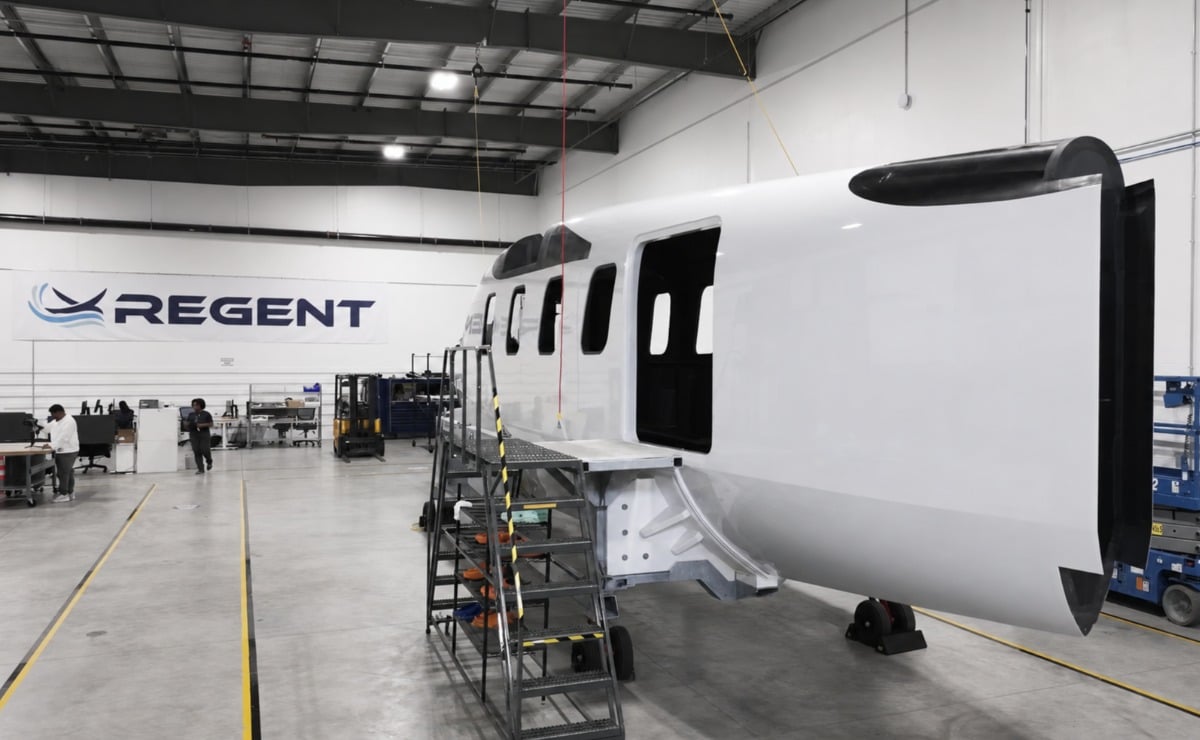
REGENT has finished building its 255,000-square-foot manufacturing plant in North Kingstown, Rhode Island, attempting to scale a transportation concept that has failed for a century. The facility at Quonset Business Park represents a bet that software and advanced composites can finally make wing-in-ground-effect craft commercially viable. While the company holds a claimed $9 billion order book for its all-electric Viceroy seagliders, the venture faces a steep climb through unestablished maritime certification pathways, rigid physical battery constraints, and the harsh realities of open-ocean physics.
To understand the scale of the gamble, one must look past the press releases celebrating the building’s completion. A factory is just an expensive shell until it clears the hurdles of mass production and regulatory approval. Also making headlines in this space: The Concrete Shadow Next Door.
The Ground Effect Mirage
Wing-in-ground-effect (WIG) technology is not new. The Soviet Union spent millions during the Cold War developing massive "Caspian Sea Monsters" that flew beautifully in calm, enclosed waters but broke apart or became uncontrollable when encountering unpredictable ocean swells.
When a vehicle flies within one wingspan of the surface, it experiences a cushion of air that reduces induced drag. It is highly efficient in theory. In practice, the ocean refuses to remain flat. More details into this topic are covered by Gizmodo.
REGENT plans to bypass the traditional WIG trap by utilizing a three-stage operational profile. The vehicle starts on its hull, rises onto hydrofoils to decouple from wave impacts during acceleration, and then takes off into a steady ground-effect cruise at 180 miles per hour.
[ Hull Operations ] ---> [ Hydrofoil Stage ] ---> [ Ground-Effect Flight ]
(Harbor Navigation)       (Wave Decoupling)         (High-Speed Cruise)
The engineering friction exists within the transitions. Moving between hydrodynamic forces and aerodynamic lift requires immense structural integrity and instantaneous flight-control adjustments. A failure in the fly-by-wire software during the handoff from foils to wings can result in a high-speed water impact, an unforgiving scenario for a composite hull packed with passengers.
The Payload Penalty
The Viceroy is designed to carry 12 passengers or a 3,500-pound payload. For a regional transit model to succeed, the vehicle must maintain this capacity over its stated 180-mile range. This is where battery technology imposes its strict boundaries.
Current lithium-ion battery chemistry features an energy density that forces a brutal trade-off between weight and range. Aerospace and maritime engineers know the math well. Every pound of battery added to secure the 180-mile radius directly subtracts from the revenue-generating cargo or passenger capacity.
While a traditional regional aircraft can burn fuel to decrease weight during flight, an electric vehicle carries its dead battery weight from takeoff to landing. The energy required to lift a 15-ton machine out of the water on hydrofoils and push it into the air is massive, meaning the Viceroy will deplete a significant portion of its energy reserves before it even reaches cruising speed.
The Certification No Mans Land
A major obstacle for the Rhode Island venture is the lack of a clear regulatory framework. The Viceroy is too fast to be governed by standard coast guard rules, yet it operates too low to fall neatly under aviation authority.
The company is pursuing maritime certification rather than aviation licensing, arguing that because the craft cannot fly outside of the ground cushion, it remains a boat. The United States Coast Guard has little experience dealing with commercial vessels traveling at triple-digit speeds just feet above the water.
Developing a brand-new safety standard requires years of data collection, destructive testing, and bureaucratic negotiation. International maritime operations will require individual approval from every coastal nation the company hopes to serve, creating a fragmented regulatory environment that could delay commercial deployment far beyond the factory’s production schedule.
The Real Cost of Blue Economy Infrastructure
The Quonset facility was attracted by millions in state tax incentives and the region’s deep history with maritime composites. Building advanced carbon-fiber structures requires specialized cleanrooms, massive autoclaves, and a highly trained workforce capable of identifying microscopic defects in lamination.
While Rhode Island possesses excellent submarine and yacht-building expertise, the production rates required to fulfill a $9 billion order book demand automotive-style scale. The facility must transition from hand-laying composite materials to automated fiber placement without introducing structural voids that could lead to delamination under the cyclical stress of ocean waves.
+-------------------------------------------------------------+
|              Manufacturing Scaling Challenges               |
+-----------------------------------+-------------------------+
| Aerospace-Grade Precision         | Maritime Scale Costs    |
| Zero-tolerance composite bonding  | High-volume assembly    |
| Corrosive saltwater proofing      | Automated quality checks|
+-----------------------------------+-------------------------+
Maintenance infrastructure presents another hidden variable. Saltwater is notoriously destructive to mechanical systems, and carbon-fiber hulls are prone to hidden damage from debris impacts. Operators purchasing these craft will need specialized drydock facilities, advanced non-destructive testing equipment, and technicians trained in both avionics and marine engineering.
The factory walls are up, the concrete floor is poured, and the tooling is being arranged. Yet the true test of the venture will not be its ability to manufacture these machines, but whether the physical limitations of battery storage and the fluid dynamics of a rough sea will allow them to operate as anything more than a niche luxury for calm coastal transit.