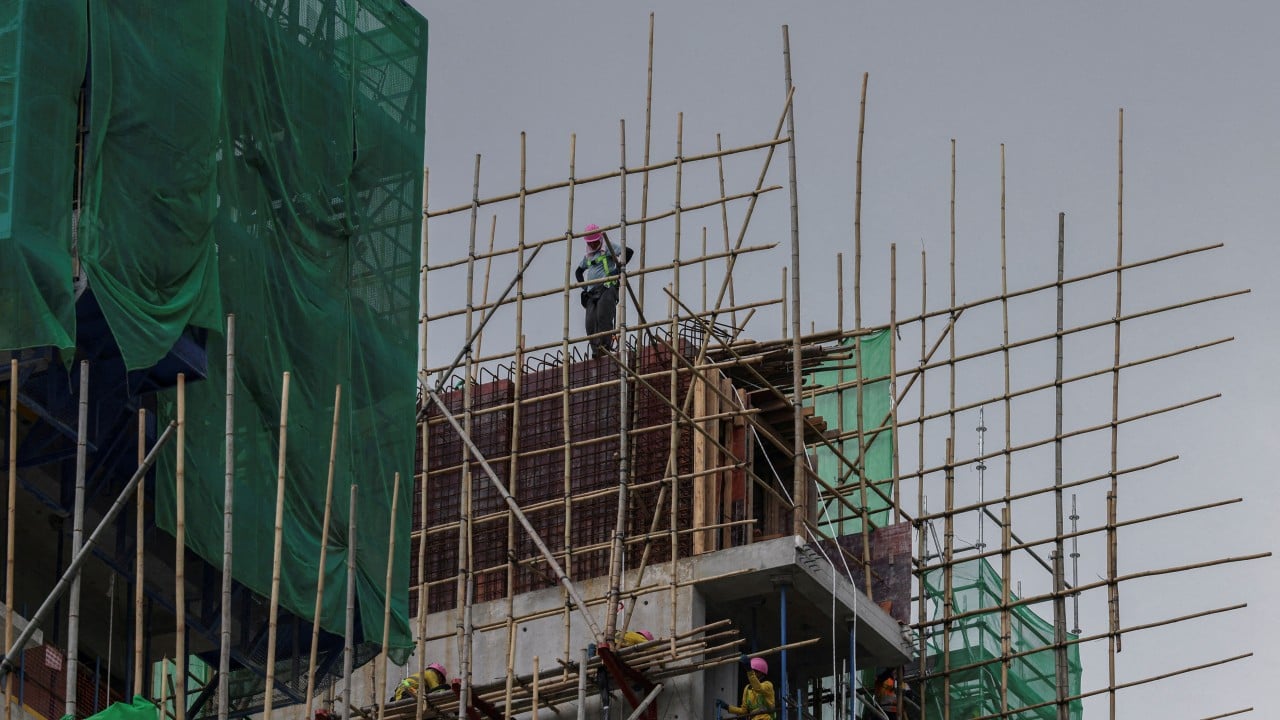
Hong Kong real estate is no longer the bulletproof asset class that minted generations of billionaires. While some analysts point to recent interest rate cuts and the removal of cooling measures as signs of an imminent rebound, they are ignoring a fundamental shift in the city’s economic DNA. The recovery isn't just delayed. It is being structurally redefined by a combination of high financing costs, a massive supply overhang, and a buyer base that has fundamentally lost its "fear of missing out."
For decades, the city operated on a simple mechanism. Supply was kept artificially low, demand was fueled by mainland capital, and borrowing was cheap thanks to the US dollar peg. That mechanism has broken. To understand why the current optimism is misplaced, one must look past the surface-level transactions and examine the yield spreads, the inventory levels in the New Territories, and the shifting migration patterns that are draining the pool of traditional middle-class buyers.
The High Cost of Holding Ground
The most immediate pressure point is the math of the carry trade. In the old world, an investor could buy a flat in Mid-Levels, rent it out at a 2.5% yield, and pay 1.5% in mortgage interest. The "carry" was positive, or at least neutral, while capital appreciation did the heavy lifting. Today, even with recent adjustments, mortgage rates remain significantly higher than rental yields.
When it costs 4% or 5% to borrow money and the property only returns 3% in rent, the investor is "bleeding" every month. This negative carry turns a home from an asset into a liability. Institutional investors and wealthy families are looking at these numbers and realizing they can get a 4% risk-free return on a time deposit or a government bond without the headache of managing tenants or paying stamp duties. Until rental yields rise significantly or interest rates drop back to near-zero levels—neither of which appears likely in the immediate window—the incentive to "buy the dip" remains largely theoretical.
A Ghost Town of Unsold Inventory
The supply side of the equation is equally grim. Developers are currently sitting on a mountain of unsold units. We are looking at roughly 20,000 to 25,000 completed but unsold apartments across the territory. This is the highest level in two decades.
The Developer Dilemma
Major players like Sun Hung Kai, Henderson Land, and CK Asset are caught in a race to the bottom. Because they need to clear their balance sheets and service their own corporate debts, they are forced to price new launches at significant discounts. When a brand-new development in Kai Tak or Northern Metropolis is priced at 2016 levels, it effectively kills the secondary market in that area.
Why would a buyer purchase a ten-year-old apartment from an individual seller when they can get a brand-new unit with developer financing and modern amenities for the same price, or less? This creates a price ceiling that prevents any meaningful recovery in the broader market. The secondary market is essentially frozen, as individual homeowners refuse to sell at a loss, while developers continue to undercut them to maintain cash flow.
The Missing Mainland Savior
The "bigger picture" argument often relies on the idea that mainland Chinese buyers will return in droves to save the market now that the "Buyer’s Stamp Duty" has been scrapped. This assumes that the mainland economy is in the same position it was in 2012 or 2017. It is not.
The wealth effect in mainland China has evaporated. With the mainland property crisis still unfolding and the Shanghai and Shenzhen stock markets struggling for momentum, the surplus capital that used to flow into Hong Kong's luxury sector has dried up. Furthermore, the capital controls enforced by Beijing have never been tighter. Moving the millions of dollars required to purchase a luxury home in Hong Kong is no longer a simple administrative hurdle; it is an act of financial gymnastics that many are unwilling or unable to perform.
Demographic Erosion and the Middle Class Exodus
We must talk about the people who actually live in these homes. Hong Kong has seen a significant migration of its professional middle class over the last four years. When a family moves to London, Vancouver, or Singapore, they don't just leave a job vacancy; they leave a vacant apartment.
The Talent Gap
The government’s "Top Talent Pass Scheme" is designed to fill this void, and on paper, the numbers look promising. Thousands of visas have been issued. However, there is a lag between a visa being issued and a property being purchased. Most of these new arrivals are renters, not buyers. They are testing the waters. They are wary of the city’s political and economic trajectory. They lack the multi-generational wealth that local Hong Kong families used to deploy into the property market.
This shift from an owner-occupier market to a transient renter market fundamentally changes the valuation of real estate. Renters do not drive up prices; they provide a floor for yields, but they don't create the speculative fervor necessary for a bull market.
The Negative Equity Trap
As of the latest data, the number of cases of residential mortgage loans in negative equity has surged. This is a psychological poison for the market. When a homeowner owes the bank more than the house is worth, they stop spending. They stop renovating. Most importantly, they stop upgrading.
The "ladder" of Hong Kong real estate is broken. Usually, a family starts in a small flat, gains equity as prices rise, sells, and moves to a larger home. With prices down 20% to 25% from their peak, the equity for that next jump has vanished. The entire ecosystem of upward mobility in housing is paralyzed.
Office Space and the Commercial Contagion
The residential market does not exist in a vacuum. It is tethered to the commercial sector, which is currently facing an existential crisis. Central's vacancy rates are at historic highs. Grade-A office towers that were once the most expensive real estate on earth are seeing rents slashed as multinational firms downsize or relocate their regional headquarters.
The Remote Work Reality
The shift toward hybrid work is not a Western phenomenon alone; it has taken hold in Hong Kong’s finance and legal sectors. If the firms that employ the people who buy the expensive apartments are shrinking their footprint, the demand for high-end residential property will naturally follow. The synergy between a booming business district and a booming housing market has turned into a mutual drag.
Rethinking the Bottom
The mistake most skeptics and optimists alike make is looking for a V-shaped recovery. They want to know when prices will "bounce back" to 2019 levels. The hard truth is that they might never go back there. 2019 was the result of a perfect storm of zero-percent interest rates, a global liquidity surge, and a specific local supply constraint that no longer exists in the same way.
What we are seeing is a "repricing" of Hong Kong. The city is being integrated more tightly into the Greater Bay Area, which means its property prices must eventually align more closely with the economic realities of that region. While Hong Kong will always command a premium due to its judicial system and currency convertibility, that premium is shrinking.
The Survival of the Cashed-Up
The only winners in this environment are those with zero leverage. Cash buyers are currently finding opportunities that haven't existed in a generation. For a buyer who doesn't need a mortgage, a 30% discount on a prime asset is an attractive entry point. But these buyers are the minority. The market cannot be sustained by the ultra-wealthy alone; it needs the participation of the thousands of families who form the backbone of the economy.
The Policy Dead End
The government has already pulled almost every lever at its disposal. Interest rates are largely out of their control due to the US dollar peg. They have removed the "spices" or cooling measures. They have lowered the thresholds for mortgage insurance. There are very few "silver bullets" left in the chamber.
If these aggressive policy shifts only resulted in a temporary stabilization of prices rather than a rally, it suggests that the downward pressure is structural, not cyclical. You cannot fix a lack of confidence with a change in stamp duty. Confidence is earned through economic growth, wage increases, and political stability—all of which are currently in a state of flux.
Liquidity is the Only Metric That Matters
Forget the asking prices on property portals. The only metric that matters right now is transaction volume. If volumes remain low despite falling prices and lower rates, it means the market has not yet found its floor. Sellers are still anchored to the prices of the past, and buyers are looking toward a cheaper future.
To find the true bottom, we need to see a capitulation. We need to see the "stale bulls"—investors who have been holding on for years hoping for a recovery—finally give up and sell. We haven't seen that mass capitulation yet. Until the "holding at all costs" mentality breaks, the market will continue its slow, painful grind sideways and down.
Investors should stop looking at the 2024 interest rate cuts as a starting gun for a new rally. Instead, they should view them as a necessary survival mechanism to prevent a more systemic collapse. The recovery will not be televised, and it will not be fast. It will be a quiet, multi-year process of de-leveraging and price discovery that will leave the market looking very different than it did a decade ago.
The era of easy money is over. The era of the "safe" Hong Kong property bet has ended with it.
Stop waiting for the old Hong Kong to return and start analyzing the one that actually exists. Examine the debt-to-equity ratios of the major developers and the actual occupancy rates in the outlying districts. If you are waiting for a sign to buy, look for the moment when people stop talking about property at dinner parties altogether. That silence is the only reliable indicator of a bottom.