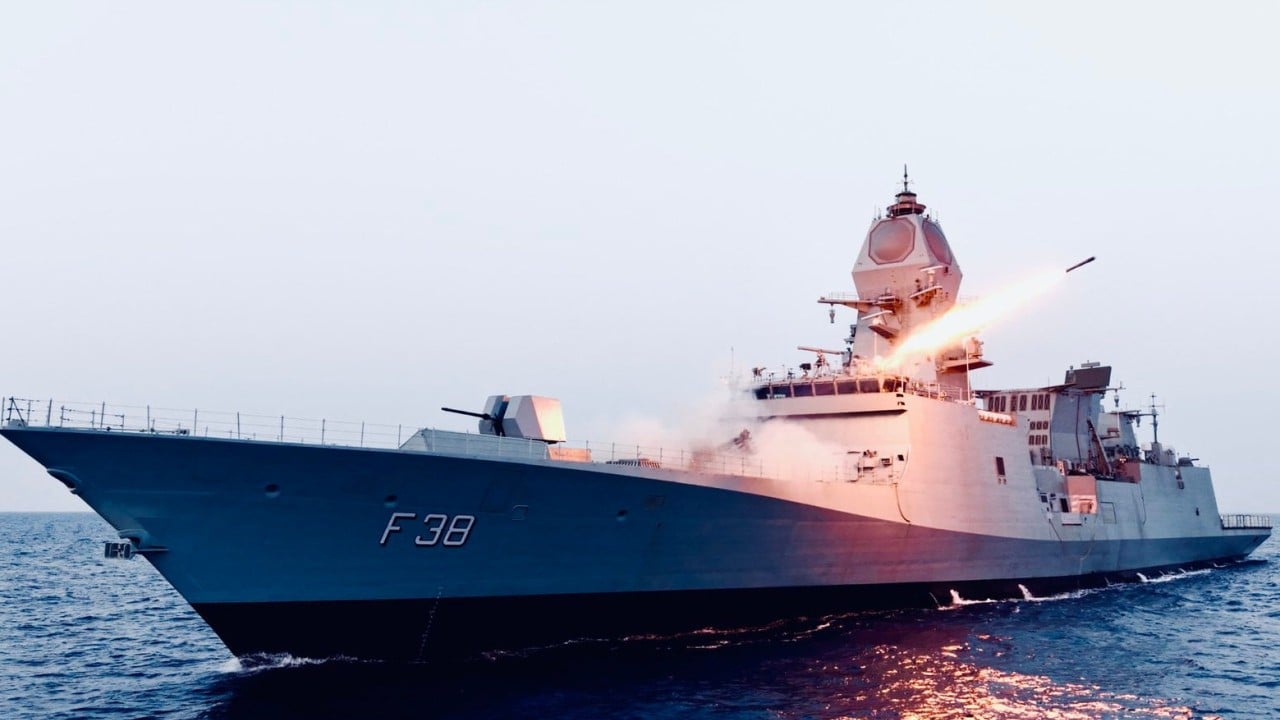
New Delhi wants a 200 ship navy. The ambition is clear, loud, and broadcasted across every defense corridor from South Block to the Indo-Pacific command centers. Planners map out carrier battle groups, nuclear attack submarines, and destroyer flotillas designed to project power across two oceans. Everyone talks about the target. Almost nobody talks about the dry docks.
The modernization narrative sounds clean on paper. China expands its naval footprint into the Indian Ocean through ports in Pakistan and East Africa. Islamabad maintains a steady, asymmetric modernization program targeting regional sea lines. India responds by cementing its status as a net security provider, eyeing a two hundred vessel fleet to secure maritime trade routes and deter Beijing's naval expansion.
Yet numbers conceal structural reality. A fleet consists of steel, electronics, maintenance cycles, and trained crews. When a hull spends half its operational lifespan undergoing refits, total ship counts become an illusion. Counting hulls on a spreadsheet means nothing if half of them sit in dry dock waiting for foreign-sourced spare parts.
The Industrial Bottleneck
Shipbuilding is not an assembly line for automobiles. It requires specialized engineering talent, precise metallurgy, and massive infrastructure. India possesses dynamic shipyards, including Mazagon Dock Shipbuilders and Cochin Shipyard, but the capacity ceiling is real.
Private shipbuilders face structural hurdles. Defense acquisition procedures historically favor state-run yards, creating a protected ecosystem that lacks competitive agility. When a shipyard secures a multi-billion-dollar contract for a destroyer class, delivery timelines stretch. Delays compound. By the time the lead ship enters active service, the combat management systems risk technological obsolescence.
Steel quality provides another constraint. Warship grade steel requires strict metallurgical standards. While domestic producers like Steel Authority of India developed specialized naval alloys, scaling production to meet the demands of a rapid expansion program strains supply chains. A single aircraft carrier demands thousands of tons of high-yield structural steel, pulling resources away from frigate and corvettes programs.
Propulsion and the Foreign Dependency Trap
Naval power relies on the engine room. India still struggles with indigenous marine gas turbine technology. While the combat systems and hull designs show increasing domestic maturity, propulsion systems often depend on foreign partnerships.
Gas turbines for destroyers and frigates historically came from Ukrainian or Russian suppliers. The geopolitical shocks of recent years disrupted these supply chains entirely. Finding alternative propulsion sources requires painful redesigns, structural modifications, and years of recertification.
Nuclear propulsion for submarines presents an even steeper climb. Operating a silent, deep-diving ballistic missile submarine or nuclear attack submarine demands reactor technology that very few nations master. Leasing older hulls from foreign partners provides operational experience, but it does not substitute for domestic design bureaus capable of turning out a continuous stream of nuclear boats.
Two Fronts and the Logistics Nightmare
Strategy dictates force structure. India faces a two-front naval challenge that is distinct from past Cold War paradigms. The western seaboard monitors Pakistani naval assets and the critical choke points leading to the Persian Gulf. The eastern seaboard confronts the expanding reach of the People's Liberation Army Navy through the Malacca Strait and the Andaman Sea.
Covering both expanses simultaneously requires distributed presence. A 200 ship navy sounds massive, but spread across two distinct theaters, the math changes instantly.
Assume a standard naval availability formula. One-third of the fleet is deployed and active. One-third is undergoing training or working up to deployment readiness. One-third sits in deep maintenance or overhaul.
Apply that formula to a 200 ship fleet. Active deployment capability drops to roughly 65 or 70 hulls at any given moment. Divide that number between the Arabian Sea and the Bay of Bengal, factor in routine rotations, and the margin for error narrows significantly.
The Human Element
Hardware requires operators. A modern warship is a floating data center packed with phased-array radars, electronic warfare suites, and complex missile guidance systems. Recruiting smart minds is only the first step. Retention is where the system breaks.
Commercial shipping offers lucrative alternatives for trained naval engineers and electronics technicians. Private maritime logistics firms poach skilled personnel with compensation packages that military pay scales cannot match. The Indian Navy invests years of specialized training into a young officer, only to watch them transition to civilian maritime sectors midway through their careers.
Training capacity for carrier aviation presents a parallel crisis. Carrier operations are unforgiving. Trainee pilots must master arrested landings on a rolling deck in adverse weather. Simulator time helps, but live flight hours dictate proficiency. With a limited number of operational carriers, pilot training bottlenecks restrict how many air wings can be fully qualified at any given time.
Financial Realities and the Defense Budget
Every rupee spent on a new aircraft carrier is a rupee diverted from infantry gear, mountain artillery, or modern air defense networks. India faces a continental threat along the disputed northern border with China alongside its maritime concerns.
Defense budgets are finite. Capital expenditure for the navy competes directly with the modernization needs of the army and the air force. When total defense allocations hover around two percent of gross domestic product, prioritization becomes brutal.
Aircraft carriers consume disproportionate shares of capital budgets. A carrier group does not sail alone. It requires destroyers for air defense, anti-submarine warfare frigates, replenishment tankers, and fast attack submarines for screen protection. Committing to a multi-carrier doctrine means starving other critical defense sectors of necessary modernization funds.
Rethinking the Fleet Architecture
Achieving numerical targets without operational depth creates a paper tiger. Defense planners recognize this vulnerability, sparking quiet debates within naval headquarters about shifting toward distributed, autonomous systems.
Unmanned underwater vehicles and surface drones offer force multiplication without the massive human and financial overhead of traditional hulls. Swarming technologies, long-range coastal defense cruise missiles, and land-based anti-ship batteries provide a more cost-effective deterrent along narrow chokepoints than building blue-water surface combatants for every scenario.
Yet technology hype often outpaces tactical reality. Drones cannot replace a multi-role frigate's capability to conduct humanitarian assistance, disaster relief, or high-end naval diplomacy. The physical presence of a warship remains a diplomatic instrument that software cannot replicate.
The Path Forward
Reaching a 200 ship navy by the targeted deadlines requires more than political willpower. It demands structural reform of defense procurement, total accountability from state-owned shipyards, and genuine integration of private sector manufacturing capacity.
Without streamlined bureaucracy, the timeline slips. Without domestic propulsion solutions, supply chain vulnerabilities persist. Without a competitive compensation structure, the talent drain continues unabated.
The ambition is necessary. The maritime domain dictates economic prosperity, energy security, and geopolitical standing in the Indo-Pacific century. But transforming ambition into operational reality requires confronting systemic failures that spreadsheets cannot fix.
The fleet will grow. The question is whether it will be built on a foundation of industrial strength or sustained by political wishful thinking.