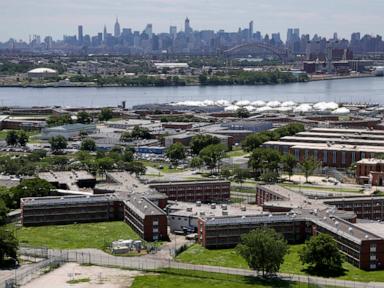
New York City Mayor Zohran Mamdani has officially pushed the legal deadline to shutter the notorious Rikers Island jail complex from August 2027 to December 31, 2032. Unveiled on November 20, 2026, the administration’s 75-page Close Rikers Strategic Plan replaces a physically impossible 2027 mandate with a staggered construction schedule across four boroughs, a $290 million multi-year investment in pretrial diversion, and a high-stakes bet that New York can shrink its jail population by nearly 40 percent without triggering a public safety backlash.
City Hall framed the rollout as an exercise in transparency and resolve. Standing alongside Department of Correction Commissioner Stanley Richards—the first formerly incarcerated person to lead the agency—and City Council Speaker Julie Menin, Mamdani argued that years of drift under previous administrations left the city with no choice but to reset the clock. Yet behind the press conference podium lies a collision of concrete, court backlogs, union resistance, and arithmetic that will test whether New York can actually dismantle one of America’s most dysfunctional penal colonies.
The Architecture of a Five-Year Retreat
When the New York City Council voted in 2019 to close Rikers Island by August 2027, the timeline was always aspirational. By the time Mamdani took office in January 2026, reality had already outrun the statute. None of the four smaller, borough-based jails meant to absorb Rikers detainees were anywhere near completion.
Mamdani’s roadmap formalizes what construction crews and budget analysts have known for years. Subject to City Council legislative approval, the new staggered opening schedule pushes full closure into the next decade:
- Brooklyn (Boerum Hill): Scheduled to open in 2029.
- The Bronx (Mott Haven): Scheduled to open in 2031.
- Queens (Kew Gardens): Scheduled to open in 2031.
- Manhattan (Chinatown): Scheduled to open at the end of 2032.
Each of these vertical facilities is designed to hold roughly 1,040 beds, alongside specialized medical and psychiatric units hosted within municipal hospitals. Mamdani’s team has moved aggressively to expedite two remaining Outposted Therapeutic Housing Units—specifically at NYC Health + Hospitals/Woodhull and North Central Bronx—targeting a 2028 opening to add 236 secure hospital beds for detainees with acute clinical needs. In June 2026, the administration also permanently shuttered the decrepit 1932 North Infirmary Command on Rikers after transferring patients to Bellevue’s therapeutic unit, initiating property handovers to the Department of Citywide Administrative Services.
Even with accelerated hospital beds, the physical footprint of the replacement system reveals the core tension of the entire enterprise. Total capacity across the completed borough system will top out around 4,500 beds, with an operational cap designed for roughly 4,100 people.
The 2,500-Person Arithmetic Problem
Rikers Island held approximately 6,600 detainees in early November 2026. Do the subtraction. To close the island by 2032 without overcrowding the new facilities on day one, New York City must cut its average daily jail population by roughly 2,500 people.
An intermediate benchmark in the strategic plan calls for bringing the headcount down to 5,500 by the time the Brooklyn jail opens in 2029. Achieving that drop requires reversing years of post-pandemic stagnation in the city’s criminal courts, where felony case processing delays routinely trap legally innocent defendants behind bars for months or years awaiting trial.
Mamdani’s blueprint attacks this bottleneck through money and front-end triage. The plan commits $30 million in immediate Fiscal Year 2027 funding—part of a projected $290 million allocation through Fiscal Year 2030—to expand pretrial diversion right at the point of arraignment. City Hall intends to build dedicated service hubs inside or adjacent to courthouses, connecting defendants immediately to supportive housing, benefits, and behavioral healthcare rather than putting them on a Department of Correction bus to the East River.
The administration is also scaling up its Supervised Release Intensive Case Management pilot citywide and slashing planned bed capacity at the Queens women’s facility from 450 down to 250, betting that community-based alternatives can safely absorb hundreds of women currently cycling through detention.
Critics across the ideological spectrum see gaping vulnerabilities in these numbers. Conservative policy analysts at the Manhattan Institute quickly labeled the 4,100-bed target a fantasy, arguing that New York has failed for half a decade to meaningfully reduce its daily census without loosening detention standards for repeat offenders. On the opposite flank, abolitionist groups and socialist commentators accused Mamdani of breaking a core promise by keeping a famously violent island complex operating for six more years while sinking roughly $16 billion into new concrete towers.
Why Brick and Mortar Cannot Fix Culture
A jail is not merely a building. It is an institutional ecosystem, and Rikers Island’s ecosystem has been in systemic collapse for over a decade, plagued by chronic staff absenteeism, rampant contraband, use-of-force spikes, and dozens of in-custody deaths that brought the department to the brink of a federal receivership.
Moving 4,100 people from a decaying island next to LaGuardia Airport into gleaming high-rises in Kew Gardens or Chinatown will not automatically erase the operational habits of the agency running them. Mamdani acknowledged as much by pairing the real estate timeline with an overhaul of Department of Correction internal rules. His administration has begun phasing out long-standing emergency executive orders that suspended basic minimum standards—rules governing detainee hygiene, overcrowding limits, officer shift caps, and internal disciplinary procedures.
Bringing in Stanley Richards as commissioner was a deliberate signal that City Hall wants a cultural reset from the top down. Yet the rank-and-file workforce remains deeply skeptical, if not outright hostile. Benny Boscio, president of the Correction Officers’ Benevolent Association, rejected the borough-based model within days of the announcement, demanding that the city scrap the four urban towers and instead build modern facilities directly on Rikers Island.
The union’s resistance highlights an operational reality rarely discussed in City Hall press releases. Managing four vertically stacked, high-rise jails scattered across dense residential and commercial neighborhoods presents entirely different logistical headaches than running a sprawling, isolated campus. Elevators replace corridors. Transporting detainees to court appearances—supposedly the great efficiency advantage of proximity to borough courthouses—still requires tightly choreographed internal movement. If staffing ratios remain distorted by sick leave and attrition, vertical jails can lock down just as easily as horizontal ones.
Neighborhood Pushback and the Chinatown Flashpoint
While criminal justice reformers focus on bed counts, residents living next to the construction sites are fighting a war over zoning, noise, and neighborhood survival. Nowhere is that friction sharper than in Lower Manhattan.
The Manhattan site, slated to be the final piece of the puzzle in 2032, sits directly adjacent to Chinatown. Local community advocates have spent years warning that excavating and erecting a massive detention tower in a dense, working-class immigrant neighborhood threatens fragile small businesses and vulnerable seniors. A third of the surrounding community lives below the poverty line, and residents have already endured years of demolition dust, street closures, and structural vibration.
Community opposition alone will not stop a project backed by both the Mayor and the City Council Speaker, especially with early site work already underway across the boroughs. However, litigation, environmental reviews, and construction bottlenecks in dense urban footprints are notorious for devouring schedules. In New York City municipal construction, a 2032 target date is rarely a guarantee; it is an opening bid.
What Happens to the Island Itself
A secondary battle is already brewing over the 400-plus acres of landfill sitting in the East River once the last detainee leaves. Under the Renewable Rikers framework championed by environmental justice advocates and City Council Criminal Justice Committee Chair Sandy Nurse, the island is supposed to be reborn as a hub for green energy infrastructure, wastewater treatment consolidation, and climate resilience.
Mamdani’s strategic plan nods heavily toward this vision. It allocates $67.5 million to begin phased demolition of decommissioned buildings on the island as early as 2027, reactivates the Rikers Island Advisory Committee to issue formal reuse recommendations by spring 2027, and pledges to explore near-term solar and battery storage installations on transferred parcels.
Yet here, too, timeline slippage carries hidden costs. As long as active jails remain on Rikers Island through 2032, the entire island remains a high-security zone. Integrating civilian environmental workers, heavy utility construction, and public planning processes onto an active correctional perimeter creates security complications that will inevitably slow down green redevelopment. Furthermore, the city still has not finalized where to relocate dozens of non-jail Department of Correction administrative, training, and logistics operations currently housed on the island that will not fit inside the space-constrained borough towers.
The Decisive Factor Nobody Controls
The CUNY Institute for State and Local Governance projects that closing Rikers and operating a leaner, modernized borough system could eventually save taxpayers more than $1.2 billion annually in staffing costs. That long-term fiscal dividend—alongside the moral imperative of ending decades of documented brutality—is what keeps the political coalition behind closure intact.
Still, Mayor Mamdani’s 2032 plan rests on an assumption that sits largely outside City Hall’s direct command. A mayor can fund courthouse social workers, build hospital beds, and sign capital contracts for concrete and steel. A mayor cannot force state judges to set lower bail, compel district attorneys to decline prosecutions, or speed up glacial felony trial calendars in New York’s state-run Unified Court System.
If violent crime ticks upward over the next six years, or if state judges grow more conservative with pretrial detention decisions, the city’s jail population will not drop from 6,600 to 4,100. And if that headcount refuses to fall, New York City will arrive at December 31, 2032 with four brand-new, multi-billion-dollar borough jails full to capacity—and thousands of detainees still locked on Rikers Island with nowhere else to go.