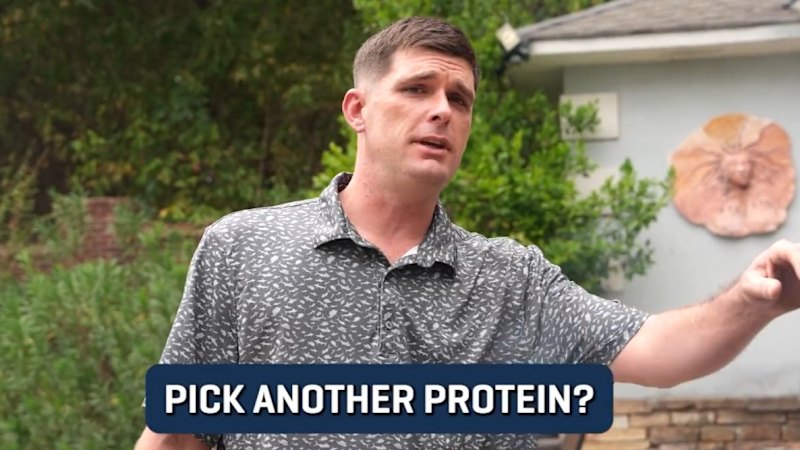
The "pick another protein" advertising campaign represents a rare, scorched-earth offensive in modern food marketing, directly attacking rival meat and dairy industries rather than merely promoting a single product's benefits. Designed to shock grocery shoppers out of habitual purchasing patterns, the campaign weaponizes environmental guilt, nutritional anxiety, and supply-chain transparency to force a binary choice at the meat counter. While legacy agricultural lobbies have scrambled to contain the fallout, the real story isn't the shock value of the commercial itself. It is the desperation of an alternative protein sector fighting for survival after years of overpromising and underdelivering on Wall Street.
The Anatomy of a Scorched-Earth Campaign
Most food advertising relies on appetite appeal. You show sizzling fat, smiling families, and golden-brown crusts. You sell comfort.
The "pick another protein" strategy burns that playbook to the ground. By confronting consumers with the stark resource costs and industrial realities behind conventional animal agriculture, the campaign operates less like a grocery ad and more like a political attack spot. It breaks the unspoken truce among major food conglomerates, where brands compete on price, convenience, or flavor profiles without actively demonizing adjacent aisles in the supermarket.
This shift is calculated. For nearly a decade, plant-based and precision-fermented brands tried to win market share through gentle persuasion. They positioned themselves as virtuous upgrades—easy swaps for consumers who wanted to feel good about their dinner choices without sacrificing taste. That soft-sell approach hit a brick wall when inflation spiked and shoppers retreated to familiar, cheaper staples. When polite persuasion stops moving inventory, marketers reach for disruption.
Breaking the Grocery Store Truce
Traditional meat producers—beef, pork, and poultry giants—have spent decades insulating their supply chains from consumer scrutiny. Packaging uses pastoral imagery of red barns and open pastures, even when the product originates from concentrated animal feeding operations.
The "pick another protein" messaging tears down that visual buffer. Instead of asking shoppers to try something new, it demands they justify what is already in their cart. Behavioral economists call this loss aversion framing. People are far more motivated to avoid making a perceived bad or harmful choice than they are to seek out a marginal improvement. By framing conventional protein as an outdated, costly habit, the ad tries to trigger immediate cognitive dissonance in the middle of a routine shopping trip.
The Financial Pressure Behind the Provocation
You do not launch an aggressive, polarizing ad campaign from a position of comfortable market dominance. You launch it when your burn rate is climbing and retail shelf space is shrinking.
Between 2019 and 2021, venture capital poured billions of dollars into alternative proteins. Valuations soared on the assumption that consumers would rapidly abandon animal products once plant-based and lab-grown mimics hit price parity and matched texture. That thesis collapsed under basic economic friction. Scaling bioreactors and extrusion facilities proved vastly more expensive than tech investors anticipated. Meanwhile, legacy meat companies fought back with aggressive pricing, clean-label counter-messaging, and their own blended product lines.
By 2024 and 2025, the sector faced a brutal reckoning. Grocery chains began trimming underperforming SKUs from refrigerated cases. Stock prices for publicly traded plant-based pioneers cratered. Against that backdrop, a safe, middle-of-the-road marketing campaign is a death sentence. Brands need earned media. They need outrage, debate, and social media virality to generate impressions they can no longer afford to buy through traditional television media buys.
The Economics of Outrage Marketing
Advertising agencies understand a simple mathematical reality about modern media consumption. A forgettable commercial requires tens of millions of dollars in paid placement to register with audiences. A polarizing commercial generates millions of dollars in free news coverage, regulatory complaints, and social media arguments within forty-eight hours.
Consider a hypothetical scenario where a mid-sized challenger brand has a $5 million quarterly marketing budget. If they spend that money on standard lifestyle ads showing happy friends grilling veggie burgers, they reach a small fraction of their target demographic once or twice. If they spend that same budget on a provocative "pick another protein" spot that triggers formal complaints from cattlemen's associations and sparks cable news segments, their effective reach multiplies tenfold. The controversy is not an unintended side effect. It is the primary media-buying strategy.
How Legacy Agriculture Fights Back
The blowback from conventional meat and dairy lobbies follows a predictable, well-funded script. Having weathered decades of scrutiny over everything from saturated fat to antibiotic use, agricultural trade groups possess immense political and regulatory infrastructure.
When an attack ad lands, the response unfolds across three distinct fronts:
- Regulatory challenges: Trade groups immediately petition advertising standards boards and federal regulators, arguing that environmental or nutritional comparisons in the ad are misleading, unsubstantiated, or disparaging to agricultural commodities.
- Legislative pushback: Lobbyists accelerate state-level labeling laws designed to restrict alternative brands from using words like "meat," "milk," "burger," or "steak," forcing them onto awkward descriptive terrain.
- Counter-narrative campaigns: Industry checkoff programs launch positive, heritage-focused campaigns emphasizing rural livelihoods, regenerative grazing practices, and nutrient density.
This institutional muscle is formidable. Unlike tech startups, which rely on quarterly venture funding, commodity checkoff programs are funded by mandatory assessments on every head of cattle or gallon of milk sold. That creates a permanent, self-replenishing war chest dedicated to defending market share.
The Consumer Psychology Trap
Aggressive negative advertising carries a massive risk in the food sector, one that political consultants rarely have to worry about. Voters only have to pull a lever once every few years. Shoppers have to eat three times a day.
Guilt is a terrible long-term motivator for repeat grocery purchases. While shock tactics can drive initial trial or spark dinner-table arguments, food remains deeply tied to culture, comfort, and personal autonomy. When consumers feel lectured or shamed by a brand, they frequently exhibit psychological reactance—an instinctive pushback against perceived attempts to limit their freedom of choice.
In practical terms, telling a tired parent rushing through a supermarket at 6:00 PM that their dinner choice is ruining the planet often backfires. Instead of switching aisles, the shopper resents the brand delivering the lecture. Even worse, they may project that resentment onto the entire alternative protein category, associating plant-based or fermented foods with self-righteousness rather than deliciousness.
The Unresolved Sensory Gap
No amount of clever copywriting can overcome a mediocre eating experience. For decades, I have watched food trends rise on moral or health claims only to collapse when the product failed the second-bite test. Low-fat snacks in the 1990s. Sugar-free baked goods in the early 2000s. Consumers will forgive a lot for a lower price, and they will tolerate minor compromises for convenience, but they will not permanently adopt a staple food that tastes worse than the original.
The "pick another protein" narrative attempts to bypass the sensory debate entirely by shifting the conversation to ethics and efficiency. Yet at the kitchen table, sensory reality always reasserts itself. If a shopper takes the ad's advice, buys an alternative product, and finds the texture rubbery or the ingredient list overly processed, the ad has actually accelerated their permanent rejection of the category.
The Overlooked Third Option in the Protein Wars
While the public brawl pits high-tech food startups against industrial livestock conglomerates, both sides are ignoring the quietest, fastest-growing trend in consumer behavior. Shoppers are increasingly bypassing engineered mimics altogether in favor of traditional, minimally processed whole foods.
Sales data across major retail chains consistently shows that when consumers reduce their red meat intake, they rarely make a one-to-one swap with an ultra-processed burger alternative. Instead, they reach for eggs, canned fish, Greek yogurt, lentils, chickpeas, and tofu. These foods require zero venture capital, carry no confusing marketing baggage, and cost a fraction of engineered substitutes.
Why Whole Foods Win on Trust
Consumer skepticism toward ultra-processed foods has reached a generational high. Shoppers read ingredient panels far more closely than they did ten years ago. When an alternative protein product requires twenty-two ingredients—including methylcellulose, isolated protein concentrates, and industrial seed oils—to mimic a single-ingredient steak, the marketing message fractures.
Legacy meat producers exploit this vulnerability relentlessly, running simple ads comparing a one-ingredient beef patty against a paragraph-long chemical roster. The "pick another protein" campaign tries to keep the spotlight on agricultural inputs like water and land use, desperately trying to steer consumers away from comparing nutrition labels in the aisle.
What This Escalation Means for the Future of Food Marketing
The gloves are officially off in the protein aisle. We are entering an era where food marketing will increasingly resemble pharmaceutical or political advertising, complete with comparative claims, regulatory skirmishes, and aggressive framing.
For brands operating in this space, the margin for error has vanished. Shock value can buy attention for a news cycle, and sharp copy can rattle an entrenched competitor's boardroom. Neither can build a durable consumer habit. Until alternative protein makers solve the fundamental equation of price, taste, and clean ingredients, provocative ads will remain a loud distraction from an unresolved business model. Consumers do not eat manifestos. They eat food.