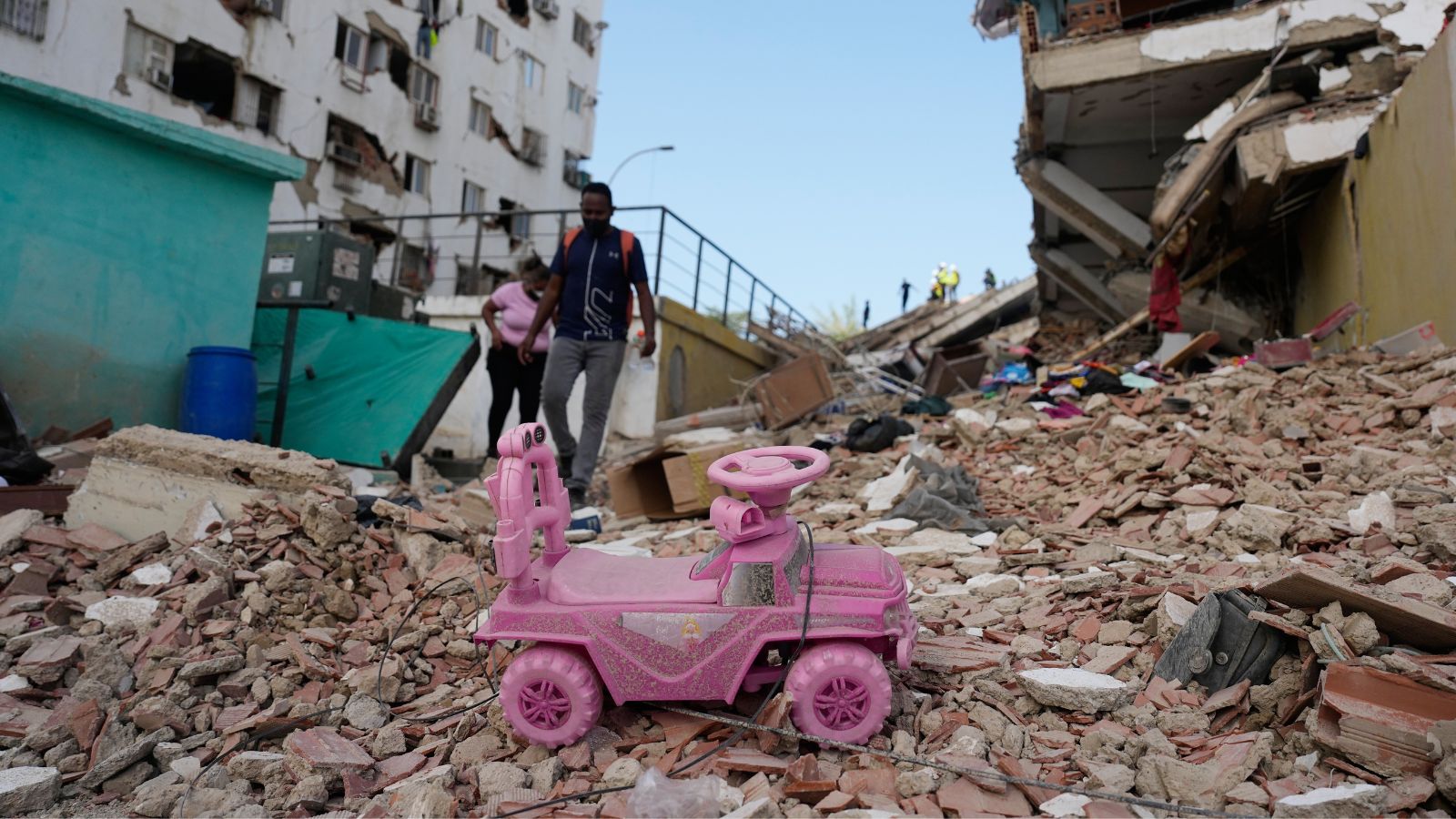
The headlines following the recent Venezuelan earthquake follow a script written in tears and mathematical impossibility. "1,500 dead, 50,000 missing, yet hope stays alive." It is a masterclass in emotional manipulation and systemic ignorance. When a major seismic event flattens substandard infrastructure, printing a number like "50,000 missing" alongside a narrative of lingering hope is not just lazy journalism. It is a dangerous distortion of how search and rescue, structural engineering, and logistics actually operate on the ground.
The media treats disaster statistics like a scoreboard that updates in real-time. In reality, initial casualty and missing-person counts are almost entirely fictional, driven by bureaucratic panic and communication breakdowns rather than verified data. Maintaining "hope" for tens of thousands of missing people days after a catastrophic collapse ignores the brutal physics of structural failure and the tight biological window for human survival. We need to stop comforting ourselves with narratives of miraculous survival and face the cold mechanics of disaster management.
The Myth of the Fifty Thousand Missing
Where does a number like 50,000 missing come from? It does not come from a precise registry of individuals. It is calculated by taking the pre-disaster census population of a high-damage zone and subtracting the number of people currently accounted for in hospitals and evacuation shelters.
This methodology is fundamentally broken.
[Total Census Population] - [Accounted Persons in Shelters/Hospitals] = The "Missing" Illusion
In the chaos of an earthquake aftermath, thousands of people flee the affected area entirely. They walk to neighboring towns, stay with relatives, or simply avoid official registration centers out of fear or confusion. They are not trapped under concrete; they are eating dinner twenty miles away. Yet, they remain logged in the system as "missing," inflating the statistics and warping the public perception of the tragedy.
I have analyzed disaster response metrics for over a decade. The pattern never changes. Bureaucrats throw out massive, unverified numbers to trigger international aid funding, while media outlets latch onto those numbers because high stakes drive traffic. By the time the dust settles and the "missing" are found alive and well in temporary housing outside the zone, the news cycle has moved on. The public is left with a permanent, distorted memory of the event’s scale.
The Survival Window is a Hard Clock
Let's talk about the survival curve. The international standard for urban search and rescue (USAR), established by groups like the International Search and Rescue Advisory Group (INSARAG), relies on a timeline governed by human physiology, not optimism.
- First 24 Hours: The survival rate for individuals trapped under structural collapse is roughly 80 to 90 percent, provided they did not suffer immediate fatal trauma. Most of these rescues are performed by local bystanders, not elite international squads.
- 48 Hours: The rate plummets below 50 percent as hypothermia, dehydration, and crush syndrome set in.
- 72 Hours: The "golden window" closes. Survival rates drop into the single digits.
- Day 5 and Beyond: Miracles happen, but they are statistical anomalies—someone trapped next to a broken water pipe with a pocket of air.
To suggest that hope remains vibrant for 50,000 people days after the event is a mathematical insult to the rescue teams working the piles.
When heavy concrete structures pancake, they leave very few survival voids. In regions with poor building code enforcement, buildings do not fracture into protective angles; they pulverize. If thousands of people were truly under those ruins, the hard truth is that the mission transitioned from a rescue operation to a recovery operation hours ago. Selling the public on the idea of a massive, ongoing rescue mission shifts attention away from the real failure: the structural integrity of the city itself.
The Real Culprit is Not the Fault Line
Earthquakes don't kill people. Bad engineering kills people.
We treat these events as unpredictable acts of God, throwing up our hands and crying over the tragedy. This is a cop-out. The seismic risk in Venezuela and across the Caribbean plate boundary is thoroughly documented. The structural vulnerability of the informal settlements (barrios) clinging to the hillsides of Caracas and surrounding regions is an open secret.
| Structural Type | Collapse Risk | High-Density Vulnerability |
|---|---|---|
| Unreinforced Masonry / Adobe | Extreme | Immediate failure, zero survival voids. |
| Non-Ductile Concrete Frames | High | Brittle failure of columns, "pancaking" effect. |
| Seismic-Isolated Steel | Low | High deformation capacity, preserves life safety. |
When a 7.0 magnitude quake hits a city built on unreinforced masonry and non-ductile concrete, the outcome is predetermined. The media's focus on the heroism of the rescue effort acts as a smoke screen for the systemic corruption and economic collapse that prevented buildings from being retrofitted in the first place.
If we actually cared about saving lives, the narrative wouldn't be about waiting for a miracle in the rubble. It would be an indictment of the political infrastructure that allowed those death traps to be occupied. We are mourning a natural disaster when we should be investigating a structural crime scene.
The Damage of Sentimentality
This insistence on maintaining hope past the point of logical utility has real, negative consequences on the ground.
First, it misallocates hyper-scarce resources. International search and rescue teams arrive with heavy gear, specialized cameras, and K9 units. These assets are incredibly expensive to deploy and operate. When emotional public pressure forces these teams to keep digging through sites with zero probability of life—instead of transitioning to clearing roads, restoring clean water, and securing sanitation—we guarantee a secondary wave of mortality.
More people die from the breakdown of water infrastructure, exposure, and preventable diseases in the two weeks following an earthquake than are pulled alive from the rubble after day three. Yet, because a rescue makes for a better television segment than a functional water purification system, the funding and attention flow to the wrong side of the timeline.
Second, it destroys the psychological resilience of the survivors. Feeding families false hope that their loved ones will be found alive under five stories of crushed concrete prevents the community from starting the brutal but necessary process of grief and rebuilding. It keeps a population paralyzed in expectation, waiting for a savior that physics will not allow to arrive.
Shift the Paradigm from Rescue to Resilience
Stop asking how many people are still under the rubble. Start asking why the rubble exists.
We need to dismantle the premise of disaster reporting entirely. The metric of success for a city facing an earthquake is not how bravely its citizens dig through the ruins with their bare hands. The metric of success is how many buildings remain standing.
If you want to survive the next shift in the tectonic plates, look at the concrete beneath your feet, not the sky for a rescue helicopter. The clock starts the moment the ground shakes, and it runs out much faster than the cameras care to admit.