The trajectory of anti-Muslim hate in London has crossed a terrifying threshold. It is no longer a series of isolated spikes reacting to global headlines. What we are witnessing is a sustained escalation, a hardening of street-level hostility into a permanent feature of the capital's social environment.
For anyone asking why London is becoming increasingly hostile for its Muslim residents, the answer is uncomfortably straightforward. The institutional guardrails designed to protect minority communities have steadily eroded under the weight of political opportunism, underfunded policing, and a pervasive normalization of Islamophobic rhetoric. The initial shock of hate crime surges has faded. In its place is a chilling complacency.
Understanding this crisis requires looking past the sanitized press releases from local councils. The reality on the ground is grim, relentless, and deeply damaging to the social fabric of the city.
The Anatomy of a Sustained Escalation
Hate crime data has always been a lagging indicator of a society's actual temperature. When organizations that track anti-Muslim attacks report sustained, elevated numbers across London boroughs, they are only capturing the fraction of incidents that cross the threshold of a police report.
The true escalation is happening in the unrecorded margins. It is the deliberate shoulder barge on a crowded Central Line platform. It is the hurled abuse from a passing vehicle in Tower Hamlets. It is the quiet, suffocating fear that now dictates the daily routines of hundreds of thousands of Londoners.
Historically, hate crimes against Muslims followed a predictable, albeit tragic, pattern. A geopolitical event or a domestic terror incident would trigger a sharp, violent spike in abuses. Weeks later, as the news cycle moved on, the incident rate would slowly recede toward a baseline. That baseline is no longer resetting. Over the past few years, particularly following the intense geopolitical conflicts in the Middle East that dominated late 2023 and beyond, the graph of anti-Muslim incidents never returned to its previous low. The spike became a plateau. The plateau became the new normal.
This mathematical shift points to a severe psychological shift in the public. When hate crimes remain elevated without a direct, immediate catalyst, it signals that the underlying prejudice has been validated. The perpetrators no longer need an excuse drawn from the evening news. They feel permanently emboldened.
The Gendered Frontline of Public Abuse
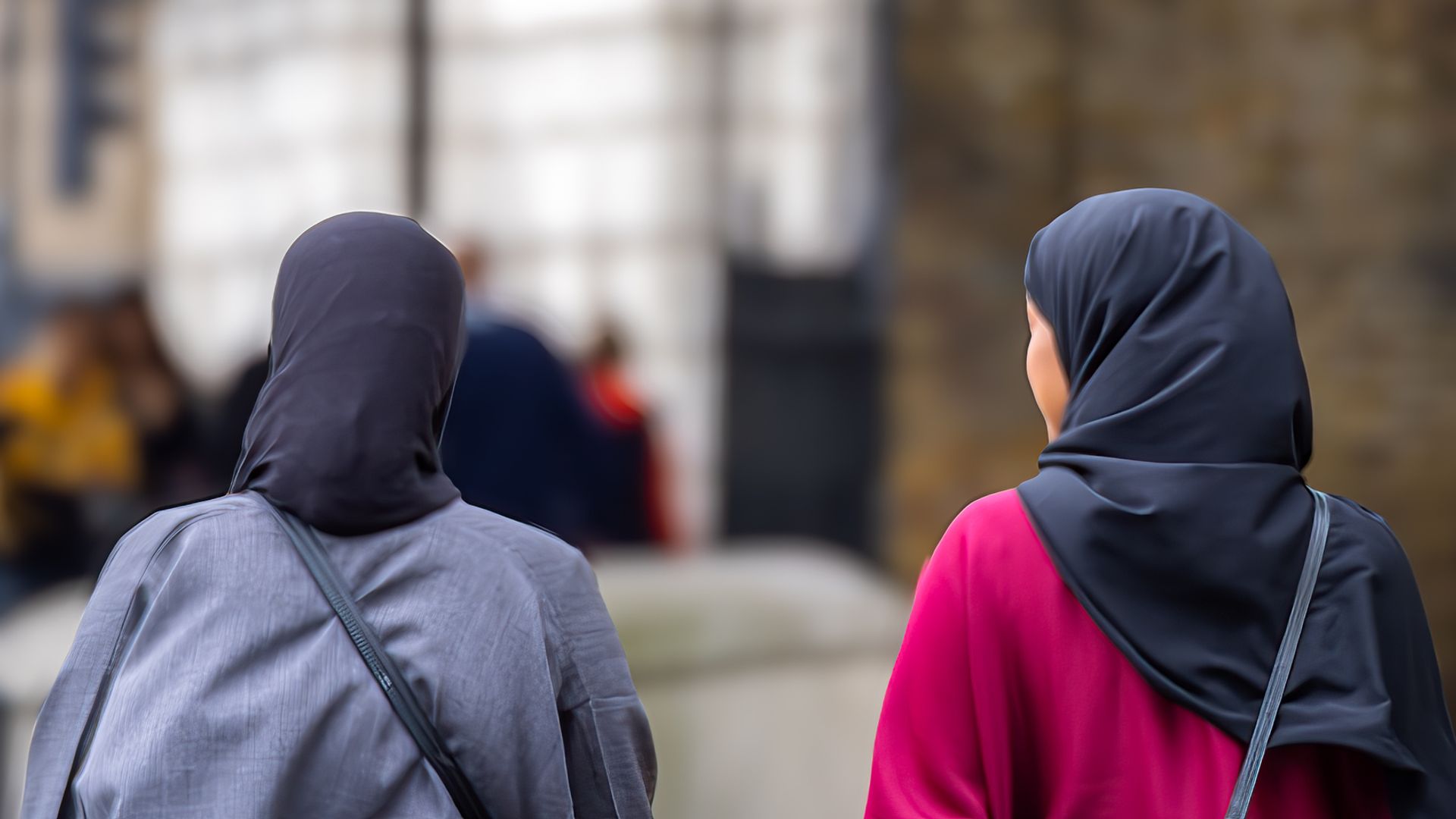
To discuss Islamophobia in London without addressing its intensely gendered nature is to fundamentally misunderstand the threat. Muslim women bear the overwhelming brunt of public hostility.
The mechanics of this are rooted in cowardly opportunism. Women who wear the hijab, niqab, or abaya are highly visible. They cannot blend into the background of a crowded high street. This visual identification makes them immediate targets for individuals looking to project their generalized anger onto a physical proxy.
Consider the daily commute. A hypothetical young Muslim woman traveling from East London to a job in the West End must navigate a gauntlet of micro-threats. She sits near the exit of the carriage, hyper-aware of the body language of the passengers around her. She calculates the risk of making eye contact. If someone begins shouting abuse, the historical data suggests the carriage will likely remain silent. Bystander intervention is statistically rare when the target is a visibly Muslim woman.
This is not a failure of courage so much as a failure of social conditioning. Years of media portrayals linking Islamic dress to foreignness, oppression, or threat have subtly desensitized the broader public to the vulnerability of these women. When a visibly Muslim woman is attacked, the societal reflex is often suspicion rather than immediate empathy. This isolation doubles the trauma of the incident itself.
How Political Rhetoric Empowers the Street
The escalation of hate on the streets of London does not occur in a vacuum. It is the downstream effect of a deeply toxic political discourse.
Over the last several election cycles, domestic politics has increasingly relied on culture war wedge issues to mobilize voters. Politicians facing economic crises and failing public services frequently pivot to debates about immigration, assimilation, and the so-called threat to national values. These debates frequently center, explicitly or implicitly, on the Muslim community.
When a cabinet minister frames legal, peaceful protests regarding Palestinian rights as "hate marches," or when commentators on national television openly question the loyalty of Muslim citizens, they are sending a clear signal. They are providing intellectual cover for raw prejudice. The man who spits at a mosque worshiper does not need to read a political manifesto. He only needs to absorb the general atmosphere of hostility broadcast by the state's highest offices.
This top-down validation creates an impossible situation for local leaders. Mayors and borough councils can issue statements of solidarity, but they cannot easily counteract a national narrative that treats the Muslim presence in Britain as a problem to be managed rather than a reality to be embraced.
Why Metropolitan Police Strategies Keep Failing
The Metropolitan Police Service is the designated barrier between a hostile actor and a vulnerable citizen. Right now, that barrier is dangerously porous.
The failure of policing to halt the sustained escalation of anti-Muslim hate is rooted in systemic inefficiencies and a profound breakdown in community trust. Reporting a hate crime is an arduous, emotionally draining process that rarely results in a conviction.
A victim walks into a station or fills out an online form. They are asked to recount a traumatic, deeply humiliating experience. The police take the details, assign a crime reference number, and begin an investigation. But street-level harassment is notoriously difficult to prosecute. CCTV coverage is often patchy or requested too late. Witnesses rarely leave their details. The evidential threshold for a hate crime conviction requires proving intent, which defense solicitors easily muddy.
Consequently, the vast majority of reported anti-Muslim hate crimes are closed with no further action. The community knows this. The word spreads. A dangerous cycle of under-reporting takes hold.
If you know that reporting your abuser will cost you six hours of your life, force you to relive the trauma, and ultimately result in an automated email telling you the case is closed due to lack of evidence, you stop reporting. You swallow the anger. You alter your route to work. You accept the abuse as an unavoidable tax on living in London. The police statistics remain artificially low, allowing leadership to claim the problem is under control while the streets grow increasingly dangerous.
The Silent Attrition of the Workplace
Physical safety is only one dimension of the crisis. The sustained escalation of Islamophobia has deeply infected London's corporate and professional environments.
While street abuse is overt and violent, workplace Islamophobia is quiet, bureaucratic, and highly deniable. It manifests in the subtle exclusion from networking events heavily centered around alcohol. It appears in the disproportionate scrutiny placed on the expenses or working hours of Muslim employees compared to their peers. It is the sudden, unexplained plateau in career advancement for highly qualified individuals with visibly Muslim names or appearances.
Human Resources departments are famously ill-equipped to handle this. Standard diversity and inclusion training rarely addresses the specific nuances of anti-Muslim prejudice. When an employee raises a concern about a toxic micro-culture within their team, the burden of proof falls entirely on the victim. Proving that a missed promotion was driven by Islamophobia rather than a legitimate business decision is nearly impossible without a paper trail of explicit bigotry.
This leads to a silent attrition. Highly skilled Muslim professionals are quietly exiting toxic corporate environments, choosing to freelance, start their own businesses, or move to organizations with proven track records of genuine inclusion. The broader economy loses incredible talent, but the underlying rot in the corporate culture remains unaddressed.
The Psychological Toll of Hyper-Vigilance
You cannot quantify the damage of sustained hatred solely through crime statistics or employment tribunals. The true cost is extracted from the mental health of an entire demographic.
Living under a sustained escalation of hostility requires a state of perpetual hyper-vigilance. It means scanning a room the moment you enter it. It means evaluating the tone of a stranger who asks for directions. It means having an exit strategy when boarding a night bus.
For the older generation, this often results in severe isolation. Elderly Muslims, particularly those with limited English proficiency, are increasingly retreating into their homes, terrified of the unpredictable aggression of the outside world. They rely entirely on their children for groceries and errands, effectively living under a self-imposed lockdown.
For the youth, the psychological burden is different but equally destructive. Young Muslims born and raised in London are experiencing a profound sense of alienation. They are told by their schools that they are equal citizens of a diverse metropolis, but they are shown by the streets, the media, and the political class that their citizenship is conditional. This cognitive dissonance breeds deep resentment and anxiety.
We are watching a generation of young Londoners learn that their safety is entirely dependent on keeping their heads down and minimizing their religious identity in public spaces. That is not the hallmark of a functioning multicultural society. That is a community being forced into submission by the ambient threat of violence.
A city that normalizes the fear of a fraction of its citizens has already lost its claim to diversity. The escalation is no longer an anomaly to be managed. It is the new reality that must be dismantled, brick by brick, before the damage becomes permanent.