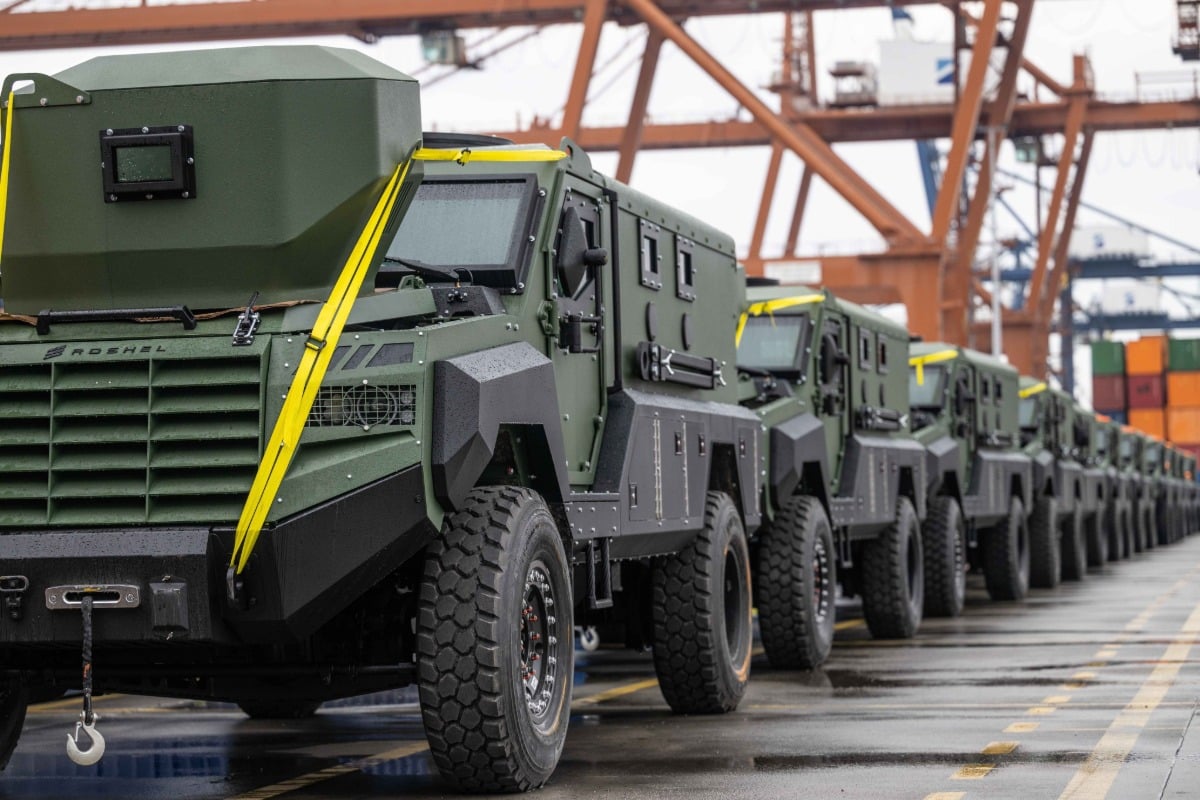
Ottawa just shipped another batch of 20 Roshel Senator Mine-Resistant Ambush Protected (MRAP) vehicles to Ukraine under the banner of the multinational Demining Capability Coalition. Mainstream headlines painted the transfer as a routine logistical victory, celebrating a three-month procurement turnaround that rushed these heavy platforms straight to the frontlines. The immediate reality is that these vehicles are desperately required to keep humanitarian demining crews alive. However, the celebration masks a far grimmer tactical reality on the ground. Western aid packages are fundamentally misjudging how the nature of attrition has changed in Eastern Europe.
The underlying crisis is no longer just about buried Soviet-era ordnance or dense fields of hidden pressure-plate explosives. A terrifying transformation has occurred on the Ukrainian battlefield. Russian reconnaissance units are actively using First-Person View (FPV) kamikaze drones to hunt down and destroy mine clearance teams before they can even unpack their equipment. Providing standard mine protection to a demining squad is no longer sufficient when the primary threat is dropping directly from the sky.
The Industrial Pipeline Explaining the Influx
To understand why the Senator has become ubiquitous in Ukraine, look at the manufacturing economics rather than government press releases. More than 2,200 Roshel Senator vehicles are now deployed across the theater of war. The vast majority of these platforms were not actually paid for by Canadian taxpayers. Foreign governments buy them directly from Roshel’s facilities in Brampton and Mississauga, Ontario, because the company has managed to achieve a staggering commercial production velocity of 120 to 140 units every month.
The mechanism behind this rapid output relies entirely on commercial-off-the-shelf integration. Every Senator is built upon a modified heavy-duty Ford F-550 commercial truck chassis. It is powered by a standard 6.7-liter Power Stroke turbo-diesel V8 engine. By using a civilian commercial foundation, the manufacturer bypasses the agonizingly slow supply chains that cripple traditional defense contractors who build military armored hulls from scratch.
Roshel Senator MRAP Performance Specifications
+-----------------------+------------------------------------------+
| Metric                | Specification                            |
+-----------------------+------------------------------------------+
| Base Chassis          | Ford F-550 4x4 Commercial Truck          |
| Powerplant            | 6.7-Liter Power Stroke Turbo-Diesel V8   |
| Ballistic Protection  | NATO STANAG 4569 Level 2                 |
| Blast Resistance      | NATO STANAG 4569 Level 3 (8kg TNT)       |
| Total Fleet Size      | 2,200+ Units in Ukraine Theater          |
+-----------------------+------------------------------------------+
From Counter-Insurgency to Total Attrition Warfare
The Senator was originally engineered as an armored personnel carrier designed for domestic law enforcement, tactical police units, and border security. It was never intended to trade punches with an industrial superpower army. Early models shipped to Ukraine in 2022 suffered immense damage when exposed to heavy artillery fragmentation and large-caliber automatic fire.
Ukrainian operational feedback forced a rapid, desperate evolution. The latest batch of 20 vehicles represents the specialized MRAP variant, which features a heavily modified two-door body and a pronounced V-shaped steel underbody hull.
- The Physics of Deflection: When a wheel rolls over a buried explosive, a traditional flat-bottomed truck hull absorbs the vertical shockwave directly, crushing the floorboards and breaking the legs of everyone inside. The V-hull splits the expanding kinetic energy gas cloud, redirecting the blast outward and away from the crew compartment.
- The STANAG Threshold: This specific engineering overhaul elevates the vehicle to NATO STANAG 4569 Level 3 blast protection, meaning it can survive an explosion equivalent to 8 kilograms of TNT under any wheel or directly beneath the center hull.
- The Ballistic Capsule: The upper cabin features a 360-degree sealed armor capsule certified to Level 2 ballistic standards, capable of stopping 7.62x39mm armor-piercing rounds fired from an assault rifle at close range.
The Drone Threat Overturning Blast Protection Calculations
The engineering upgrades are impressive on paper, but they are designed to solve yesterday's tactical problem. The fundamental flaw in deploying an 8-ton, high-profile truck into a modern demining sector is its extreme visibility to electronic warfare and aerial surveillance.
Traditional Threat Vector:
[Buried Mine] ---> Blows Upward ---> V-Hull Redirects Blast Blast (Crew Survives)

Modern Frontline Threat Vector:
[FPV Drone]   ---> Strikes Top/Sides ---> Targets Weak Roof Armor (Catastrophic Failure)
Russian drone operators do not waste their loitering munitions hitting the heavily reinforced V-shaped belly of an MRAP. They spot the massive silhouette of the Senator moving slowly down a dirt track and pilot the drone directly into the unarmored roof plate, the rear doors, or the engine block. The installation of a Chemical, Biological, Radiological, and Nuclear (CBRN) air filtration system and thermal night-vision optics keeps the crew comfortable until an explosive drone strikes the thin glass viewing ports.
Ukrainian frontline commanders have pointed out that while the Senator is excellent for transporting troops through secondary lines of defense and keeping them safe from random shrapnel, using them anywhere near an active zone of contact turns them into a high-value target. Open-source intelligence databases like Oryx have already visually documented the destruction, damage, or capture of nearly 200 Senator variants. The true loss numbers are almost certainly higher.
The Severe Logistics Strain of Commercial Parts
Western defense analysts frequently praise the use of the Ford F-550 chassis because it keeps the initial purchase price close to a modest $600,000 per unit. This commercial asset carries a hidden, brutal penalty when deployed into deep mud and freezing trenches.
The suspension, axles, and transmission systems of a civilian work truck are not designed to carry 8 tons of heavy ballistic steel plates through a cratered combat zone indefinitely. Field reports indicate that these vehicles face frequent off-road mechanical breakdowns. When a specialized steering knuckle or a heavy-duty front axle snaps in a remote village near Kharkiv, the Ukrainian military cannot simply drive down to a local dealership to pick up a spare Ford part.
The fleet stays operational only because Ukrainian mechanics have become masterful at cannibalizing severely damaged Senators to keep the surviving ones running. Localized assembly initiatives are under development to produce these platforms directly within Ukraine, which may eventually ease the component bottleneck. Until those domestic production lines are running at full scale, sending batches of 20 vehicles at a time provides a temporary patch for a systemic structural deficit.
The relentless mechanical attrition of these platforms means that the West must constantly supply replacement fleets just to maintain current operational baselines. Canada's latest donation provides immediate protection for humanitarian teams clearing unexploded shells, but the relentless evolution of aerial drone attacks means these crews remain highly vulnerable.