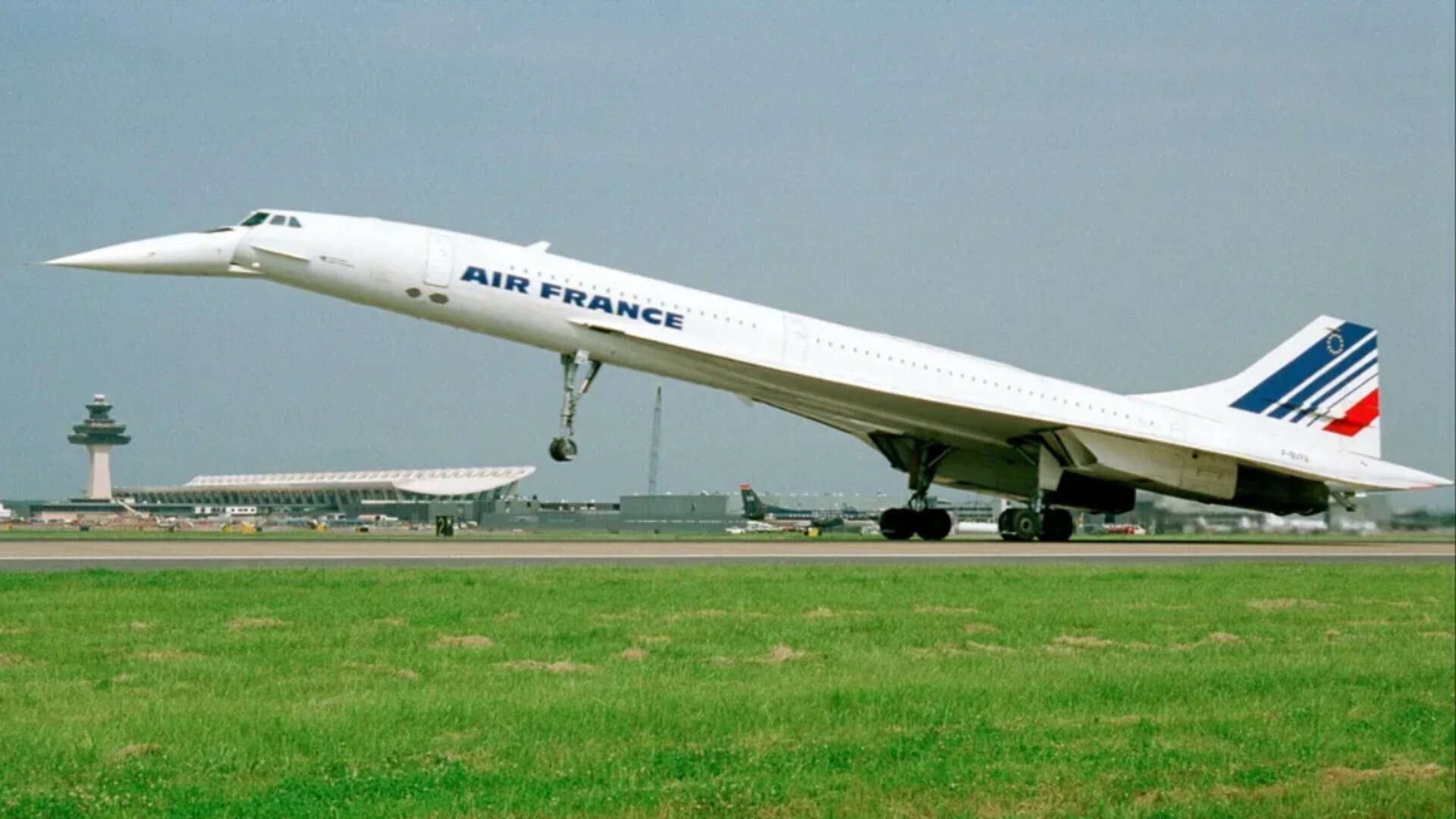
Concorde flew at the edge of space, but its speed came with a hidden tax. To escape the thick air of the lower atmosphere and reach its cruising speed of Mach 2.04, the legendary Anglo-French supersonic transport had to climb to altitudes of up to 60,000 feet. At this height, the protective blanket of Earth’s atmosphere is thinned out by almost 90 percent. This exposed passengers and crew to cosmic radiation levels up to three times higher than those experienced on standard subsonic flights. To manage this threat, every Concorde had to carry an active radiation detection system, turning the flight deck into a flying laboratory tasked with a high-stakes safety mission.
The Atmospheric Shield That Concorde Outclimbed
Subsonic commercial airliners cruise between 30,000 and 40,000 feet. In this zone, the vast majority of the Earth's atmosphere sits above the aircraft, absorbing and scattering incoming galactic cosmic rays and solar particles.
When Concorde pushed past 50,000 feet on its climb to 60,000 feet, it entered the stratosphere.
Altitude Exposure Scale (Approximate)
============================================================
60,000 ft (Concorde Cruise)   | [||||||||||||||||||||] Max Exposure
35,000 ft (Subsonic Cruise)   | [|||||||] Moderate Exposure
Sea Level                     | [|] Minimal Exposure
============================================================
At these heights, the protective mass of air shielding the cabin is drastically reduced. The primary threat comes from two sources: galactic cosmic rays, which originate outside our solar system, and solar particle events, which are intense bursts of radiation launched by the sun during solar flares.
The biological impact of this radiation is measured in millisieverts. While a passenger flying from New York to London on a standard Boeing 747 would receive a negligible dose, Concorde's speed actually helped mitigate routine exposure. Because the supersonic jet crossed the Atlantic in under three and a half hours, passengers spent far less time in the air. This meant that during quiet solar periods, a traveler's total radiation dose on Concorde was roughly equivalent to, or even slightly lower than, the dose received during a much longer subsonic flight.
The real danger was not the routine background radiation. The real danger was the sun.
The Active Cosmic Radiation Detector
To address the threat of sudden solar storms, British Aerospace and Aérospatiale installed a specialized instrument in the cockpit of every Concorde. This was the AAM (Active Airborne Monitor), a highly sensitive radiometer designed to measure both the instantaneous dose rate and the cumulative dose of cosmic radiation.
+-----------------------------------------------------------------+
|                    CONCORDE COCKPIT INSTRUMENT                  |
|                                                                 |
|   [ WARNING LIGHT ]  --> Triggers if dose rate exceeds          |
|   |  SOLAR FLARE  |      0.1 millisieverts per hour             |
|   +---------------+                                             |
|                                                                 |
|   [ DIAL DISPLAY  ]  --> Shows real-time micro-sieverts/hr      |
|                                                                 |
+-----------------------------------------------------------------+
The instrument sat on the flight engineer’s panel, constantly monitoring the environment outside the aluminum fuselage. If solar activity spiked, the radiometer would alert the flight crew.
The system used a series of Geiger-Müller tubes and tissue-equivalent proportional counters to measure the ionization of gas caused by passing radiation. This allowed the flight engineer to read the exact dose rate in real-time. If the dial crept into the warning zone, the crew had to act immediately.
The Emergency Descent Protocol
Standard operating procedures for Concorde dictated a clear response to a radiation warning. If the instrument registered a sustained dose rate exceeding 0.1 millisieverts per hour, the pilots had to initiate an unscheduled descent.
They had to bring the aircraft down.
Dropping from 60,000 feet to below 47,000 feet placed the aircraft back beneath a thicker layer of atmosphere, which acted as a natural shield against the incoming solar particles. This maneuver was not simple. Descending meant entering more crowded airspace, transitioning to subsonic speeds to prevent aerodynamic instability in thicker air, and burning fuel at a much higher rate.
Fortunately, this emergency protocol was rarely triggered. Throughout Concorde's 27 years of commercial service, solar activity remained stable enough during flights that actual tactical descents due to radiation alerts were incredibly rare. However, the system remained a mandatory, non-negotiable piece of flight hardware for every single journey.
The Occupational Hazard for Flight Crews
While wealthy passengers flew occasionally, the pilots, flight engineers, and cabin crew lived in the stratosphere.
Under international radiological protection guidelines, Concorde crew members were classified as occupationally exposed workers. Air carriers were required to track the cumulative annual radiation doses of their employees to ensure they did not exceed statutory limits.
Annual Radiation Exposure Comparison (Typical)
============================================================
Nuclear Power Plant Worker Limit | 20 mSv/year
Concorde Active Crew Member      | 6 to 8 mSv/year
Subsonic Active Crew Member      | 2 to 3 mSv/year
Average Public Background        | 2.4 mSv/year
============================================================
To manage this, airlines utilized complex computerized models that calculated the radiation dose for every flight based on flight path, altitude profiles, and solar activity data. The physical radiometer on board served as the ultimate safety net, validating these models and protecting the crew from unpredicted solar weather.
The Supersonic Legacy and the New Space Race
The retirement of Concorde in 2003 closed the chapter on commercial supersonic travel, but the engineering lessons of the stratosphere remain highly relevant today. Modern companies attempting to resurrect commercial supersonic flight must solve the same atmospheric equation.
Furthermore, the rise of suborbital space tourism has pushed human flight far beyond Concorde's 60,000-foot ceiling. Spacecraft operating in the thermosphere and lower orbit face even harsher radiation profiles, completely exposed to solar winds without the benefit of an atmospheric buffer. The active monitoring systems pioneered on Concorde form the direct technological lineage of the safety systems installed in today's private spacecraft.
Supersonic travel was never just about breaking the sound barrier. It was a constant negotiation with the laws of physics and the harsh realities of high-altitude meteorology. The radiation meter on Concorde's flight deck serves as a stark reminder that the higher we fly, the more we must rely on precise engineering to survive the environment we fought so hard to reach.