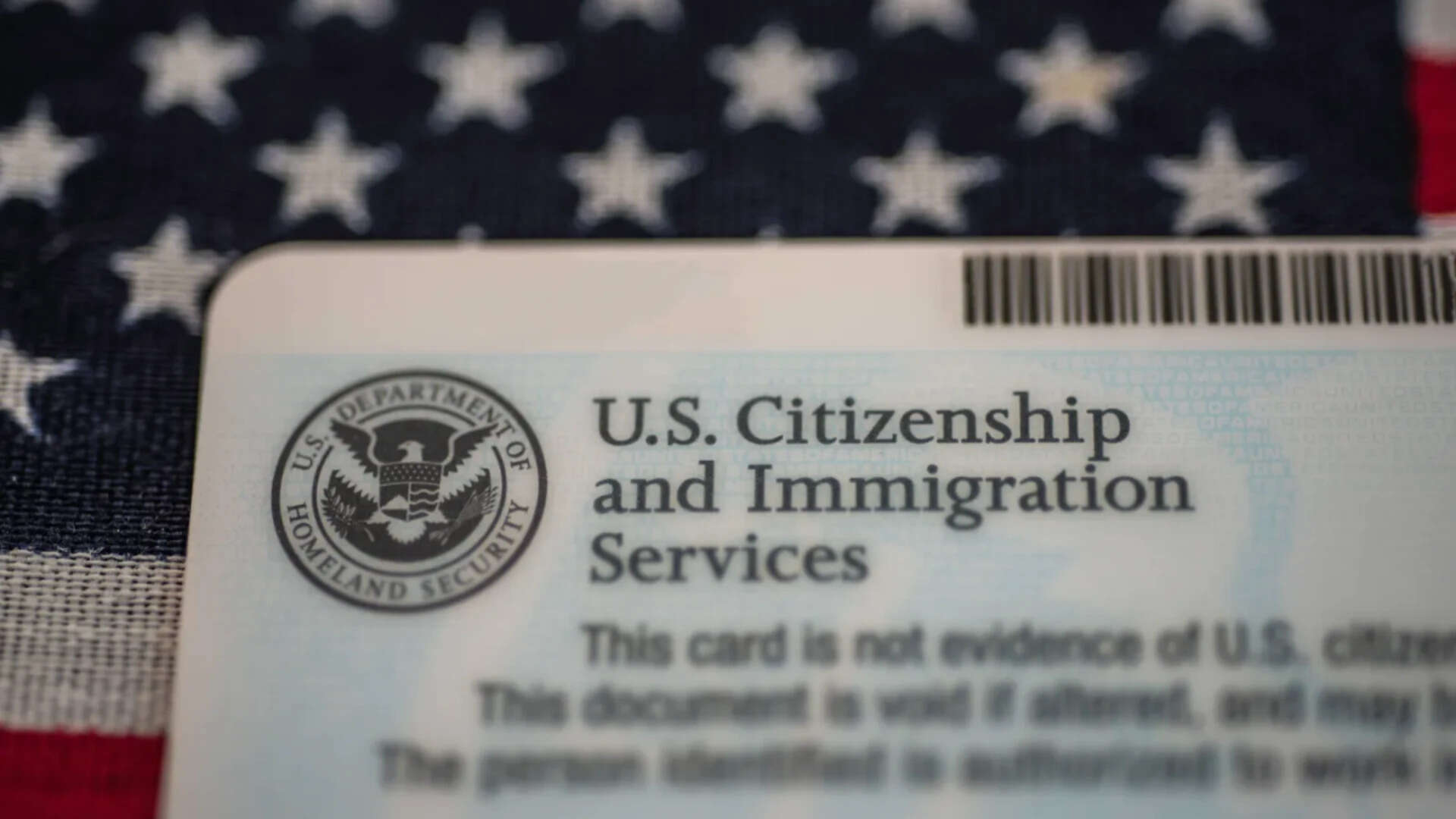
The Department of Homeland Security (DHS) has quietly sharpened its most potent administrative blade. For years, the bureaucratic machinery of the U.S. asylum system moved with a sluggish, often forgiving rhythm. That era is over. Under a new, aggressive enforcement posture, the government is transforming filing fees into a hard wall. Failure to pay the mandated Asylum Program Fee now results in an immediate, scorched-earth response: the summary rejection of work permits and the potential fast-tracking of removal proceedings. It is no longer just a fiscal requirement; it is a mechanism of mass exclusion.
This shift targets a specific bottleneck in the immigration system. By linking the right to work—the very thing that keeps asylum seekers afloat—to a mandatory payment, the DHS is essentially putting a price tag on survival while the legal process grinds on. It isn't just about balancing the books or funding U.S. Citizenship and Immigration Services (USCIS). It is about deterrence through administrative attrition.
The Financial Chokehold on Legal Presence
At the heart of this policy is the Asylum Program Fee, a $600 surcharge applied to various employment-based petitions. While the fee itself isn't new, the rigidity of its enforcement marks a departure from previous administrative norms. In the past, a missing fee or a clerical error might result in a "Request for Evidence" or a simple delay. Now, the system is programmed for rejection. If the check isn't there, or if the fee waiver is denied, the application for employment authorization (Form I-765) is treated as if it never existed.
For an asylum seeker, a work permit is the difference between legal employment and the shadows of the underground economy. Without that document, they cannot obtain a Social Security number in most states. They cannot pass an E-Verify check. They are effectively barred from the formal labor market. By tightening this knot, the DHS is forcing a choice: find the money or face the consequences of being "undocumented" despite having a pending legal claim.
The Mechanism of Removal
The danger doesn't stop at the loss of a job. The DHS has signaled that these administrative failures can and will be used as triggers for removal. When an asylum seeker’s application is rejected for non-payment, their status becomes precarious. If they were relying on that pending application to maintain a lawful "stay" or to pause a deportation order, the rejection removes that shield.
Once the shield falls, Immigration and Customs Enforcement (ICE) gains the legal standing to initiate or resume removal. It is a domino effect. One bounced check or one denied fee waiver sets off a chain reaction that ends at a detention center or an international flight. The government is betting that the threat of removal will either force compliance or encourage "self-deportation" among those who cannot afford the entry price of the American legal system.
The USCIS Funding Crisis and the Shift to User Fees
To understand why this is happening, you have to look at the ledger. USCIS is a fee-funded agency, meaning it doesn't rely on taxpayer dollars for the vast majority of its operations. It survives on the money paid by the people using its services. For years, the agency has been drowning in a massive backlog, with millions of cases pending and processing times stretching into years.
The $600 fee was designed as a "tax" on employers to help subsidize the costs of processing asylum applications, which are technically free for the applicants themselves. However, the burden often trickles down. When an employer balks at the cost, or when an individual filing for a different category of work permit gets swept up in the new regulations, the financial pressure hits the person at the bottom of the ladder.
The Myth of the Universal Waiver
The government often points to fee waivers as the safety valve for the poor. In theory, if you can’t pay, you ask for a waiver (Form I-912). In reality, the waiver process is a gauntlet. The criteria are narrow, requiring documented proof of financial hardship that many newly arrived migrants simply do not have. They lack the tax returns, the pay stubs, or the bank statements required to satisfy a skeptical USCIS adjudicator.
When a waiver is denied, it isn't a "try again" scenario. The underlying application is often rejected simultaneously. By the time the applicant realizes the waiver failed, their previous status may have already expired. They are left in a legal no-man's land, holding a rejection notice and facing a government that is increasingly unwilling to hear excuses.
Deterrence by Bureaucracy
This isn't an accident. It is a strategy. High-level policy analysts recognize that the U.S. asylum system is overwhelmed, not just by the volume of people, but by the complexity of the cases. By introducing "hard stops" in the administrative process, the government can trim the rolls without ever having to argue the merits of an asylum claim in front of a judge.
It is a form of procedural clearing. If 10% of applicants fail to pay or fail to secure a waiver, that is 10% fewer cases the agency has to adjudicate. It is a cold, mathematical approach to a human crisis. The "strict penalties" mentioned in recent DHS bulletins serve as a warning: the administrative grace period is over. The government is no longer interested in helping you navigate the system; it is looking for a reason to close your file.
The Shadow Labor Market
The irony of this policy is that it doesn't actually make people leave. Most people fleeing violence or persecution aren't going to get back on a plane because they couldn't afford a $600 fee. Instead, they disappear into the gray market. They work for cash. They live in the shadows. They become more vulnerable to exploitation by unscrupulous employers who know these workers have no legal recourse.
By denying work permits over fee disputes, the DHS is inadvertently fueling the very "illegal" labor market that politicians claim to despise. It creates a class of people who are "legal" enough to have an alien registration number, but "illegal" enough to be barred from paying taxes or holding a legitimate job.
The Legal Challenges Ahead
Advocacy groups are already preparing for a fight. The argument is simple: the right to seek asylum is protected by international and domestic law, and placing an insurmountable financial barrier in front of that right is unconstitutional. They argue that by linking work authorization—a necessity for survival—to a fee that many cannot pay, the government is effectively denying the right to seek protection.
However, the courts have historically given the DHS wide latitude in how it manages its own procedures. As long as the government can claim the fees are "reasonable" and necessary for the functioning of the agency, judges are often hesitant to intervene. This leaves asylum seekers in a state of permanent anxiety, waiting for the next policy memo to drop.
The Cost of Compliance
For those who can scrape together the money, the process is still fraught with risk. The instructions for these fees are notoriously dense. A mistake in the amount, a missing signature, or a check sent to the wrong "lockbox" facility can result in an immediate rejection. In the current climate, there is no room for error.
Lawyers who spend their days in these trenches report a surge in "rejection for cause" notices that have nothing to do with the merits of the case. They see families who have spent every cent they have on a filing fee, only to have the application kicked back because of a clerical change the agency made a week prior. It is a game of high-stakes musical chairs, and the music just stopped.
A System Built on Friction
The U.S. immigration system has always been a balance of welcome and gatekeeping. But the current trend toward punitive administrative enforcement suggests the balance has shifted entirely toward the gate. The message from the DHS is clear: the path to legal status is no longer just a legal journey; it is a financial one.
The penalties for non-compliance are intentionally severe. The loss of a work permit isn't just a loss of income; it's the loss of a life in the light. When the government threatens removal for unpaid fees, it is signaling that the administrative process is now a weapon of enforcement rather than a tool for adjudication.
Every rejected application is a win for a system trying to reduce its numbers. Every person who drops out of the process because they can't afford the entry fee is one less case for a backlogged judge. This is the new reality of American immigration—a system where the law is written in the fine print of a fee schedule and justice is reserved for those who can afford the bill.
The bureaucracy has become the border. The check you write to the DHS is now as important as the story you tell the asylum officer. If the money doesn't clear, nothing else matters.