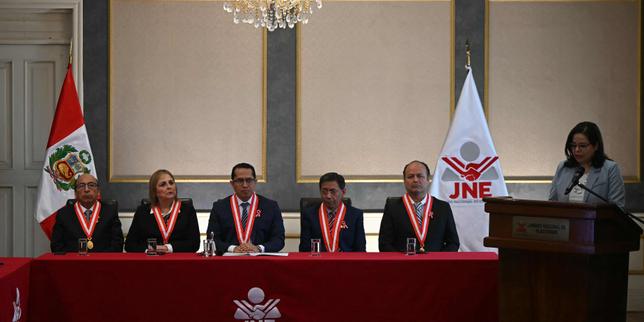
Keiko Fujimori has officially been proclaimed the president-elect of Peru. For a nation battered by years of systemic corruption, institutional gridlock, and deep-seated social polarization, this moment marks a profound structural shift rather than a standard democratic transition. The official declaration by the National Jury of Elections closes a chaotic chapter of legal challenges and street protests, yet it opens an entirely unpredictable era for South America's most volatile political arena. This victory is not a mandate for celebration; it is a high-stakes gamble by an electorate desperate for stability but deeply divided over the price of achieving it.
Understanding this outcome requires looking far beyond the immediate vote tally. The path to the presidency for the leader of Fuerza Popular was paved by a combination of calculated political survival, the fragmentation of the traditional left, and an intense fear of economic collapse among the urban middle class. To view this as a simple electoral win is to misread the deep undercurrents of Peruvian politics.
The Architecture of a Polarized Triumph
The election was decided by the narrowest of margins, exposing a fracture line that runs directly between Lima and the rural provinces. Fujimori secured her win not by uniting the country, but by successfully consolidating the conservative, pro-market vote in the capital and major northern cities.
This strategy capitalized heavily on anti-communist sentiment. By framing the contest as a binary choice between economic continuity and a plunge into radical state control, her campaign managed to absorb voters who had previously rejected her brand of politics. It was a coalition built on pragmatism rather than ideological devotion.
Rural Peru presents an entirely different reality. The southern highlands and the Amazonian regions voted overwhelmingly against her, viewing her ascent as the restoration of an authoritarian legacy. The deep resentment in these areas stems from decades of perceived neglect by the central government in Lima. For these citizens, the official proclamation is a bitter pill that validates their fears of political exclusion.
Breaking Down the Economic Mandate
Peru's business sector has reacted with a visible sigh of relief, yet the economic challenges ahead remain monumental. The country’s mining-dependent economy requires immediate stability to attract foreign investment, which had stalled during the prolonged electoral dispute.
Macroeconomic Priorities for the New Administration:
1. Rebuild investor confidence in the copper and gold sectors.
2. Address the massive informal labor market, which covers over 70% of workers.
3. Manage inflation and food insecurity in urban shantytowns.
The immediate challenge for the incoming administration is the massive informal economy. Over seventy percent of Peruvians work outside the formal system, lacking social safety nets, pensions, or stable wages. A pro-market agenda that focuses solely on macroeconomic indicators like GDP growth and fiscal discipline will fail to reach these populations. If the benefits of mining revenues do not filter down to the communities living near the extraction sites, the social unrest that characterized the campaign will inevitably return to haunt her presidency.
Governing from a Position of Chronic Weakness
Winning the executive office is only the first step in a highly hostile environment. The Peruvian Congress remains a fractured minefield where no single party holds an absolute majority. Fujimori will face an uphill battle to pass legislation, manage cabinets, and avoid the fate of her predecessors, several of whom were impeached or forced to resign.
The legislative branch in Lima has a notorious track record of turning on the executive. To survive, the new president will have to build fragile alliances with smaller, opportunistic centrist parties. These alliances often come at a high price, requiring patronage appointments and policy compromises that can quickly erode public trust.
Furthermore, the shadow of past corruption investigations continues to hang over the political establishment. The judicial system is independent enough to cause serious problems for the executive branch if new scandals emerge. The administration will operate under a microscope, with opposition lawmakers waiting for any misstep to initiate vacancy proceedings.
The Specter of the Past
It is impossible to discuss this presidency without addressing the legacy of Alberto Fujimori, the president's father who ruled the country in the 1990s. His administration was defined by both the defeat of brutal insurgencies and widespread human rights abuses alongside systemic corruption.
For older generations, the Fujimori name represents the restoration of order and the end of hyperinflation. For others, it signifies the darkest days of democratic erosion. The president-elect has spent years trying to distance herself from her father’s excesses while retaining his core base of support. Balancing these two narratives during active governance will be nearly impossible. Every security measure, every executive decree, and every confrontation with the press will be evaluated through the lens of the 1990s.
Regional Implications for Latin America
Peru’s political trajectory serves as a bellwether for the broader Andean region. The continent has seen a sharp swing between left-wing populism and conservative reactions over the last decade, driven by economic stagnation and the fallout from global supply chain disruptions.
A conservative, market-friendly government in Lima provides an anchor for international capital in a region where neighbors like Bolivia and Venezuela have chosen state-led economic models. However, if this administration fails to address the underlying social grievances, it could spark a renewed wave of radicalism in the next electoral cycle. The stakes extend far beyond Peru's borders.
The coming months will test whether a polarizing figure can transition from a fierce campaigner into a pragmatic leader capable of managing a fractured state. The official proclamation is over; the brutal reality of governing an ungovernable country now begins.