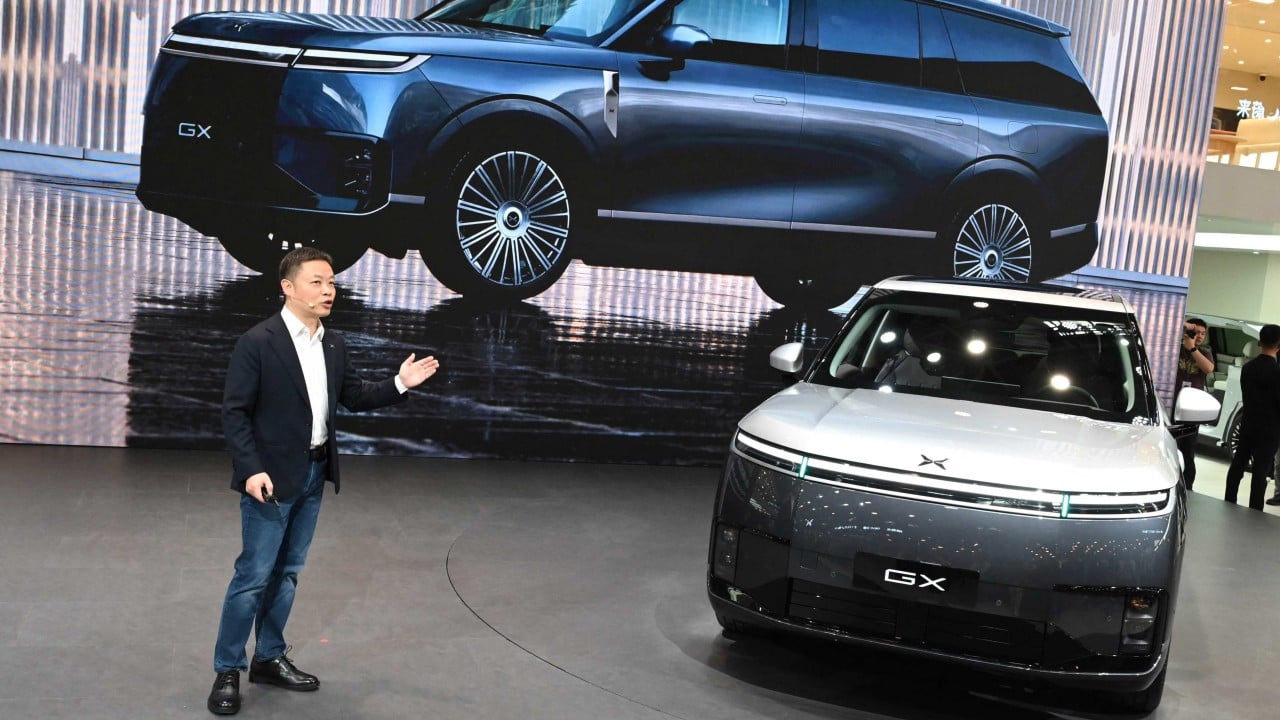
The gleaming display floors of the 2026 Beijing Auto Show tell a story of absolute dominance, but the ledger books in the back offices tell a story of desperation. While Western headlines focus on a "global expansion strategy," the reality is far more kinetic. China is not just expanding; it is venting. Faced with a domestic market so saturated it has turned into a "brutal knockout stage," Chinese automakers are pushing vehicles onto the global stage because they simply have nowhere else to put them.
At the heart of this surge is a massive industrial imbalance. Chinese factories now possess the capacity to manufacture 55.5 million vehicles a year. In 2025, domestic demand swallowed only 23 million. This leaves a staggering 50% capacity utilization rate—a figure that would spell bankruptcy for any traditional legacy automaker. To survive, companies like BYD, Geely, and Chery have turned the world into a pressure valve. You might also find this similar story useful: The Bank PO Salary Myth Why Your First Paycheck is a Golden Cage.
The Overcapacity Pressure Valve
The "energy shock" cited by many analysts as the catalyst for this expansion is a secondary factor at best. The primary driver is a domestic price war that has reached a point of diminishing returns. In early 2026, BYD accelerated its average price reductions to 10%, forcing competitors to sell at or below cost just to maintain foot traffic.
This is not a healthy competition. It is a siege. As discussed in detailed coverage by The Economist, the results are significant.
When a manufacturer cannot find a buyer in Shanghai or Guangzhou, the car is loaded onto one of the massive "Ro-Ro" (Roll-on/Roll-off) vessels, some of which are now owned and operated by the carmakers themselves. BYD’s fleet of dedicated vehicle carriers is a physical manifestation of this export-at-all-costs mandate. By controlling the logistics, they bypass the traditional shipping bottlenecks that once kept Chinese exports in check.
The Tariff Wall and the Pivot to the Global South
Washington and Brussels have noticed. The U.S. has effectively sealed its borders with 100% tariffs on Chinese EVs, while the EU has implemented definitive countervailing duties of up to 35.3% as of late 2024. These barriers were designed to protect the "Old Guard" of the automotive world, but they have inadvertently triggered a strategic pivot that may be even more dangerous for Western interests in the long run.
Blocked from the high-margin markets of the North, Chinese EVs have flooded the "Rest of World" segment.
- Brazil: Chinese brands accounted for over 85% of EV sales in 2025.
- Thailand: Market share for Chinese imports has surged, with local assembly plants now being built to bypass regional trade barriers.
- Southeast Asia: Sales doubled year-on-year in 2025, fueled by a price-to-performance ratio that Western manufacturers cannot dream of matching.
By the time Volkswagen or Ford manages to launch an affordable mass-market EV for the Brazilian or Indonesian middle class, the infrastructure—from charging stations to repair networks—will already be built on Chinese standards.
The Four Year Battery Gap
The secret weapon in this expansion is not just cheap labor; it is a profound technological lead in Lithium Iron Phosphate (LFP) battery chemistry. While Western companies spent a decade chasing high-nickel chemistries that are expensive and prone to thermal runaway, Chinese firms like CATL and FinDreams (BYD) perfected LFP.
LFP now accounts for 80% of Chinese automotive battery installations. These are fifth and sixth-generation cells that offer 4C+ ultra-fast charging—capable of a full recharge in under ten minutes. Industry analysts estimate that the rest of the global industry is approximately four years behind this development curve.
This is a structural advantage that cannot be erased by a tariff. Even if a European brand builds a car in Europe, they often have to license the battery tech or import the cells from the very Chinese competitors they are trying to fight.
The End of the IOU Economy
There is, however, a fracture in the armor. To fuel this global push, Chinese automakers have historically relied on an "IOU" system with their suppliers, delaying payments for months to keep cash flow liquid. That system is breaking. Under pressure from regulators to stop "deflationary momentum," companies are being forced to pay parts makers faster.
This shift, combined with the shrinking margins from the price war, led to BYD’s first significant annual profit dip since the pandemic. The financial toll of maintaining global export networks while bleeding cash at home is creating a "survival of the fittest" environment.
The weaker players—the dozens of smaller EV startups that flourished under the era of easy subsidies—are being liquidated or absorbed. What remains will be a leaner, more aggressive group of titans that have survived a domestic environment more hostile than any trade war the West can drum up.
The world is not just seeing the rise of Chinese cars; it is witnessing the fallout of an industrial explosion. The vehicles arriving at ports in Santos and Bangkok are the survivors of a fire that is still burning in China. For the global consumer, the result is a high-tech bargain. For the global automotive industry, it is a reckoning that has only just begun.
The era of the "affordable" Western car is over. It was replaced while nobody was looking.