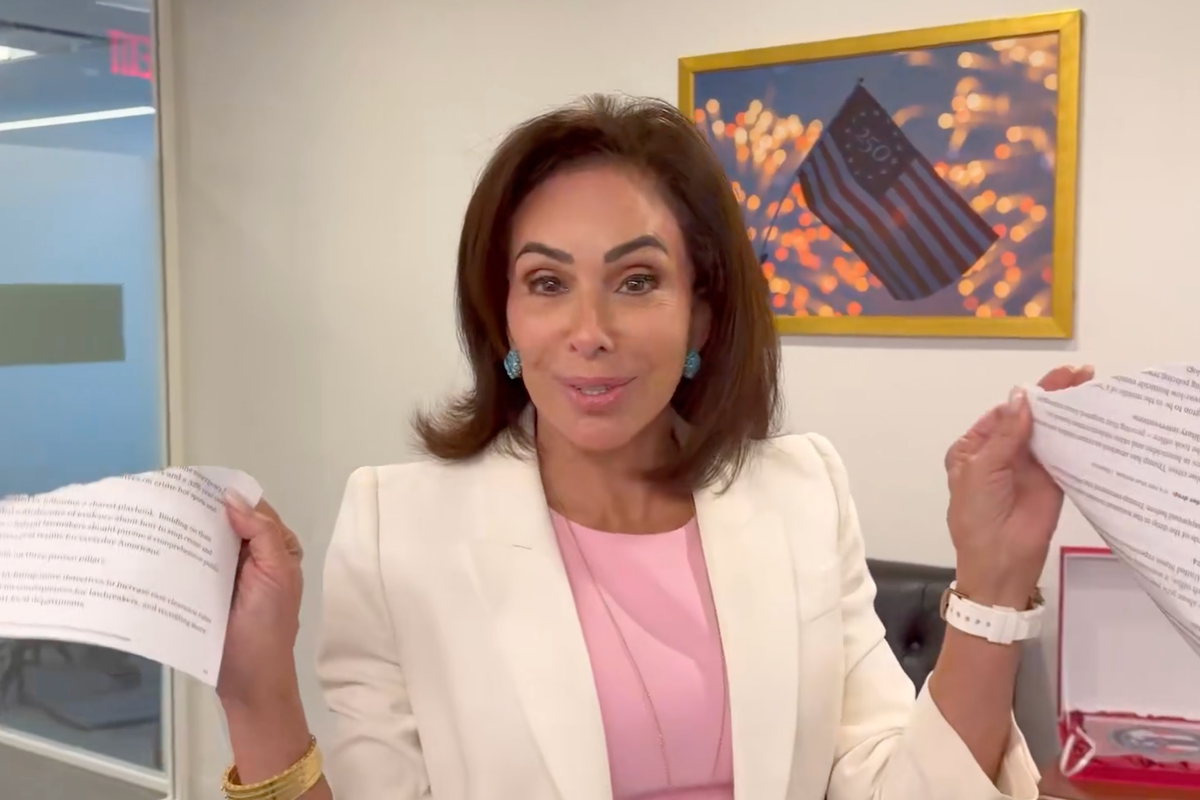
The tenure of U.S. Attorney for the District of Columbia Jeanine Pirro is currently defined by a visible, grinding friction between the legal realities of her office and the political demands of the Oval Office. When Pirro made the decision to dismiss federal charges related to the Lincoln Memorial Reflecting Pool—concluding that the damage was the result of a botched government renovation rather than a wave of activist vandalism—she effectively collided with the President’s public narrative. That collision sparked a firestorm of speculation regarding her job security and her future within an administration that often equates loyalty with the wholesale adoption of its immediate political grievances.
This standoff is not merely about a damaged pool. It highlights the inherent tension of installing a high-profile media personality into a position that requires the granular, often tedious application of statutory law. Pirro entered the role carrying the dual legacy of a former judge and a fierce television advocate. Yet, the machinery of the Department of Justice is indifferent to television ratings or social media optics. When the evidence in the Reflecting Pool case failed to support the narrative of intentional destruction, the prosecutor in her took precedence over the political ally. This decision, while legally sound, alienated her from the very center of power that empowered her appointment. Meanwhile, you can find other developments here: Why Western Training Camps Are Failing Ukrainian Conscripts.
The criticism from the White House was immediate and visceral. The President publicly accused her of having "choked," a phrase that signaled a deep dissatisfaction with her perceived inability to deliver on specific political objectives. In Washington, such public rebukes are rarely accidental. They serve as warning shots, meant to signal to both the appointee and the public that the leash is tightening. Despite this, Pirro remains in her position. Behind the scenes, the calculus is likely more complex than the headlines suggest. Removing a U.S. Attorney for D.C. during a period of massive federal law enforcement deployment—including an ongoing, controversial "summer surge" of National Guard troops for the upcoming 250th anniversary—could invite unnecessary administrative chaos during a high-stakes period.
Her recent decision to convene a rare special grand jury has been interpreted by some administration insiders as a strategic maneuver to regain favor. Whether this is a legitimate exercise of prosecutorial authority or a frantic attempt to align her office’s output with the President’s desires remains a matter of intense debate among federal observers. What is undeniable is that her office has been pushed to its limits. Her tenure has been marked by repeated, and often unsuccessful, attempts to secure indictments that align with the broader "Safe and Beautiful" agenda, which often pits her office against the skepticism of federal judges who are increasingly wary of politically motivated charging decisions. To see the bigger picture, we recommend the excellent analysis by The Washington Post.
The broader environment in the capital is one of persistent securitization. The increased presence of federal law enforcement—FBI agents, U.S. Marshals, and thousands of National Guard troops—has transformed the daily experience of D.C. residents, turning neighborhoods into staging grounds for a federal security experiment. Pirro has been the public face of this militarized approach, repeatedly justifying the surge as a necessary response to rising crime and social disorder. By doing so, she has tethered her own professional survival to the success of this occupation-style policy. If the security operations in D.C. encounter significant pushback or result in further high-profile legal failures, the political cost will fall directly on her shoulders.
True independence is the rarest currency in the federal justice system. Any U.S. Attorney working under a president with such a hands-on approach to local prosecution faces a nearly impossible binary: act as a blunt instrument for the administration or operate as an independent arbiter of justice. Pirro is currently attempting to navigate the space between these two extremes. If she chooses the path of complete subordination, she risks losing the credibility of her own office; if she insists on legal independence, she risks the loss of her mandate.
The events of the past few weeks suggest a woman who is acutely aware of the tightening walls. Her refusal to step down, coupled with the continued prosecution of other vandalism cases—such as the recent charges brought against a Kentucky woman for actions at the World War II Memorial—shows an effort to demonstrate that her office remains active and aligned with the administration’s broader goals on property protection, even if she defied the President on the Reflecting Pool specifics. It is a delicate balancing act. She is attempting to project strength while the ground beneath her shifts.
Ultimately, the friction currently on display is a symptom of a larger struggle over the role of federal prosecutors in a highly polarized environment. The Department of Justice is meant to function as a shield against the winds of political volatility, not as a sail to catch them. As long as the pressure to deliver "wins" for the White House supersedes the commitment to objective evidence, the tenure of any official in such a position will be defined by its next crisis. For now, Pirro occupies a precarious middle ground, one that is becoming increasingly untenable as the demands from the Oval Office grow more specific and the tolerance for institutional independence wanes.
Trump weighed firing Pirro for Reflecting Pool reversal: Sources
This video provides additional context regarding the internal White House discussions surrounding the potential removal of the U.S. Attorney and the President's public frustration over the Reflecting Pool case.
http://googleusercontent.com/youtube_content/1