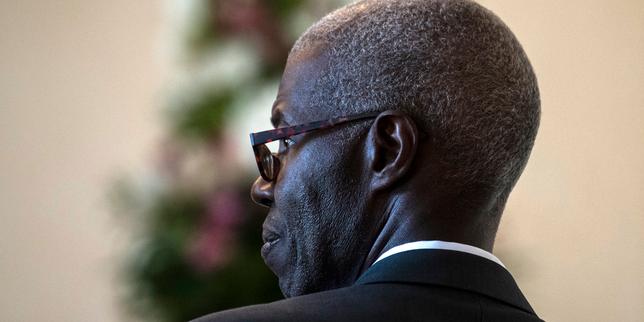
Modern societies are actively dismantling the ancient obligation to welcome the stranger, replacing universal solidarity with what philosopher Souleymane Bachir Diagne calls an anti-empathy ideology. In his seminal examination of hospitality, Diagne argues that treating human movement as an existential threat rather than a shared human condition erodes the very foundation of democratic ethics. Drawing on West African traditions of teranga, Kantian cosmopolitanism, and postcolonial thought, his work exposes a stark reality: border walls and bureaucratic cruelty do not protect civilization—they hollow it out from the inside.
That is the uncomfortable diagnosis. We have spent decades building legal, financial, and architectural fortresses designed to keep outsiders at bay, convincing ourselves that cold detachment is simply pragmatic governance.
The Architecture of Indifference
Walk through any major transit hub in Europe or North America today and look closely at the seating. You will notice armrests placed directly in the middle of benches, sloped surfaces that prevent lying down, and spikes tucked into building alcoves. Urban planners call this defensive architecture. Critics call it hostile design.
It is the physical manifestation of a deeper philosophical shift.
For centuries, across virtually every major religious and secular tradition, the treatment of the traveler was the ultimate moral litmus test. In ancient Greece, xenia dictated that a host must offer food, shelter, and protection to a guest before even asking their name. In the Islamic traditions that deeply inform Diagne’s intellectual framework, honoring the guest is a direct reflection of faith. Across Senegal and much of West Africa, the concept of teranga elevates hospitality from a polite social gesture into a foundational civic duty—an active, unconditional openness toward the other.
Today, that duty has been inverted. Empathy is routinely framed in political discourse as a dangerous weakness, a luxury that overburdened welfare states and anxious populations can no longer afford. Politicians campaign on the promise of hardness. Media ecosystems monetize fear of demographic change. Gradually, almost imperceptibly, cruelty becomes normalized as common sense.
Diagne identifies this exact inversion as the anti-empathy ideology. It does not merely ask citizens to ignore the suffering of migrants, refugees, or the unhoused; it actively trains them to view compassion as naive, subversive, or outright illegal. When humanitarian rescue ships in the Mediterranean face criminal prosecution and ordinary citizens face fines for offering water to border-crossers, the state is no longer just policing territory. It is policing the human conscience.
Why Souleymane Bachir Diagne’s Philosophy Matters Now
Souleymane Bachir Diagne is not an ivory-tower theorist detached from the friction of global politics. Born in Saint-Louis, Senegal, educated at the École Normale Supérieure in Paris under Louis Althusser and Jacques Derrida, and now teaching at Columbia University, he occupies a unique vantage point between African, European, and American intellectual traditions.
His work consistently challenges the false binary between universalism and cultural identity. Many contemporary thinkers argue that we must choose between open universal values—which critics dismiss as a disguised form of Western imperialism—and rigid cultural relativism, which traps people inside closed ethnic or national boxes.
Diagne rejects both traps. He proposes what he terms a lateral universalism, a concept borrowed from Maurice Merleau-Ponty.
Instead of a single, top-down standard imposed by one dominant culture onto the rest of the world, lateral universalism emerges through translation, dialogue, and mutual encounter between equals. Hospitality is the practical engine of this philosophy. You cannot translate another person’s experience if you refuse to let them through the door.
Consider a hypothetical example to see how this plays out on the ground. Imagine a mid-sized European manufacturing town facing a labor shortage alongside an influx of asylum seekers from West Africa. Under an anti-empathy framework, the town treats the newcomers purely as an administrative problem—housing them in isolated facilities on the industrial outskirts, barring them from working while claims drag on for years, and framing their presence as a drain on municipal budgets. Resentment festers on both sides. Now imagine the same town applying lateral universalism and teranga. Local guilds pair newcomers with retired craftsmen for language and trade apprenticeships, municipal centers host shared community kitchens, and integration is treated as a reciprocal exchange rather than a one-way demand for assimilation. The economic metrics shift, certainly, but the deeper transformation is civic: the stranger ceases to be an abstraction and becomes a neighbor.
The Economics and Politics of Manufactured Scarcity
Why has the anti-empathy ideology gained such traction over the past twenty years? Follow the incentives.
Fear is an extraordinarily efficient political currency. When wages stagnate, housing costs spiral, and public healthcare systems strain under decades of underinvestment, ruling elites face a choice. They can address the structural causes of economic precarity—tax policy, corporate consolidation, housing speculation—or they can redirect public anger toward the most visible and least powerful group available: the outsider.
The scapegoating mechanism is ancient, yet modern technology has supercharged it. Algorithmic news feeds reward outrage over nuance. A single viral video of border chaos generates millions of impressions, while the quiet, daily reality of immigrant nurses, agricultural workers, and engineers keeping Western economies functional rarely trends.
At the same time, a massive border-industrial complex has emerged to profit from exclusion. Private detention operators, surveillance tech firms, biometric data contractors, and defense conglomerates now rely on multi-billion-dollar government contracts to build smart walls, deploy aerial drones, and manage offshore processing centers. Once an industry depends on permanent crisis for quarterly growth, peace and integration become bad for business.
The Myth of the Closed Container
Defenders of strict exclusion often rely on a seductive metaphor: the nation as a lifeboat. If too many people climb aboard, the boat sinks and everyone drowns.
It sounds logical until you examine the history of human civilization. Nations are not static wooden boats floating in an empty ocean; they are dynamic, living networks shaped by centuries of trade, migration, intermarriage, and cultural cross-pollination.
In his analysis of identity, Diagne repeatedly points out that no culture exists in a vacuum. The French language he writes in carries deep imprints of Arabic, Latin, and West African syntax. The mathematics, medicine, and philosophy that fueled the European Renaissance passed through scholars in Baghdad, Cordoba, and Timbuktu. Even the most fiercely guarded national traditions are the accumulated result of past hospitalities—moments when a society absorbed new ideas, foods, technologies, and people.
Attempting to freeze a culture in amber by sealing its borders does not preserve it. It induces stagnation.
Kant’s Conditional Welcome Versus Unconditional Teranga
To understand the radical edge of Diagne’s argument, it helps to contrast two major philosophical models of hospitality.
In 1795, the German philosopher Immanuel Kant wrote Perpetual Peace, in which he argued that cosmopolitan right must be limited to conditions of universal hospitality. For Kant, every human being has the right not to be treated with hostility when arriving in a foreign land, simply because all humans share the finite surface of the Earth. However, Kant drew a sharp line between the right of visitation (temporary entry to propose commerce or dialogue) and the right of residence (permanent settlement), which he argued depended entirely on a special treaty granted by the host state.
Jacques Derrida later pushed this tension further, distinguishing between conditional hospitality—regulated by laws, quotas, passports, and security checks—and unconditional hospitality, which demands opening one’s home to the unexpected arrival without asking for identification, guarantees, or reciprocity.
Derrida admitted that unconditional hospitality is impossible to fully codify into state law; a nation without any borders ceases to function as a legal entity. Yet he insisted that without the horizon of unconditional hospitality pulling at our conscience, conditional laws inevitably degenerate into bureaucratic brutality.
Diagne bridges Kant and Derrida by grounding this tension in lived African philosophical traditions. In Senegal, teranga is not an abstract legal debate. It is a daily social discipline practiced even—and especially—in conditions of material scarcity. Families with modest means routinely prepare extra food in case an unannounced guest arrives at mealtime. The philosophy behind this practice is profoundly pragmatic: human vulnerability is universal. Today you are the host with a roof over your head; tomorrow, through war, drought, or economic collapse, you may be the traveler knocking at someone else’s door.
The Blind Spots of Both Extremes
Intellectual honesty requires acknowledging where standard arguments on both sides break down.
Hardline restrictionists pretend that sovereign states can completely seal themselves off from global demographics, climate displacement, and economic interdependence without resorting to authoritarian surveillance and ruinous economic contraction. Look at countries with severe demographic aging and ultra-low immigration: shrinking workforces, collapsing pension ratios, and hollowed-out rural towns are already forcing quiet policy reversals behind closed doors.
Conversely, naive open-borders rhetoric often ignores real administrative friction. Municipalities do face genuine short-term pressures on housing stock, public schools, and emergency healthcare when arrivals spike abruptly without federal funding or coordinated logistics. Pretending those constraints do not exist hands an easy rhetorical victory to demagogues.
The real failure of modern governance is not an excess of compassion. It is a catastrophic failure of administrative imagination. Governments spend billions on deterrence infrastructure that fails to stop human movement—merely pushing migrants onto deadlier desert and maritime routes—while starving local communities of the housing, transit, and integration resources that make hospitality sustainable.
How Anti-Empathy Erodes Democracy From Within
The most dangerous consequence of the anti-empathy ideology is rarely discussed in immigration debates: you cannot compartmentalize cruelty.
A society cannot train its police, border agents, judges, and citizens to suspend basic human empathy toward one category of people without that numbness spreading to everyone else. History offers unambiguous warnings here. Colonial powers that perfected brutal crowd-control tactics, arbitrary detention, and racialized surveillance in overseas territories eventually imported those exact tools back into their domestic cities to suppress labor unions and political dissidents.
Psychologists call this moral disengagement. Once you accept the premise that certain human beings fall outside the circle of moral obligation because they lack the right paperwork, lowering that threshold becomes effortless.
First, it applies to undocumented migrants.
Then, to asylum seekers fleeing war.
Soon, the same cold utilitarian logic is turned against the domestic poor, the disabled, the elderly, and political minorities. Why fund public psychiatric care? Why maintain disability benefits? Why protect tenant rights? Under the gospel of anti-empathy, vulnerability itself becomes a moral failing.
Diagne warns that when we amputate our capacity to recognize ourselves in the face of the stranger, we mutilate our own humanity. Empathy is not a finite resource that runs dry when shared; it is a muscle that atrophies when unused.
Reclaiming Hospitality as a Civic Practice
Reversing this cultural drift does not require waiting for sweeping international treaties or overnight political revolutions. Philosophical shifts take root when citizens, institutions, and local leaders refuse to surrender their moral agency to fear.
- Audit the language of public debate. Words shape policy. Terms like "flood," "swarm," and "invasion" are deliberately engineered to trigger biological disgust and bypass rational empathy. Journalists, educators, and citizens must insist on precise, humanizing language that describes people as people rather than natural disasters.
- Shift funding from deterrence to municipal capacity. Citizens and local officials should demand that national governments redirect spending from private detention contractors directly to the cities and towns actually welcoming newcomers—funding affordable housing construction, language instruction, and rapid credential recognition so doctors, engineers, and tradespeople can work immediately.
- Build everyday spaces of encounter. Anti-empathy thrives on segregation. When newcomers and longtime residents never share a classroom, a workplace, a sports league, or a neighborhood council, stereotypes harden into dogma. Community land trusts, public libraries, cooperative workshops, and local civic associations remain the most effective antidotes to manufactured polarization.
- Decriminalize solidarity. Legal protections for humanitarian aid workers, sea-rescue crews, and ordinary citizens providing food, shelter, or medical care to undocumented individuals must be fiercely defended in court and in legislatures. Providing basic life-saving assistance to another human being can never be allowed to become a felony.
Souleymane Bachir Diagne’s core insight is neither sentimental nor utopian. It is a clear-eyed assessment of survival in an interconnected century. Climate disruption, economic volatility, and geopolitical instability guarantee that human mobility will only accelerate in the decades ahead. We cannot build walls high enough to repeal geography or history, and trying to do so will only turn our societies into anxious, heavily policed garrisons—leaving us with a stark choice between learning how to share a fragile planet as equals or destroying our own democracies in the frantic effort to keep the rest of the world outside.