When the signal from a deep space mission drops off the monitors at the Jet Propulsion Laboratory, the public reaction is almost always immediate panic. Social media feeds fill with speculation about catastrophic collisions, equipment failure, or the terrifying isolation of the vacuum. Yet, inside the mission control centers, the atmosphere remains eerily steady. This disconnect exists because the average person views a loss of contact as a life-or-death emergency, while NASA engineers view it as a scheduled, expected, and often routine part of orbital mechanics.
The agency is not indifferent to the silence. Rather, they have spent sixty years building systems specifically designed to handle the inevitable reality that space is a place where communication is never guaranteed.
The Physical Walls of the Solar System
Silence is baked into the flight plan. We often imagine space as a clear, empty void, but for a radio wave, it is a minefield of interference and physical barriers. The most common reason for a "blackout" is a simple matter of geometry. Planets rotate. Moons pass in front of receivers. The sun, a massive ball of charged plasma, frequently sits directly between Earth and a distant probe.
When a spacecraft passes behind Mars, a phenomenon known as occultation occurs. For those minutes or hours, no amount of power can push a signal through the bulk of a planet. Engineers don't sweat these gaps because they are predictable down to the millisecond. They know exactly when the signal will vanish and exactly when it will reappear on the other side. This isn't a crisis; it is a coffee break.
Why Solar Conjunction is the Ultimate Test of Patience
Every two years, Mars and Earth find themselves on opposite sides of the sun. During this period, known as solar conjunction, the sun's corona interferes with radio signals, corrupting data or blocking it entirely. NASA doesn't just "hope" the rovers survive. They intentionally shut down most communications for weeks.
During this time, the rovers are programmed to stay still. They perform basic health checks and wait. The "silence" here is a deliberate strategic choice to prevent a garbled command from accidentally bricking a multi-billion dollar asset. The risk of sending a "turn left" command that the sun's interference turns into a "format hard drive" command is far greater than the risk of letting a rover sit idle for a month.
Autonomy is the Hidden Safety Net
The modern era of space exploration has moved away from "joystick" piloting. If a spacecraft required a constant, live link to Earth to stay alive, it would be doomed before it left orbit. Light speed is a hard limit. A signal sent to a probe near Jupiter takes roughly 40 minutes to arrive. If the probe hits a snag, it cannot wait 80 minutes for a round-trip instructions from Earth to tell it how to fix it.
Every major mission carries a suite of fault protection software. If the spacecraft loses its link to Earth, it enters "safe mode." In this state, it ignores its primary scientific mission and focuses entirely on survival. It will turn its solar panels toward the sun to maintain power and point its high-gain antenna toward the general direction of Earth, waiting for a "handshake" signal. This autonomous recovery protocol is why mission controllers can sleep at night even when their screens are blank.
The Logic of the Safe Mode
- Power Preservation: Shutting down non-essential heaters and cameras.
- Thermal Control: Orienting the craft to prevent sensitive electronics from freezing or overheating.
- Sun-Earth Pointing: Using star trackers to find home without human help.
The Fragility of the Deep Space Network
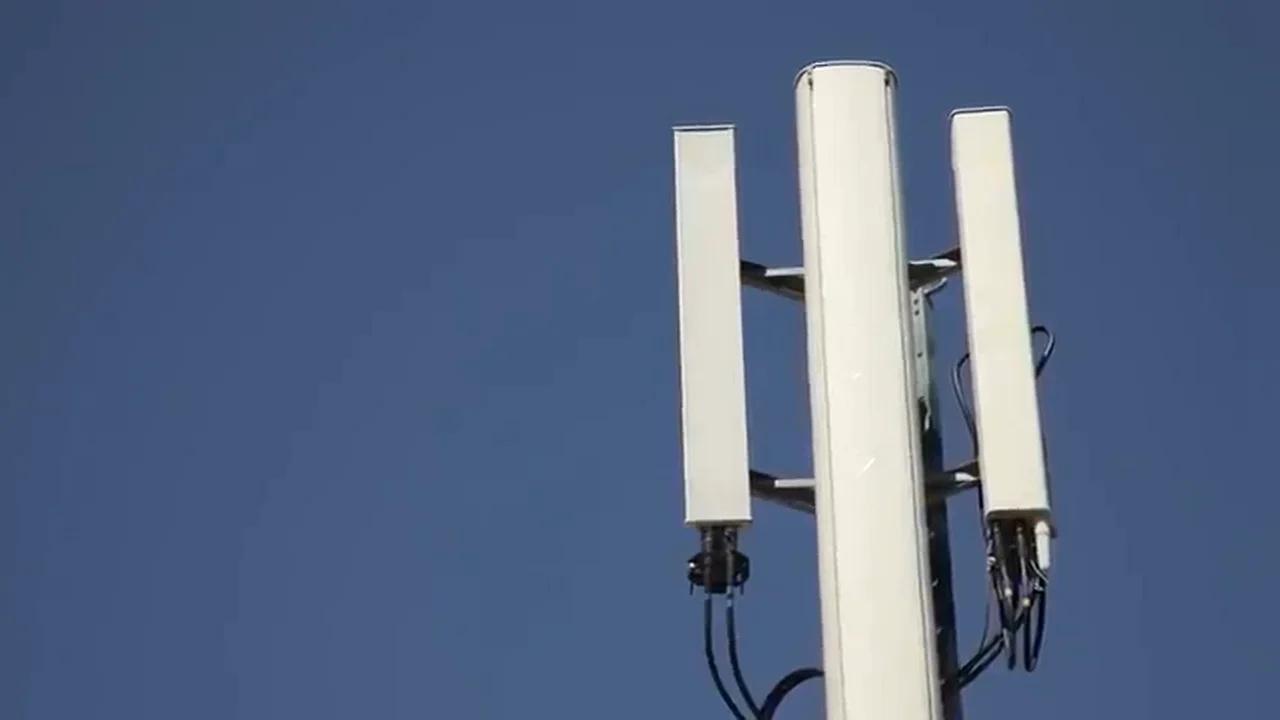
If there is a legitimate reason for concern, it rarely lies with the spacecraft itself. The real bottleneck is the Deep Space Network (DSN). This is a collection of massive radio antenna complexes in California, Spain, and Australia. Because of the Earth’s rotation, these three sites are spaced out so that as one turns away from a target, another turns toward it.
The DSN is old. It is oversubscribed. With the surge in private space missions and new lunar expeditions, the "bandwidth" of the solar system is reaching a breaking point. Sometimes, NASA "loses contact" simply because another mission had a higher priority for the big dish. It is a cosmic version of waiting for your turn on a shared phone line. When a high-priority event like a landing occurs, other missions are told to go silent to clear the airwaves.
Human Psychology Versus Orbital Reality
The fear of silence is a deeply human trait. We equate silence with abandonment or death. In the context of a crewed mission, such as the upcoming Artemis flights to the Moon, the stakes are obviously higher. A loss of signal during a lunar transition is gut-wrenching for the families and the public.
However, even with humans on board, the protocols remain centered on physics, not emotion. Astronauts are trained to execute "loss of comms" procedures that allow them to continue the mission or return home using pre-calculated burn maneuvers. The silence doesn't mean they are lost; it means they are working the problem without the distraction of a voice in their ear.
The Voyager 2 Incident and the Power of Physics
Consider the recent event where a wrong command caused Voyager 2 to tilt its antenna two degrees away from Earth. For weeks, the spacecraft was "silent." To the public, it was a tragedy—the end of a decades-long journey. To NASA, it was a math problem.
They knew the spacecraft was programmed to reset its orientation several times a year to keep its antenna pointed at Earth. They didn't need to "fix" it immediately; they just had to wait for the onboard clock to trigger the pre-programmed correction. They eventually sent a high-power "shout" to bridge the gap, but the calm at NASA was rooted in the knowledge that the machine was doing exactly what it was designed to do in a failure state.
Space is big, and the energy required to bridge the distance is immense. We are trying to hear a whisper from a flashlight a billion miles away. Occasionally, the wind blows, or someone steps in the way, and the whisper vanishes.
We have to stop treating every dropped call as a disaster. The silence isn't a sign of failure. It's a reminder of the scale of the environment we are trying to conquer. The real danger isn't when the signal drops out—it’s if we stop building the machines that know how to handle the dark.