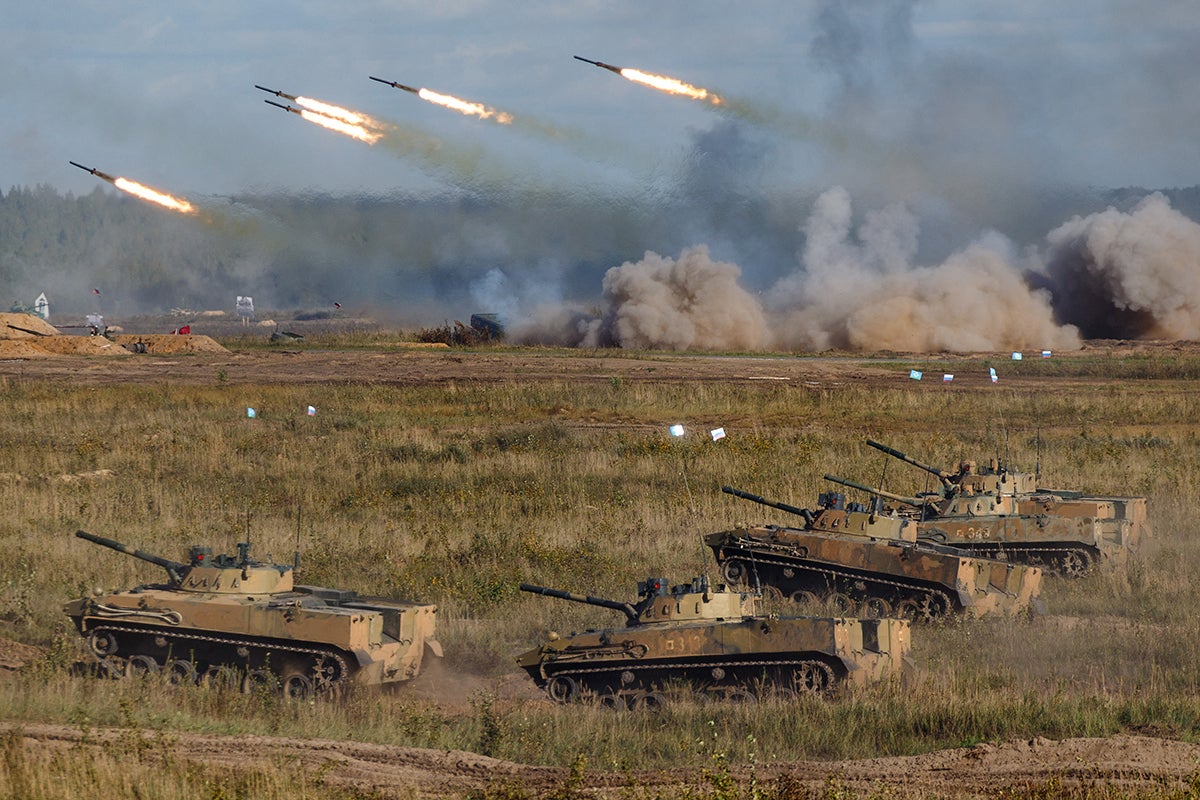
European defense planning has hit a wall of cold math. When General Carsten Breuer, Germany’s highest-ranking military officer, warned that Russia could be logistically and militarily ready to launch an attack against NATO territory within three to five years, he was not engaging in political hyperbole. He was reading from a intelligence playbook that tracks factory shifts, supply lines, and artillery shell production rates. The primary concern is not a massive, cross-border blitzkrieg aiming for Berlin or Paris, but rather a swift, localized land grab in the Baltics designed to test the ultimate validity of NATO’s Article 5 collective defense clause.
Understanding this timeline requires looking past political rhetoric and examining the stark industrial realities defining the current European security grid. Recently making headlines in related news: The Mechanics of Cultural Assimilation: Deconstructing Early-Stage Institutionalization in Tibet.
The Industrial Asymmetry Behind the Three Year Warning
Military strategy means nothing without manufacturing capacity. The core reason Western intelligence agencies have dramatically accelerated their threat timelines boils down to Russia's transition into a permanent wartime economy. While European nations debate budgets and bureaucratic procurement processes, Moscow has restructured its entire domestic industrial base around sustained high-intensity conflict.
Russian defense factories are currently operating on three-shift, 24-hour rotations. This is not a temporary surge; it is a structural realignment. Western sanctions, while damaging to consumer sectors, failed to halt the flow of critical dual-use components needed for military hardware. Through complex supply networks stretching across Central Asia and East Asia, Russia continues to secure the microchips, optical gear, and raw machinery required to refurbish old tanks and construct new cruise missiles at a rate that far outpaces Western Europe’s current industrial output. Additional details into this topic are covered by Associated Press.
Consider the baseline metric of modern warfare: artillery ammunition.
European factories have struggled to meet even fractional production goals for 155mm shells, bogged down by environmental regulations, specialized labor shortages, and a lack of long-term government contracts that would give private defense firms the confidence to expand operations. Russia, conversely, has pushed its domestic production of 152mm shells to levels that dwarf the combined output of the United States and its European allies. When domestic production falls short, established supply agreements with external partners fill the gap, ensuring their front-line batteries rarely go dark.
This is not a matter of superior technology. It is a matter of brutal, industrial volume. A nation that can produce millions of low-tech shells annually holds a distinct operational advantage over an alliance that produces hundreds of thousands of highly advanced, prohibitively expensive precision munitions that take months to build and cannot be easily replaced.
The Baltic Chokepoint and the Mechanics of a Limited Incursion
NATO planners are not preparing for World War III in the traditional sense. They are preparing for a calculated, asymmetric gamble.
The most vulnerable geography sits along the eastern flank, specifically the Suwalki Gap. This narrow strip of land, roughly 60 miles wide, connects Poland with Lithuania while separating the heavily militarized Russian exclave of Kaliningrad from Belarus. In a hypothetical scenario based on current Russian military doctrine, a rapid thrust could seal this gap within hours, effectively cutting off the Baltic states from the rest of the alliance.
The Anti Access Area Denial Umbrella
A localized land grab would be immediately protected by a sophisticated network of air defense and anti-ship missile systems centered in Kaliningrad. This setup creates an operational bubble known as an Anti-Access/Area-Denial (A2/AD) zone.
- S-400 Triumf Systems: These long-range surface-to-air missile batteries can track and engage targets deep into Polish and Baltic airspace, complicating any immediate Western air response.
- Iskander-M Ballistic Missiles: Capable of carrying conventional or nuclear warheads, these mobile systems put European capitals and key logistics hubs at immediate risk.
- Bastion Anti-Ship Systems: Deployed along the coast, these units can effectively close the Baltic Sea to NATO naval reinforcement efforts.
The strategic goal of such an incursion would not be total conquest. The objective would be political paralysis. By establishing a fait accompli on the ground within 48 hours, Moscow would present NATO with a catastrophic choice: launch a full-scale, potentially nuclear-escalatory war to liberate a small strip of Baltic territory, or negotiate a settlement that fundamentally breaks the promise of mutual defense. If the alliance chooses negotiation over confrontation, NATO ceases to exist as a credible deterrent.
The German Reconstitution Dilemma
Germany sits at the center of this security calculation, yet its military remains crippled by decades of deliberate underfunding and structural neglect. The much-publicized Zeitenwende—the 100-billion-euro special fund announced to revitalize the Bundeswehr—has run into the brick wall of German procurement bureaucracy.
Money does not instantly transform into military capability. Buying fighter jets or ordering new frigates involves multi-year lead times. In the short term, the Bundeswehr faces critical shortages in basic operational gear, ranging from digital encrypted radios to winter clothing and functional spare parts for its armored fleets.
Germany’s commitment to station a permanent, combat-ready brigade of 4,800 soldiers in Lithuania by 2027 is a massive logistical strain. Under current conditions, equipping this single brigade requires stripping assets from other domestic units, leaving the remaining home forces even more depleted. It is an exercise in robbing Peter to pay Paul, occurring at a time when the entire force needs comprehensive modernization.
Furthermore, the European defense infrastructure remains deeply fragmented. Unlike the unified procurement systems seen during the Cold War, contemporary Europe features a patchwork of competing national defense champions. France, Germany, the UK, and Sweden all manufacture distinct, proprietary weapon systems. This lack of standardization means that a German tank cannot easily use spare parts or ammunition manufactured in France, creating a logistical nightmare for any sustained, coalition-led defense operation along the eastern border.
The Logic of the Three Year Window
Why did the intelligence assessments settle specifically on a three-to-five-year timeframe? The answer lies in the projected trajectory of the conflict in Ukraine and the subsequent timeline required for military reconstitution.
Western analysts calculate that within thirty-six to sixty months, the intense consumption of material along the current front lines will transition into a stabilized or managed phase. At that juncture, Russia's hot production lines will no longer be feeding an active, resource-devouring war zone. Instead, that massive industrial output will be redirected entirely toward stockpiling weapons, replacing lost armor, and positioning fresh, combat-experienced divisions along the borders of Estonia, Latvia, and Lithuania.
Europe’s window to match that capability is shrinking daily. Building a new ammunition factory or expanding a tank assembly line takes roughly two to three years from the moment the first contract is signed to the moment the first products roll off the line. If European governments do not issue binding, long-term production contracts immediately, their defense industries will not achieve the required scale until long after the Russian military has fully rebuilt its conventional forces.
The Deterrence Calculus Shifts
Deterrence is entirely psychological. It relies on a potential adversary looking at your forces and concluding that the cost of an attack vastly outweighs any conceivable gain. Right now, the Kremlin is observing a Europe that is economically dominant but militarily fragmented and politically hesitant.
The assumption that the United States will always deploy its full military weight to solve European security crises is undergoing severe strain. With shifting political priorities in Washington and the growing necessity to counter naval expansion in the Indo-Pacific, Europe can no longer treat American airpower and logistics as a permanent safety net. The continent must develop an independent, conventional capacity to hold the line.
Achieving this level of readiness requires a fundamental shift in economic priority. It means moving away from peacetime budgetary frameworks and treating defense procurement with the same urgency as an active national emergency. If European capitals fail to bridge the gap between their political promises and their industrial realities within the next thirty-six months, the continent will enter a period of vulnerability where peace is maintained not by strength, but by the shifting whims of an aggressive neighbor.


