The United States has finally offered a formal stance on the timeline for the conflict involving Iran and Israel, but the answer is far grimmer than the diplomatic "de-escalation" rhetoric suggests. Washington’s current assessment signals that we are no longer looking at a temporary flare-up but a permanent shift in regional security where active combat is the new baseline. For those waiting for a specific date or a peace treaty to signal the end of hostilities, the reality is that the war has already transitioned into an open-ended cycle of attrition.
The conflict will not end because the fundamental drivers—nuclear capability, regional hegemony, and the collapse of the proxy buffer—are now irreconcilable. While the U.S. State Department maintains that it seeks to avoid a "wider regional war," the Pentagon's movements and the intelligence coming out of Tel Aviv suggest that the wider war has arrived. It is simply being fought in chapters rather than all at once.
The Illusion of a Ceasefire
Diplomats often mistake a pause in missile fire for the beginning of peace. This is a fatal miscalculation. In the corridors of power in Tehran and Jerusalem, the strategic calculus has shifted from deterrence to degradation. Iran has spent decades building a "ring of fire" around Israel, using groups like Hezbollah and the Houthis to maintain plausible deniability. That mask fell away when Iran launched direct ballistic missile strikes from its own soil.
Once a red line is crossed, it cannot be uncrossed. The U.S. response has been to provide a "limitless" defensive shield while privately telling Israel to "take the win." This advice ignores the military reality on the ground. You cannot win a war of survival by merely catching bullets in a glove. Israel’s military establishment is now convinced that the only way to end the threat is to dismantle the source. This means the timeline for the war is now tethered to the lifespan of the current Iranian political structure.
The Failed Logic of Containment
For twenty years, the West believed Iran could be contained through economic sanctions and the JCPOA framework. That theory is dead. Sanctions have not stopped the centrifuges from spinning, nor have they prevented the development of hypersonic missile technology. The U.S. now finds itself in a reactive posture, rushing carrier strike groups to the Eastern Mediterranean every time a fresh round of threats emerges.
This reactive cycle is exactly what Tehran wants. It drains American resources and forces Israel to remain on a permanent high-alert footing that bleeds its economy dry. Military analysts often overlook the "math of exhaustion." Israel’s Iron Dome and Arrow systems are technical marvels, but they are astronomically expensive. A single interceptor can cost millions of dollars, while the drone it destroys might cost twenty thousand. Iran is playing a long-game of financial and psychological exhaustion, and the U.S. hasn't figured out how to stop the bleeding without a direct kinetic intervention they are desperate to avoid.
The Shadow War Moves Into the Light
We used to talk about the "war between the wars"—a series of covert assassinations, cyberattacks on infrastructure, and maritime sabotage. That era is over. The current phase is characterized by high-intensity exchanges that involve sovereign territory. When Israel struck the Iranian consulate in Damascus, it signaled that diplomatic norms no longer provide sanctuary for those planning operations.
Iran’s response showed a willingness to risk total war to maintain its domestic credibility. This is a critical point that many analysts miss. The Iranian leadership is facing significant internal pressure. A regime that appears weak against a foreign "Zionist enemy" risks losing its grip on the hardliners who form its base of power. Therefore, they are incentivized to keep the conflict simmering, if not boiling.
The Nuclear Threshold Factor
The ultimate "end date" for this conflict is tied to the nuclear clock. Intelligence reports suggest Iran is closer to weapons-grade uranium than at any point in history. Israel has stated repeatedly that it will not allow a nuclear-armed Iran to exist.
If Iran crosses that threshold, the U.S. will be forced to choose between a full-scale military campaign to destroy the facilities or accepting a Middle East where every minor border skirmish carries the risk of a nuclear exchange. The U.S. response to "when will it end" is essentially "when the nuclear threat is neutralized," but they have no clear path to do that without a war they don't want to fight.
The Washington Paradox
The U.S. is currently trying to ride two horses at once. On one hand, it provides the intelligence and munitions that allow Israel to strike Iranian interests. On the other, it begs for restraint to keep oil prices stable and voters at home satisfied. This duplicity is visible to both sides. Tehran knows that the U.S. has no appetite for a new ground war in the Middle East during an election cycle or a period of economic uncertainty.
Israel knows this too. Consequently, Israel is increasingly acting unilaterally, presenting the U.S. with a fait accompli that forces Washington to provide cover after the fact. This breakdown in the traditional patron-client relationship means the war’s duration is no longer something Washington can control. The "answer" from America is less of a strategy and more of a hope that the situation doesn't explode before the next news cycle.
The Role of New Alliances
We must also look at the shifting global chessboard. Iran is no longer isolated; it is a key supplier of hardware for Russia’s efforts in Ukraine and has secured a strategic partnership with China. This creates a protective "Great Power" umbrella over Tehran. If the U.S. pushes too hard, it risks a confrontation with Moscow or Beijing.
This geopolitical shielding allows Iran to be more aggressive than it would be otherwise. The war is no longer a regional dispute; it is a frontline in a larger global struggle between the West and a new axis of revisionist powers. When you view it through this lens, the idea of a "peace deal" becomes an absurdity. You don't sign peace deals with states that are trying to overturn the entire world order.
Military Reality Versus Diplomatic Fiction
The U.S. continues to talk about a "two-state solution" or "regional integration" via the Abraham Accords as a way to sideline Iran. This is a fantasy. You cannot integrate a region while one of its most powerful actors is actively trying to burn it down. The Arab states that signed the accords are now in a terrifying position. They want Israeli security cooperation against Iran, but they cannot afford to be seen as Western puppets while Palestinian casualties mount.
Iran uses the Palestinian cause as a tactical tool to prevent this integration. Every time Israel and Saudi Arabia get close to a deal, a new front opens up. This is a repeatable, effective strategy that ensures the war never truly ends because the "peace" being offered is an existential threat to Iran’s regional ambitions.
The Infrastructure of Attrition
To understand why this war won't end, look at the geography. Iran has built a logistics network that spans from Tehran to the Mediterranean. This "land bridge" allows for the constant flow of precision-guided munitions. Israel’s mission is to physically sever this bridge. That requires constant bombing in Syria, Lebanon, and Iraq.
This is not a mission with a "completion" checkbox. It is like mowing the grass; if you stop for a week, the threat grows back. The U.S. provides the fuel and the blades for this metaphorical lawnmower but refuses to acknowledge that the job is infinite. As long as the Iranian Revolutionary Guard Corps (IRGC) controls the Iranian state, the land bridge will be rebuilt as fast as it is destroyed.
The Social Cost of Perpetual Readiness
In Israel, the "citizen-soldier" model is being pushed to its breaking point. Constant reservist call-ups are hollowing out the tech sector and creating a mental health crisis. In Iran, the cost of the war is being paid by a population suffering from hyperinflation and repression.
Yet, neither government sees a way out. For the Israeli government, any sign of weakness is an invitation for a repeat of October 7th. For the Iranian clergy, the external enemy is the only thing justifying their iron-fisted rule. They are locked in a "death hug"—a struggle where neither can let go without falling into the abyss.
The Coming Threshold
The U.S. answer on when the war ends is effectively "not yet." They are waiting for a moment of internal collapse within Iran or a decisive military blow that they don't have to deliver themselves. This is not a policy; it is a gamble.
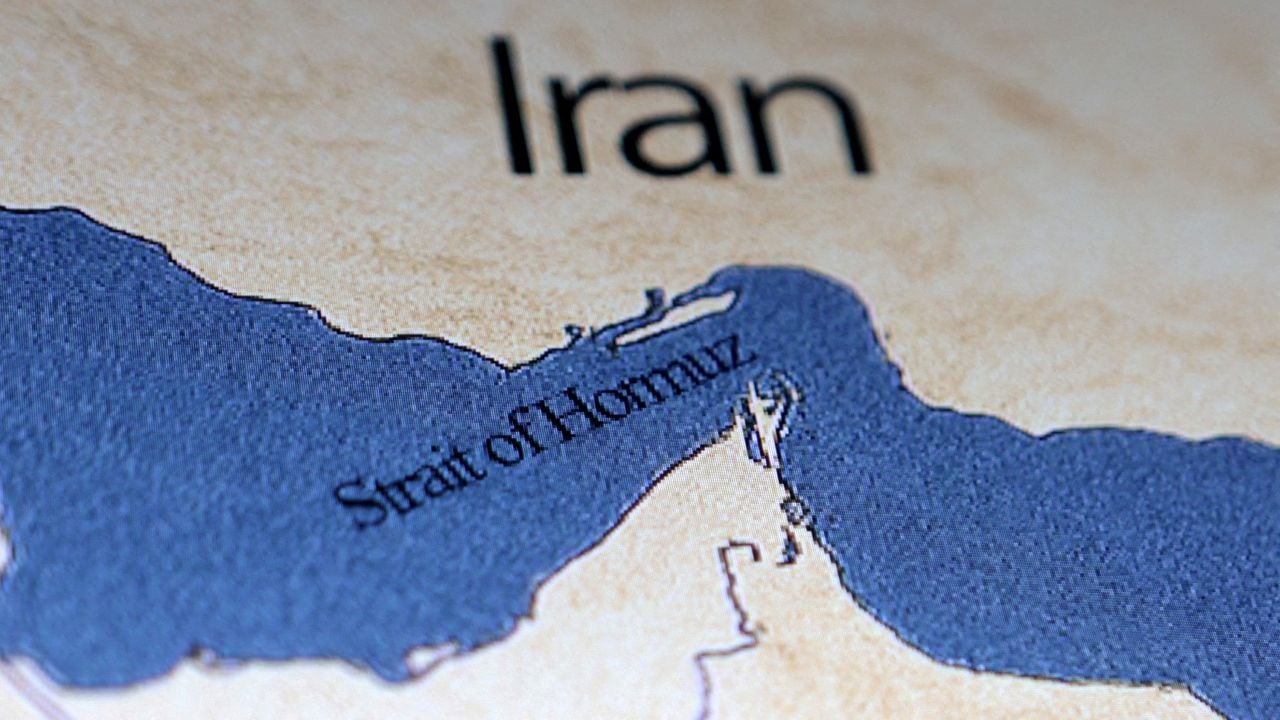
The danger of this approach is that "open-ended" conflicts eventually produce "Black Swan" events. A single missile hitting a high-value target, a stray round hitting a holy site, or a miscalculation in the Strait of Hormuz could turn this controlled attrition into a global catastrophe. The U.S. is trying to manage the unmanageable, acting as a referee in a match where both players have discarded the rulebook.
The hard truth is that we are witnessing the birth of a Thirty Years' War for the Middle East. The boundaries of the conflict are expanding, the weapons are getting more sophisticated, and the political will to stop it is non-existent. The war ends when one side can no longer physically or economically sustain the effort. Based on the current stockpiles and the fanatical commitment of the leadership on both sides, that day is years, if not decades, away.
Prepare for a decade of high-intensity regional instability. The old Middle East is gone, and the new one is being forged in a furnace of perpetual combat that no amount of Western diplomacy can extinguish.