Radio City Music Hall doesn't usually shake quite like that. When Buddy Guy stepped onto the stage for his sold-out 90th birthday concert celebration, titled Buddy's Got the Blues, he wasn't just marking another year. He was giving a masterclass in survival, grit, and the enduring power of American music. At an age when most people have long since retired to the porch, Guy is still bending strings, breaking rules, and leaving audiences completely breathless.
If you think the blues is a dying art form played in empty basement bars, October 1, 2026, in New York City proved you completely wrong. The house was packed to the rafters, filled with fans who knew every B.B. King nod, every Muddy Waters reference, and every scorching lick that made Guy a Chicago legend in the first place. Building on this theme, you can find more in: The Brutal Math Behind the Olivia Dean Copyright Battle.
An All-Star Lineup That Meant It
Tribute shows can occasionally feel stiff or corporate, like a collection of polite nods from artists who barely know each other. This night was the exact opposite. Music director Steve Jordan assembled a murderers' row of guitar slingers, vocalists, and lifelong disciples who treated the stage like church.
John Mayer called him a hero and a mentor. Gary Clark Jr. admitted he grew up with Buddy Guy posters plastered across his bedroom walls. When artists like Susan Tedeschi, Derek Trucks, Joe Bonamassa, Christone "Kingfish" Ingram, Billy Gibbons, and Jimmie Vaughan trade solos, you expect fireworks. What you don't always expect is raw, unadulterated reverence. Analysts at The Hollywood Reporter have also weighed in on this trend.
Every guest understood the assignment. They didn't try to outplay the master; they played for him. When Eric Gales and Samantha Fish locked into "Baby Please Don't Leave Me", the energy in the room spiked. When Bobby Rush stepped up for "Chicken Heads," the history of electric blues walked right out into the spotlight.
Why Buddy Guy Still Matters More Than Ever
We live in an era obsessed with digital perfection, quantized drum tracks, and auto-tuned vocals. Buddy Guy represents the violent, beautiful opposite of that sterile approach. His playing is messy, loud, emotional, and unpredictable. He walks into the crowd, plays his Stratocaster with a drumstick, and squeezes notes until they cry. That isn't something you can program on a laptop.
The setlist was a sprawling, chronological love letter to the genre. Moving from fiery renditions of "Damn Right, I've Got the Blues"
Why Buddy Guy at Radio City Music Hall Was Everything Modern Concerts Lack
entertainment
You can spend three hundred dollars on a stadium ticket, watch a pop star hit their marks on a hydraulic stage, and walk out feeling like you just watched a very expensive television commercial. Or you can stand in a room while an eighty-seven-year-old man plugs a Stratocaster into a beaten-up Fender amp and tears the roof off a historic theater.
That is what happened when Buddy Guy took over Radio City Music Hall for a sold-out night billed as Buddy's Got the Blues.
Most music journalism treats legendary blues artists like museum pieces. Reviewers whisper about their legacy, praise their endurance, and grade them on a curve because of their birth year. Buddy Guy refuses to participate in that polite retirement home narrative. He walks onto a stage not to collect applause for what he did in nineteen-sixty-something, but to remind every younger musician in the building how the instrument is supposed to bleed.
If you weren't there, you missed a masterclass in tension, release, and absolute emotional honesty. Let's look at why this specific night at Radio City matters so much in the current musical ecosystem.
The Raw Power of Unfiltered Blues
Radio City Music Hall is an art deco masterpiece designed to swallow sound and project grandeur. It feels vast. It feels intimidating. Most performers need massive LED walls, a twenty-piece dance troupe, and pyrotechnics just to fill that room with energy.
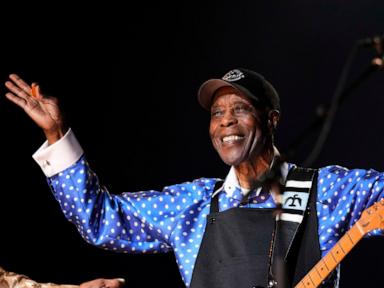
Buddy Guy walked out wearing a polka-dot shirt and holding a guitar, and the cavernous venue suddenly felt like a sweaty south side Chicago lounge.
That is the difference between production value and raw presence. Modern live shows rely on synchronization. Every click track, lighting cue, and backing track is locked in place to ensure nothing goes wrong. Buddy's shows are dangerous because he still leaves room for chaos. He stretches notes until they break. He drops his volume to a literal whisper, forcing three thousand people to hold their breath, before exploding into a jagged, distortion-heavy run that rattles the balcony.
You cannot script that kind of dynamic range. It comes from decades of playing in clubs where you had to fight the sound of glasses clinking and cash registers ringing just to get the room's attention.
A Living Link to History That Is Rapidly Disappearing
The architecture of modern blues is built on ghosts. We spend our time writing obituaries for the greats, chronicling the passing of the last traditional bluesmen who learned directly from the originators. Buddy Guy occupies a lonely, vital space. He stood on stage alongside Muddy Waters and Howlin' Wolf. He showed Jimi Hendrix what a Stratocaster could really do.
When he plays a shuffle, he is not imitating a style; he is playing the dialect he helped invent.
Yet, the media narrative around his Radio City appearance often gets trapped in sentimentality. Writers focus on his age rather than his execution. That is a mistake. On that stage in New York, his timing was as sharp as a razor, and his phrasing was economical. He doesn't waste notes. Every bend serves a purpose. Younger guitarists often fall into the trap of playing fast to prove their competence. Buddy plays a single note and makes you feel every ounce of disappointment, triumph, and exhaustion behind it.
That authority cannot be taught in a conservatory or downloaded from a sample library. It is earned through a lifetime of road wear.
What Modern Touring Artists Can Learn From This Night
We are living through a strange era of live music. Ticket prices are astronomical, dynamic pricing has turned buying seats into a blood sport, and fans frequently complain about artists phoning it in behind walls of pre-recorded vocals.
Buddy Guy’s sold-out night at Radio City serves as an antidote to all of that corporate bloat.
It proves that audiences are starving for genuine connection. People do not pack a massive historic theater to watch perfection. They go to witness a human being wrestle with an instrument in real time. When Buddy stepped off the stage and walked down the aisles while soloing—a trademark move he has executed for decades—he broke the invisible wall separating the star from the crowd. Grown adults reached out just to touch the neck of his guitar as he walked past, not out of rabid fandom, but out of a desire to anchor themselves to something real.
If you want to understand why the blues still matters, stop looking at streaming charts and go watch someone who lived the history execute it live.
Listen to his records if you need a baseline, but find a ticket the next time he plays within driving distance. Pay attention to how he commands a room without saying a word. Put down your phone for at least three songs. Let the volume hit your chest. That is the standard. Everything else is just noise.