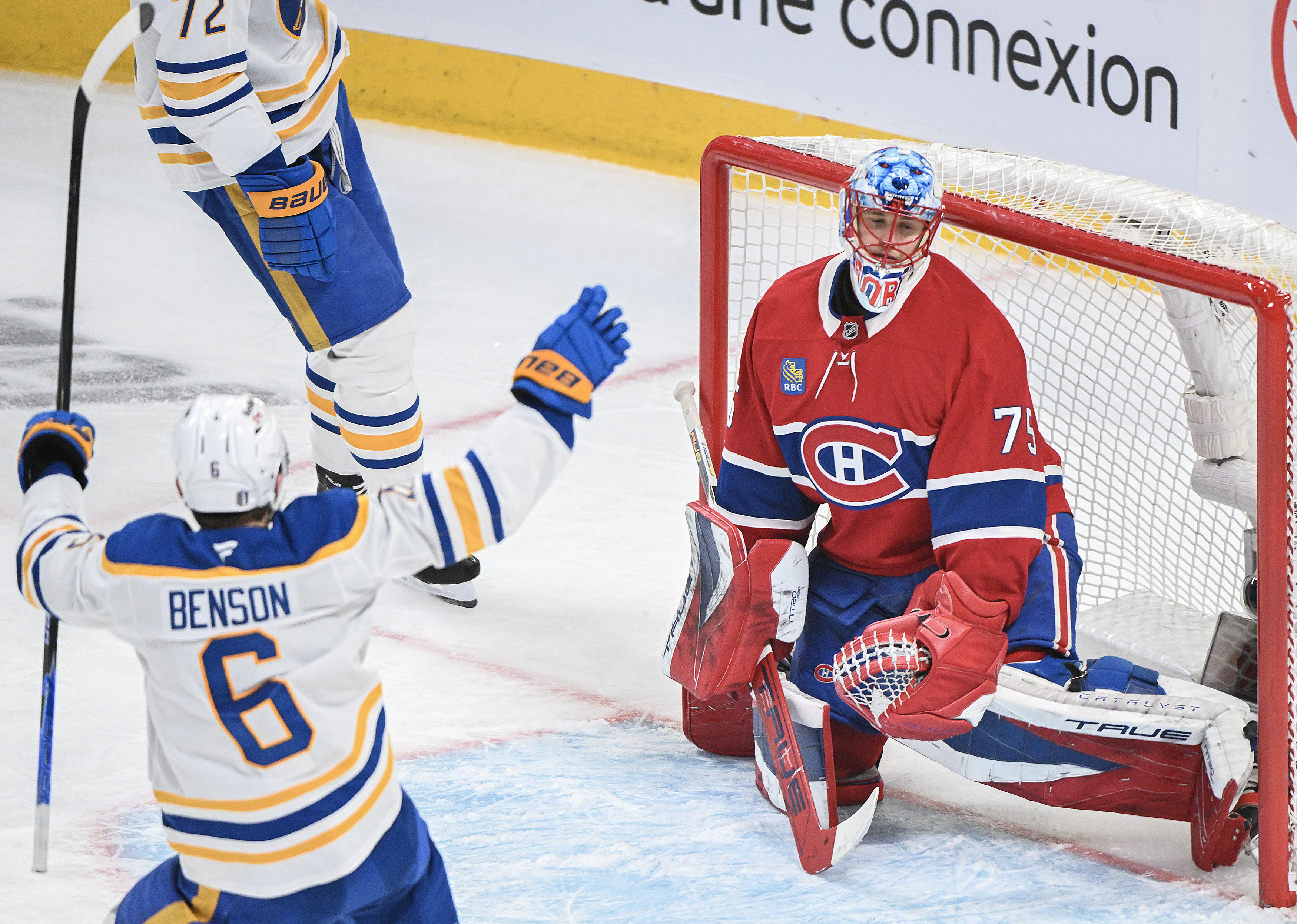
The Buffalo Sabres just proved they can survive a street fight. After dropping the opener to the Montreal Canadiens, the Sabres clawed back with a 3-2 victory to even the series. It wasn't pretty. It wasn't a clinic in puck possession. But for a team that has historically folded when the pressure ramps up in the third period, this win felt different.
If you're a Sabres fan, you've seen this movie before. The team gets a lead, sits back, and spends the final ten minutes watching their goaltender get shelled like a beach during a storm. Not this time. Buffalo stayed aggressive, clogged the neutral zone, and forced Montreal into mistakes they didn't make in game one. The series is tied, and the momentum has shifted back to Western New York.
Why the Sabres defensive rotation worked
Defense wins playoff games. Everyone says it. It’s a cliché because it’s true. In the first game of this series, Buffalo's blue liners were caught chasing ghosts. They let the Canadiens’ speed dictate the flow. Tonight, the Sabres shortened their gaps. They didn't let Nick Suzuki or Cole Caufield breathe in the transition.
Rasmus Dahlin played like a man possessed. He wasn't just clearing the crease; he was initiating the breakout with a level of confidence we haven't seen in weeks. When Dahlin is on, the rest of the team follows. He logged heavy minutes, but he didn't look gassed in the final stretch. That’s the fitness level you need for a deep run.
The physical play was the real story. Buffalo finished checks. They made Montreal's forwards look over their shoulders before reaching for the puck. You saw it on the second goal. A heavy hit along the boards separated the puck from the defender, leading directly to a quick strike in the slot. It’s simple hockey, but it’s effective.
Montreal missed their opportunities on the power play
The Canadiens had their chances. Let's be honest. If Montreal's power play was even slightly competent tonight, we'd be talking about a 2-0 series lead for the Habs. They went 0-for-4 on the man advantage. That’s a death sentence in the postseason.
Buffalo's penalty kill deserves a ton of credit. They were active. They didn't just sit in a box and wait to get picked apart. They pressured the points. They forced hurried passes. Most importantly, Ukko-Pekka Luukkonen was a wall. He stopped 28 of 30 shots, but his biggest saves came when the Sabres were shorthanded.
Montreal looked frustrated. You could see it in their body language by the middle of the second period. They were trying to be too perfect. Instead of shooting the puck and crashing for rebounds, they were looking for the extra pass that wasn't there. Against a goalie like Luukkonen, who tracks the puck well through traffic, you have to create chaos. Montreal played it too safe.
The depth scoring finally showed up
Top lines usually cancel each other out in the playoffs. You expect the stars to get their points, but it’s the third and fourth lines that actually win series. Buffalo's bottom six was the difference maker in this 3-2 edge.
The go-ahead goal didn't come from a flashy superstar move. It came from grit. A puck thrown toward the net, a scramble in the blue paint, and a determined stick pouncing on a loose rebound. That’s playoff hockey. It’s not always about the highlight reel. It’s about who wants the puck more in the dirty areas of the ice.
Montreal’s depth, meanwhile, felt invisible. They didn't provide the secondary scoring needed to offset the Sabres' defensive focus on their top guys. If the Canadiens don't get more production from their middle-six forwards, this series is going to end much sooner than their fans want.
Small mistakes led to big problems for Montreal
Hockey is a game of inches and split seconds. A missed assignment on a line change or a weak clearing attempt can change everything. Montreal had a couple of those tonight.
- A turnover at the blue line led directly to Buffalo's first goal.
- A failed clearance under pressure allowed the Sabres to reset their cycle.
- Too many losing battles in the corners during the third period.
These aren't massive systemic failures. They’re individual lapses. But in a one-goal game, those lapses are magnified. Montreal has to clean up the sloppy play in their own zone if they want to reclaim the lead when the series heads back to their barn.
Goaltending remains the biggest X factor
Luukkonen won the battle of the creases tonight. He looked calm. When things got hectic in front of him, he didn't scramble. He stayed big in the net and made the saves he was supposed to make, plus a few he probably wasn't.
On the other side, Sam Montembeault wasn't bad. He made some stellar saves early to keep the game scoreless. But he'd probably like that third goal back. It was a scramble, sure, but those are the moments where a goalie has to find a way to smother the puck.
The goaltending matchup is basically a toss-up right now. Both guys are capable of stealing a game. The edge goes to whoever can maintain that focus for sixty full minutes without a soft goal leaking through. Tonight, that was Luukkonen.
Physicality and the mental game
Playoffs are as much about mental toughness as they are about skill. Buffalo showed they have some bark. They didn't get bullied. In fact, they were the ones initiating the contact. This is a team that has been called "soft" in the past. Tonight, they looked like they embraced the grind.
The scuffles after the whistle were frequent. Neither team is backing down. This series is getting chippy, and that usually favors the team that can stay disciplined while playing on the edge. Buffalo took some penalties, but they didn't let the emotion derail their game plan.
Montreal needs to find a way to get under the Sabres' skin without ending up in the penalty box themselves. They have the speed to draw calls, but they weren't moving their feet enough tonight to force Buffalo into those desperate hooks and holds.
Adjustments for game three
The series is now a best-of-five. The pressure shifts.
Buffalo needs to keep the forecheck heavy. Don't let Montreal’s defensemen have time to look up and find their outlets. When the Sabres pressure the puck carrier in the offensive zone, Montreal struggles to transition. It’s a simple blueprint, but it requires a lot of energy.
Montreal has to fix their power play. Period. You can't go 0-for-4 in a playoff game and expect to win. They need more shots from the point and more bodies in front of Luukkonen's eyes. They’re making it too easy for him to see the puck.
The Sabres also need to stay out of the "defensive shell" mindset. When they had the lead in the third, they started to retreat. It’s a dangerous way to play. They survived tonight, but against a high-octane offense like Montreal’s, playing prevent defense usually leads to disaster.
The impact of the home crowd
Returning to Buffalo with the series tied is a massive win for the Sabres. The atmosphere in that building is going to be electric. Fans have waited a long time for meaningful spring hockey, and you can bet the energy will feed the players.
Montreal is a tough environment, but Buffalo at home is no walk in the park when the team is actually winning. The Sabres need to use that energy early in game three to jump out to a lead. Don't let Montreal settle into the game. Hit them early and hit them often.
This series is far from over. Both teams have shown they can win in different ways. But for one night, the Sabres looked like the more determined group. They evened the score, and now the real chess match begins.
Stop worrying about the flashy stats and start looking at the blocked shots and the hits. That’s where Buffalo won this game. If they keep that up, they have a real shot at taking control of this series. Watch the neutral zone play in the next game; it’ll tell you everything you need to know about who’s going to win.