Bans do not kill traditions. They move them indoors, into private ranches, or out of sight.
Look at the standard story coming out of Mexico City whenever a judge suspends or a legislature bans tauromaquia at Plaza México. It usually goes like this. A matador practices footwork or charges a wheeled cart on a quiet patio or inside a ganadería outside the capital, and the headline frames it as quiet defiance. A plucky artist refusing to let politics snuff out centuries of heritage. Building on this theme, you can find more in: Inside the Starshield Whiplash Nobody in Washington Will Own.
That framing is lazy. It mistakes courtroom theater for how a high-risk physical discipline actually operates.
A bullfighting ban in Mexico City does not stop a serious matador from training because a matador's training never depended on selling twenty-thousand tickets on a Sunday afternoon in the middle of the capital. It depends on muscle memory, livestock, coaching, and time. When people treat a city ban like a death sentence for every torero in the country, they get the mechanics of the sport—and the mechanics of cultural bans—completely backwards. Experts at USA Today have shared their thoughts on this trend.
The Lazy Consensus About Bans and Bullfighting
The lazy consensus assumes that when a city halts commercial bullfights, the entire ecosystem evaporates overnight. No public arena events, no culture. Simple.
Except anyone who has spent real time around livestock, training rings, and ranch roads knows that public spectacles are the tip of a very heavy iceberg. Bullfighting is not a single event. It is a multi-stage apprenticeship that runs on quiet, repetitive labor long before anyone puts on a traje de luces.
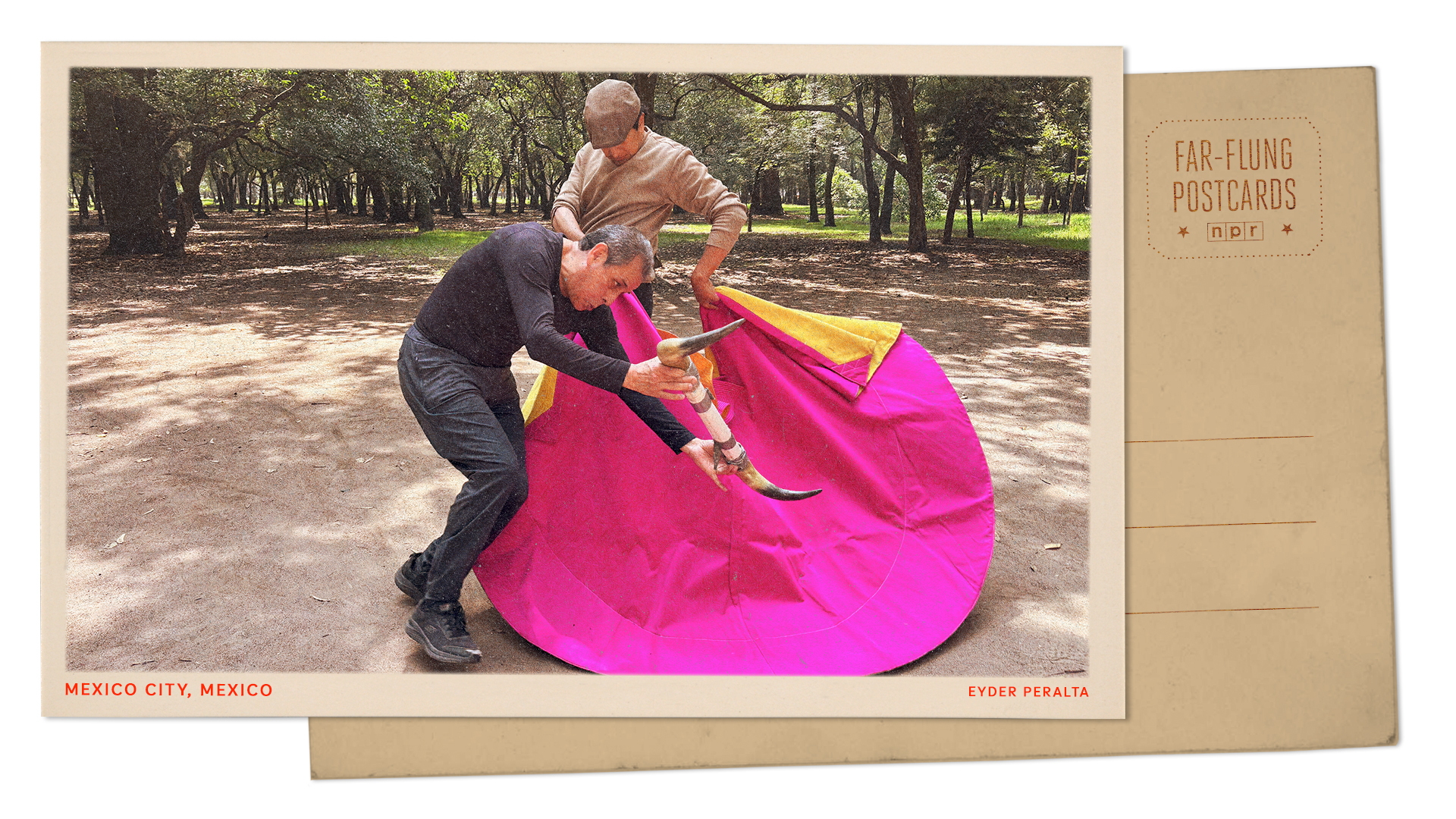
Footwork drills with a muleta or cape. Posture work in front of a mirror or a trainer. Charging practice against a carretón—the wheeled frame with horns used to teach weight transfer, timing, and hip alignment. Private sessions with fighting cattle on ranches in states like Tlaxcala, Querétaro, or Hidalgo. None of those require a packed stadium in Mexico City to happen.
When commentators act shocked that a matador is still training despite a local ban, they are confusing public exhibition with technical preparation. Those are two different things. A boxer does not stop hitting the heavy bag just because a local commission suspends fights in one venue. A gymnast does not forget how to work a pommel horse because a city cancels an exhibition meet.
I have watched plenty of sports, arts, and commercial industries burn time and money fighting the wrong battle after a regulatory shock. They put all their energy into press releases and emotional appeals while ignoring how the underlying skill is built, funded, and passed along. In bullfighting, that mistake shows up every time someone assumes a municipal injunction erases years of physical conditioning.
What "Training" Actually Means When the Ring Goes Quiet
Let's define terms precisely before anyone romanticizes or vilifies what happens behind closed gates.
In tauromaquia, training covers physical conditioning, technical repetition with cloth and dummy frames, mental composure, and live work with cattle—often tienta sessions on breeding ranches where cows or young bulls are tested and aspiring bullfighters learn distance, terrain, and reaction under real pressure. Public performance is the ticketed, regulated spectacle held in an authorized ring, subject to municipal permits, animal welfare injunctions, court stays, and political swings.
Mixing those two buckets together leads to bad analysis on every side of the argument.
Animal rights advocates often point to a city ban and declare victory, assuming the practice is finished in that jurisdiction. Meanwhile, traditionalists often treat a ban as total erasure, painting every practice session as an act of rebellion against a hostile world. Both sides miss the boring, stubborn truth: training is routine, and routine adapts faster than legislation.
A matador working out in Mexico City or traveling out to a ranch isn't necessarily staging a grand political statement. Often, they are just doing what athletes and performers do when the calendar changes: keeping their timing sharp, staying in shape, and waiting to see whether legal injunctions lift, shift to another venue, or turn into a permanent reality.
Think about the economics, too. A full-scale commercial event at a massive venue like Plaza México involves massive logistics—security, vendors, licensing, transportation, promotion, and legal compliance. Training a single fighter takes a fraction of that footprint. You can run footwork drills in a courtyard. You can haul a practice frame into an open space. You can drive out to a ranch with a few people and work for hours without drawing a crowd or needing a city permit.
Why People Ask the Wrong Questions About This Ban
Whenever a major bullfighting ban hits the news in Mexico City, the surrounding search questions tend to follow a predictable script. Most of them start from a shaky premise.
"How can matadors keep training if bullfighting is banned?"
By separating private skill work from public commercial events. A ban on holding bullfights in a city restricts staging events under that rule—it does not confiscate a matador's legs, balance, timing, or access to training tools and rural ranches. Asking how they can train assumes training requires a public arena. It doesn't.
"Does a ban in Mexico City end bullfighting in Mexico?"
No. Mexico is a huge country with different state laws, local ordinances, court rulings, and ranching regions. Even within Mexico City, legal battles over tauromaquia have swung back and forth through injunctions, appeals, and legislative votes. Treating one city's ban as a nationwide off-switch ignores federalism, court timelines, and rural geography.
"Why do matadors still practice if their career prospects are uncertain?"
For the exact same reason any specialist keeps training through a slump, an injury, or a regulatory freeze: optionality and identity. If you have spent ten or fifteen years building a specific physical craft, you do not walk away on a Tuesday because a court or council issues a ruling. You stay ready in case windows open elsewhere, in case legal stays hold or reverse, or simply because the discipline is how you measure yourself.
"Is bullfighting on its way out anyway?"
That is the harder, more honest question—and pretending the answer is a simple "no" would be dishonest. Even critics who favor traditional arts have to look at long-term headwinds: shifting urban attitudes toward animal welfare, tighter legal scrutiny, rising costs, and younger generations that often view the spectacle very differently than their grandparents did. A city ban doesn't single-handedly kill a tradition overnight, nor does a training session prove that long-term cultural pressure doesn't exist. Both realities can be true at once.
Heavy Hitters, Real Mechanics, and the Blind Spots
To understand why these clashes keep repeating, look at how historians and cultural analysts examine blood sports and contested traditions. Writers like Ernest Hemingway in Death in the Afternoon and Alexander Fiske-Harrison in Into the Arena—whatever one thinks of their romanticism or blind spots—spent serious ink breaking down how ritual, fear, technique, and audience expectations interact in the ring. On the legal and ethical side, scholars of animal law and urban governance—such as Cass Sunstein or Gary Francione, representing very different legal philosophies—have long shown how courts and municipalities wrestle with traditions when public norms collide with established practices.
Notice what happens when those worlds collide in a megacity like Mexico City.
In a dense urban center, legal and political pressure is concentrated. Courts issue rulings. Activists organize visibly. Politicians weigh urban voters. Yet the physical craft itself is anchored in bodies, trainers, breeders, and rural land. Legislation can shut a gate in the capital far faster than it can unlearn muscle memory or erase centuries of ranching infrastructure.
Still, let's be straight about the downsides of looking at things this coldly.
Focusing purely on technical continuity and legal loopholes can make an analyst sound detached from real human and animal stakes. If you only talk about footwork, ranch access, and court stays, you can miss why millions of people care deeply about animal suffering—or why other people feel genuine grief watching a lifelong craft get squeezed by urban politics.
There is another risk, too. Overstating how easily matadors adapt can lull traditionalists into ignoring real structural shrinkage. Keeping a training routine alive is not the same thing as keeping a vibrant mass market, a deep pipeline of newcomers, or broad public legitimacy. Training can survive in smaller corners even while mainstream relevance narrows.
What Actually Works When Everything Around You Shifts
If you are watching this from the outside—as a fan, a critic, an observer of sports and culture, or someone dealing with disruption in your own field—stop reacting to headlines and start watching behavior under constraint.
- Separate the stage from the craft. Whenever a rule, platform, or law restricts public performance, look at what happens in practice spaces. Real commitment lives in unglamorous repetition, not press statements.
- Track geography and jurisdiction. Never assume one city or one ruling equals a national verdict. Look at where rules apply, where enforcement happens, and where adjacent spaces still operate.
- Do not confuse survival with growth. A practice continuing behind closed doors proves resilience, not immunity from long-term cultural or economic decline.
- Watch the pipeline, not just the stars. A tradition's real health shows up in who is learning the basics from scratch—not just veteran figures who already know their craft inside out.
Imagine a scenario where a city bans public bullfights tomorrow, yet three young apprentices still wake up at dawn to work on stance, balance, and timing with a trainer before heading out to a ranch on the weekend. Nothing about that scene is a mystery. It is just human persistence colliding with a legal line on a map.
A ban in Mexico City can close a stadium. It cannot unmake a matador's training.