Cash is a loud, crude signal for a quiet, sophisticated problem.
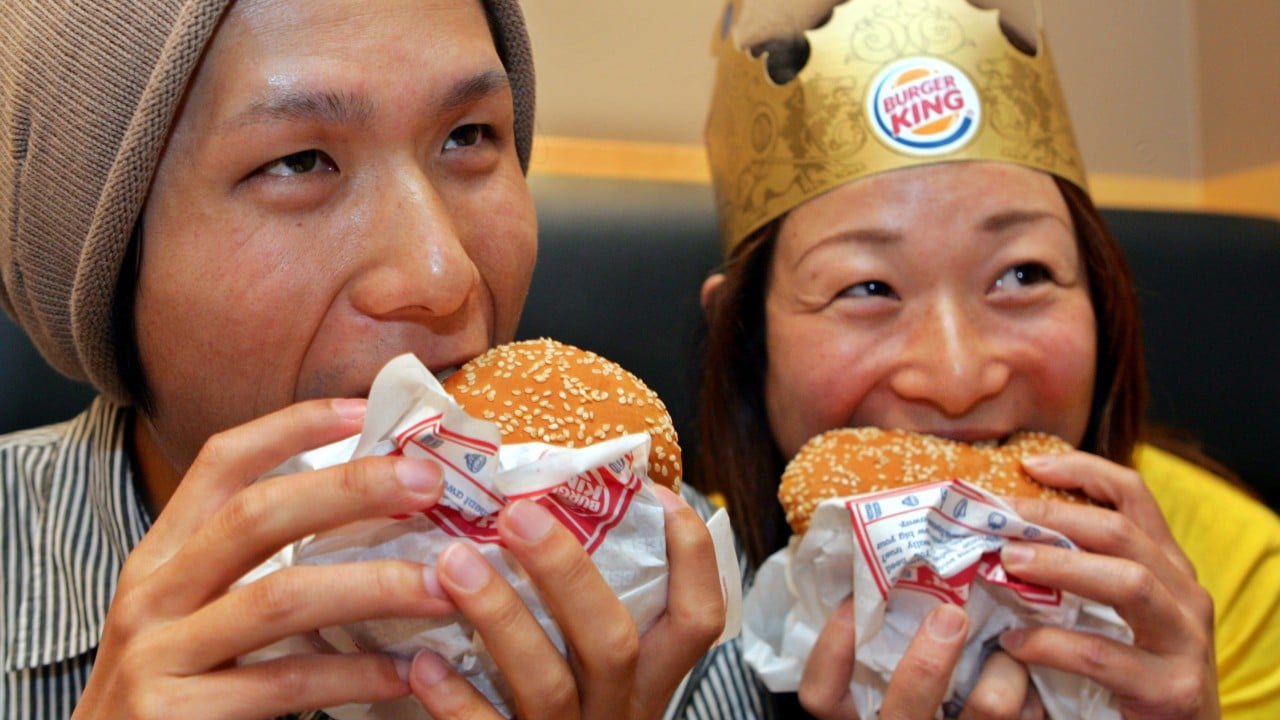
When Burger King Japan announced they would shell out up to $250,000 to lure franchisees away from rivals like McDonald’s or Mos Burger, the business press swooned. They framed it as a "bold expansion play." They called it a "war chest for growth."
They are wrong.
In the high-stakes world of Quick Service Restaurants (QSR), a signing bonus of this magnitude isn't a sign of strength. It is a distress signal. It’s an admission that the brand cannot win on its unit economics, its operational friction, or its cultural relevance in the Japanese market. If you have to pay someone a quarter of a million dollars just to walk through the door, you aren't "disrupting" the market. You are subsidizing a flawed business model.
The Mirage of the Switching Bonus
Let’s look at the math that the PR team wants you to ignore. Opening a QSR outlet in a high-density urban environment like Tokyo or Osaka isn't just about the initial franchise fee. You are looking at massive CAPEX for construction, specialized ventilation for those "flame-grilled" patties, and the soul-crushing reality of Japanese real estate costs.
A $250,000 "incentive" covers a fraction of the setup costs. But here is the kicker: it comes with strings. These "incentives" are almost always structured as offsets against future royalties or development milestones. You aren't getting a check for $250k to spend on a vacation; you are getting a discount on a long-term debt obligation to a brand that is currently struggling to find its footing against a dominant McDonald’s Japan.
I have seen private equity groups blow through nine figures trying to "buy" market share this way. It never works. Why? Because you end up with "Mercenary Franchisees."
A Mercenary Franchisee doesn't care about the brand. They care about the rebate. The moment the subsidy runs out and the reality of Burger King’s lower foot traffic compared to competitors hits the P&L, these operators start cutting corners. They cut staff. They let the bathrooms get grimey. They kill the brand to save the margin.
Japan is Not a Growth Market for Burgers
The "lazy consensus" in the industry is that Japan is a land of untapped potential for Western fast food. That is a fantasy from 1995.
Japan’s population is shrinking. The workforce is evaporating. The cost of labor is skyrocketing. In this environment, "growth" is a zero-sum game of attrition. To win, you have to steal a customer from someone else.
McDonald’s Japan is a fortress. They have mastered the "local-global" balance, offering seasonal items like the Tsukimi Burger that have achieved near-religious status. Mos Burger owns the "premium/fresh" niche. Burger King sits in the awkward middle—too expensive to be the budget king, too inconsistent to be the premium choice.
When you offer a massive bounty for franchisees, you are effectively asking operators to bet against the demographic cliff. You are asking them to believe that your flame-broiler is a magic wand that can conjure customers out of thin air in a neighborhood where the average age is 50 and climbing.
The Operations Trap: Flame-Grilling is an Albatross
Burger King’s biggest marketing strength is its biggest operational weakness. The broiler.
In the United States, space is cheap. In Japan, every square centimeter is a battleground. The specialized equipment required to maintain the "Home of the Whopper" identity creates a higher barrier to entry for kitchen design. It requires more maintenance, more specific HVAC requirements, and creates more heat in a cramped kitchen.
When a franchisee looks at the "switching incentive," they have to weigh that cash against the lifetime maintenance cost of a kitchen that is fundamentally more complex than a standard flat-top grill setup.
The competitor's article focuses on the "lure" of the cash. An insider looks at the "drag" of the equipment. If the brand were truly "flame-grilled for success," operators would be lining up to pay extra for the privilege of the license. They wouldn't need a bribe.
Can You Buy Loyalty?
In the franchise world, the relationship between the franchisor (the brand) and the franchisee (the operator) is a marriage.
Imagine a marriage proposal where the groom says, "I know I’m a bit of a mess and my house is falling apart, but I’ll give you $250,000 if you marry me instead of that guy next door."
That is not a foundation for a healthy relationship. It is a transaction based on desperation.
The best franchisees—the ones who actually know how to run a profitable P&L in the Japanese market—aren't looking for a handout. They are looking for:
- Supply Chain Stability: Can you get the lettuce to the door during a global logistics crisis without tripling the cost?
- Digital Integration: Does your app actually work, or is it a clunky reskin of the US version that doesn't understand Japanese payment nuances?
- Menu Innovation: Can you move beyond the Whopper without alienating your core fans?
If Burger King Japan had the answers to those three questions, they could keep the $250,000. The operators would come for the profit, not the rebate.
The Hidden Cost of the "Rival" Strategy
The specific target of this campaign—franchisees of rival brands—is particularly dangerous.
You are asking an operator to diversify their portfolio by adding a direct competitor. This creates immediate operational friction. It splits the focus of the management team. It creates a "house divided" scenario where the operator is constantly comparing the ease of the McDonald’s system with the friction of the Burger King system.
Usually, within 24 months, the operator realizes why they liked the rival brand in the first place. They realize the $250,000 was just a down payment on a headache.
Stop Asking the Wrong Question
The media is asking: "Will this help Burger King reach its goal of 600 stores?"
The real question is: "What happens to those 600 stores when the subsidies end?"
Artificially inflating store counts through financial engineering is a classic move for a brand trying to look attractive for an IPO or a private equity exit. It creates a "hockey stick" growth curve on paper while the underlying health of the individual units is actually declining.
If you are an investor or an operator, you should be terrified of any brand that uses cash to solve a culture problem. Real growth is pulled by customer demand, not pushed by corporate handouts.
The Unconventional Advice for the Bold
If Burger King Japan actually wanted to win, they would take that $250,000 per store and dump it into a five-year R&D cycle to reinvent the "Whopper" for the Japanese convenience-store (konbini) era. They would stop trying to be a "restaurant" in the traditional sense and start being a high-efficiency flavor engine that fits into the 2026 reality of Japan.
They won't do that. It’s too hard. It’s much easier to write a check and hope the headlines do the work for them.
Don't be fooled by the glitter of the quarter-million-dollar bounty. In the QSR world, there is no such thing as a free lunch, and there is certainly no such thing as a free franchise. If they have to pay you to play, the game is already rigged against you.
The $250,000 isn't a gift. It’s an exit fee for your sanity.
Take the money and run? No. Don’t even take the meeting.