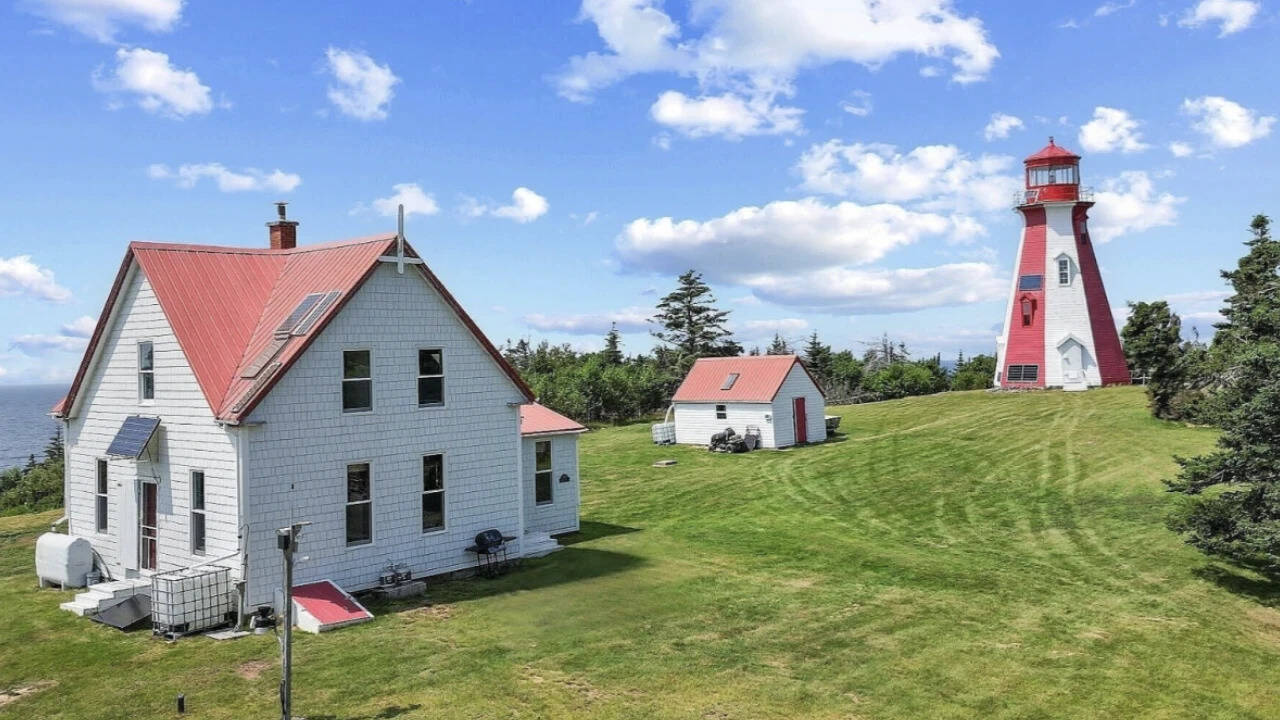
Every few months, a real estate listing for a remote lighthouse island hits the news cycle and triggers a collective sigh from desk-bound professionals. The latest trophy on the block carries a $6.9 million price tag. Mainstream property blogs treat these listings like fairy tales. They sell you the fantasy of ultimate privacy, crashing waves, and off-grid sovereignty.
They are lying to you by omission.
I have spent fifteen years advising ultra-high-net-worth buyers on distressed coastal assets and trophy properties. I have watched tech founders and hedge fund managers drop eight figures on private islands, only to beg me to offload them at a forty percent haircut three years later. When you buy a remote lighthouse for $6.9 million, you are not buying real estate. You are buying an unfunded infrastructure liability surrounded by corrosive saltwater.
The lazy consensus in luxury real estate says land is scarce, water views are priceless, and historic structures hold permanent value. That logic works for a brownstone in Manhattan or a villa in Lake Como. It collapses entirely the moment your driveway requires a Coast Guard-certified vessel and a favorable tide chart.
The Maintenance Trap Nobody Puts in the Brochure
Saltwater is an acid that never sleeps. It eats mortar, rusts structural steel, shorts out solar inverters, and rots timber from the inside out. On the mainland, a burst pipe or a blown transformer is a phone call and a $500 service bill. On a remote rock three miles offshore, it is a logistical military operation.
Consider the physics of marine construction. You cannot just hire a local contractor to fix a leaking slate roof on a nineteenth-century tower. You have to pay a specialized crew from the moment they step onto your chartered barge at the mainland dock. If the swell picks up to six feet, they cannot land. You still pay their day rate.
Here is what the glossy listings deliberately hide from the balance sheet:
- Marine Transit Logistics: Barging heavy equipment, concrete, or a replacement septic tank costs thousands of dollars per trip, assuming weather windows align.
- Desalination and Water Storage: Reverse osmosis systems require constant filter replacements, high-pressure pump rebuilds, and massive energy draws. When they fail, you are drinking bottled water flown in by helicopter.
- Power Generation Redundancy: Off-grid solar looks great on an architectural digest spread until you hit three weeks of coastal fog in November. You need commercial-grade diesel generators, bulk fuel storage tanks, and environmental containment systems to prevent catastrophic spill fines.
- Insurance Uninsurability: Standard property carriers will laugh you out of the building. You are forced into the surplus lines market, such as Lloyd's of London, where deductibles for named storms routinely start at ten percent of the insured value.
If you do not budget at least $350,000 to $500,000 a year purely for preventative maintenance and operational burn, the ocean will reclaim your investment within a decade.
The Legal Fiction of Private Island Ownership
Buyers assume that dropping $6.9 million buys them absolute dominion. They picture themselves pacing the lantern room like a sovereign monarch.
In reality, historic lighthouses are tangled in a web of federal, state, and maritime easements that strip away the very privacy you paid for. Because most historic lighthouses were originally transferred out of federal hands—often under frameworks like the National Historic Lighthouse Preservation Act in the United States or equivalent crown estate transfers abroad—they come with ironclad deed restrictions.
First, the aid to navigation itself almost never belongs to you. The Coast Guard or national maritime authority retains permanent ownership of the Fresnel lens, the foghorn, and the automated beacon. More importantly, they retain a permanent legal easement to access your island without notice, twenty-four hours a day, seven days a week. You might be hosting a private dinner on the terrace when a buoy tender drops anchor and a crew in steel-toed boots marches straight through your courtyard to service a battery bank.
Second, historic preservation covenants dictate what you can and cannot touch. Want to widen a window to let in more natural light? Denied. Want to replace failing historic masonry with modern weatherproofing composites? Rejected by the historical commission. You are legally obligated to restore the structure using period-accurate materials and techniques, which easily triples your construction costs.
Third, public access mandates frequently survive the sale. Many coastal jurisdictions enforce strict public trust doctrines. While you own the upland rock above the mean high-water mark, the intertidal zone belongs to the public. Kayakers, fishermen, and curious tourists have every legal right to pull their boats onto your cove, set up camp on the wet sand, and stare at your house with binoculars.
Why People Ask the Wrong Question About Off-Grid Luxury
When prospective buyers look at these properties, they always ask the same flawed questions. Let's look at the actual realities behind the standard search queries surrounding private islands.
Is buying a private island a good investment?
No. It is a depreciating, illiquid consumption asset. Liquidity in real estate relies on a deep pool of qualified buyers. The global pool of people who have $7 million in liquid cash, want to live in extreme isolation, and possess the tolerance for marine logistics is roughly the size of a high school classroom. When you want to sell, your property will sit on the market for four to seven years. You do not buy an island to build wealth; you buy it to burn excess capital.
Can you turn a remote lighthouse into a luxury boutique hotel or Airbnb?
This is the favorite delusion of first-time trophy buyers. They run a quick spreadsheet, assume $1,500 a night at seventy percent occupancy, and convince themselves the island will pay for itself. They completely ignore commercial maritime regulations. The moment you charge a paying guest to step onto your rock, your liability profile explodes. You need commercial passenger vessel certifications for your transport boats, ADA compliance modifications that violate historic preservation rules, commercial fire suppression systems, and full-time staff housing. The regulatory compliance costs alone will bankrupt the venture before your first guest checks in.
How much does it cost to live off-grid on an island?
Beyond the purchase price, living off-grid at a luxury standard costs roughly three times what an equivalent estate costs on the mainland. Every gallon of fuel, every carton of milk, and every bag of groceries carries a marine freight surcharge.
The Contrarian Play for True Coastal Sovereignty
If your goal is genuine isolation, dramatic ocean views, and generational wealth preservation, you have to abandon the romanticism of the standalone rock.
Smart capital avoids isolated islands and targets peninsular choke points or causeway-connected estates.
Imagine a scenario where you spend that exact same $6.9 million on a forty-acre rocky headland connected to the mainland by a narrow, gated strip of land. You get the exact same 270-degree crashing surf. You get the exact same feeling of being at the edge of the earth.
Yet look at what changes on your balance sheet:
- Grid Tie-In: You can pull municipal power and fiber-optic internet directly to the property line, using solar and battery walls as a clean backup rather than a life-support system.
- Standard Construction: Concrete trucks, cranes, and local tradespeople can drive straight to your front door. Your maintenance costs drop by seventy percent overnight.
- Medical Evacuation: If someone has a medical emergency at two in the morning during a winter gale, an ambulance can reach your driveway in fifteen minutes. On a lighthouse island, you are praying a Coast Guard rescue swimmer can hoist you off a slick rock in forty-knot winds.
- Exit Liquidity: When you eventually decide to sell, your buyer pool is ten times larger because the property is accessible by car.
I will admit the one undeniable downside to this approach: you lose the cocktail party bragging rights. Saying you own a coastal peninsula does not trigger the same wide-eyed reaction as saying you own a lighthouse island. You give up the cinematic mythology of the isolated keeper's tower.
But mythology does not keep the lights on when a nor'easter rips the copper flashing off your roof in January.
If you have $50 million in the bank and want to set $6.9 million on fire just to own a piece of maritime history, buy the lighthouse and enjoy the view. Just stop calling it real estate, and make sure you keep another $5 million in a dedicated escrow account to pay the ocean's ransom. Everyone else should buy the mainland bluff, keep their dry feet, and let someone else subsidize the Coast Guard's real estate.