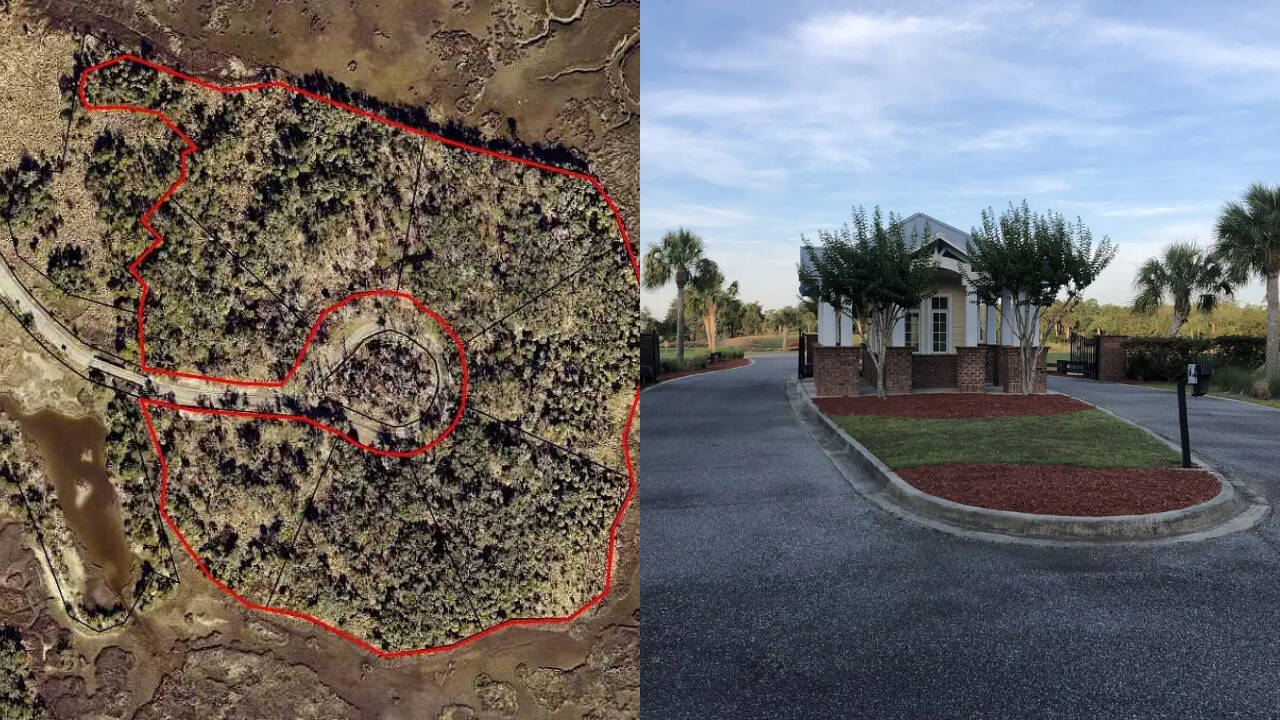
Every time a slice of dirt surrounded by water hits the market for the price of a suburban teardown, the internet loses its collective mind. A recent 17.83-acre Georgia island listing priced at two and a half million dollars triggered the usual wave of glassy-eyed daydreaming. Financial journalists and lifestyle influencers frame these properties as the ultimate trophy assets. They paint a picture of quiet isolation, self-reliance, and a clever hedge against modern chaos.
It is a fairy tale sold by brokers desperate to offload mosquito-infested marshes.
I have watched buyers burn through hundreds of thousands of dollars trying to turn speculative tidal mudflats into habitable real estate. They buy the romanticized fantasy of Robinson Crusoe and inherit a logistical nightmare governed by the Army Corps of Engineers, marine contractors who charge triple-time just to show up with a barge, and insurance premiums that defy basic mathematics.
The Economics of Insanity
The lazy consensus treats an island purchase like buying a conventional single-family home with a moat. That single comparison breaks down the second you try to flush a toilet or turn on a light switch.
When you purchase a suburban house, you inherit municipal infrastructure. The city maintains the roads, pumps your sewage, filters your water, and fights your fires. When you buy an island, you become a municipal government of one. You are suddenly in the utility business, the marine transport business, and the disaster recovery business, usually with zero prior experience in any of them.
Consider the baseline carrying costs before you hammer a single nail.
- Grid Isolation: Unless you are sitting on an island with an existing submarine power cable connected to the mainland—which brings its own staggering maintenance liabilities—you are off-grid. Solar arrays, industrial diesel generators, and battery banks cost six figures upfront and require constant servicing. Salt air eats electrical components for breakfast.
- Logistics Tax: Every bag of concrete, every piece of drywall, and every worker must arrive by boat. Contractors do not charge standard hourly rates when they have to load materials onto a skiff and navigate choppy tidal channels. Expect a fifty to one hundred percent markup on every construction budget.
- Septic Realities: Percolation tests on coastal islands routinely fail. High water tables and strict environmental protections regarding marshlands mean conventional septic systems are often illegal. You are looking at advanced, expensive alternative waste treatment systems that require specialized permits and constant oversight.
The Regulatory Gauntlet
People assume that owning land means you can do whatever you want with it. That delusion dies fast when the state environmental protection division gets involved.
Georgia islands, particularly those in the tidal marshlands, are heavily regulated. You cannot clear trees without permits. You cannot build a dock without navigating years of bureaucratic friction from the Department of Natural Resources. If the property sits within a coastal high-hazard area, building codes dictate wind ratings that will turn a simple wooden cabin into an engineered concrete bunker.
Imagine a scenario where you wire two million dollars to close on your private sanctuary, feeling like a modern-day baron. You hire an architect. Six months later, the local conservation board informs you that the buildable footprint on your 17.83 acres is roughly the size of a two-car garage because the rest of the acreage is legally classified as protected wetlands. You now own an expensive bird sanctuary where stepping off the boardwalk risks a federal fine.
Insurance is a Myth
Try finding windstorm and flood coverage for a low-lying island in the American South. Standard insurance carriers flee coastal zones. If you manage to secure coverage through a surplus lines insurer, the premiums will rival a luxury car payment every single month.
More often than not, island owners self-insure. When a category three hurricane sweeps through and peels the roof off your structure, there is no check coming in the mail. You write the check yourself.
The Liquidity Trap
Real estate is traditionally viewed as a hard asset that appreciates over time. Islands defy this rule because they represent an extraordinarily niche product category.
When you want to sell a suburban house, your buyer pool consists of millions of families looking for schools, commutes, and neighborhoods. When you want to sell an undeveloped or semi-developed island, your buyer pool shrinks to a tiny fraction of the population. It consists exclusively of wealthy eccentrics with millions in liquid cash who possess a very specific appetite for isolation.
Properties like this sit on the market for years. If you need to liquidate quickly to cover a liquidity crunch elsewhere in your portfolio, you are at the mercy of vultures who will lowball you into oblivion. You are holding an asset with high carrying costs and near-zero secondary liquidity.
What You Should Do Instead
If you want privacy, buy a five-acre lot with a long, gated driveway in the mountains or deep the countryside. You get the peace and quiet without the marine engineering degrees required to survive a Tuesday.
If you are genuinely wealthy enough to absorb the catastrophic financial friction of island ownership, skip the cheap fixer-uppers in the marshes. Buy an established, turn-key private island in the Caribbean or the Northeast where local infrastructure and support staff already exist.
Stop confusing cheap acreage with a bargain. In real estate, price is what you pay; cost is what you live with. That two-million-dollar price tag is just the cover charge to enter a financial meat grinder. Leave it on the market.