Owning a piece of the Gilded Age usually requires a nine-figure net worth and a team of lawyers. But right now, a literal gatehouse to one of America’s most legendary dynasties is sitting on the market in Rhinebeck for $525,000. That’s not a typo. You can buy into the Astor family heritage for less than the price of a cramped one-bedroom in Brooklyn.
It's a wild reality. This isn't just a house; it’s the "sentinel" of Ferncliff, the massive 2,800-acre Hudson Valley playground of John Jacob Astor IV. You know, the guy who built the Astoria Hotel and famously went down with the Titanic. While the main mansion was demolished in the 1940s, this gatehouse survived. It’s been sitting empty, rotting quietly, and waiting for someone with more vision than common sense to bring it back to life. Don't forget to check out our previous article on this related article.
The Reality of a 525000 Dollar Fixer Upper
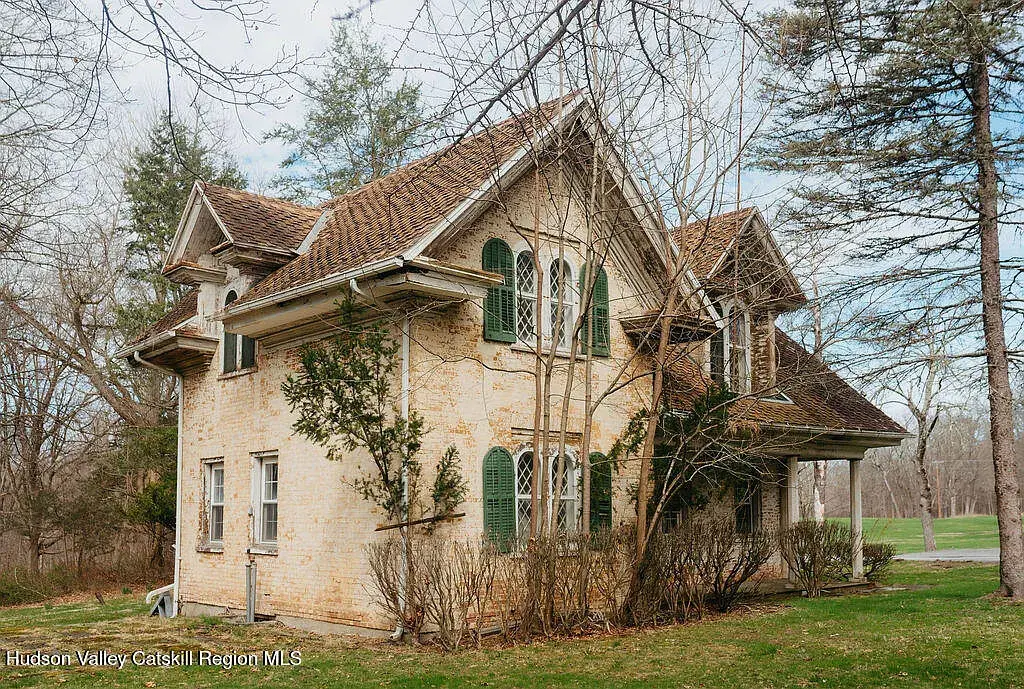
Let’s be real. At this price point in the Hudson Valley, you aren't getting a turnkey Victorian. You’re getting a project that would make a sane contractor sweat. The listing doesn't hide the "significant deterioration." We're talking about a property where the elements have reclaimed the ornamentation and the interiors look like a set from a ghost story.
The home spans about 1,700 square feet and sits on an acre of land. It’s got three bedrooms and exactly one bathroom. If you’re looking for luxury, keep walking. But if you’re looking for "unparalleled provenance," this is it. The bones date back to 1854. It originally housed the farm superintendents and later John Jacob Astor IV’s personal chauffeur. To read more about the history of this, Refinery29 provides an excellent breakdown.
Why This Property Is Actually a Steal
Rhinebeck is one of the most expensive zip codes in the Hudson River Valley. The median listing price there is currently hovering around $765,000, and that’s for standard suburban builds. This gatehouse is listed over $200,000 below that.
- Location: You're a two-minute drive from Astor Courts.
- Expansion: With an acre of land, you aren't stuck with the current 1,700-square-foot footprint.
- Heritage: You're adjacent to land donated by Brooke Astor herself.
The property is currently owned by the Archdiocese of New York. They’ve held it near their nursing home and rehab center, but they’ve clearly decided they aren't in the business of historic restoration. That’s your opening.
The Astor Legacy You’re Buying Into
Ferncliff wasn't just a house; it was a kingdom. When William Backhouse Astor Jr. started buying up small farms in 1853, he created an Italianate masterpiece with a mile and a half of river frontage. His son, John Jacob IV, turned it into a world-class sporting estate.
The estate featured the "Ferncliff Casino," a Beaux-Arts pavilion designed by Stanford White. It had one of the first indoor pools in the U.S., a bowling alley, and a shooting range. While the grand mansion is gone, the gatehouse remains as the physical entry point to that history. Every time you pull into your driveway, you’re literally following the path of the richest men in the world.
The Risks Most People Ignore
Don't let the "Gilded Age" branding blind you. Restoring a landmarked or historically significant ruin is a money pit. The listing mentions that the "noble architectural detail" remains, but "restoration" in this context usually means stripping it to the studs. You aren't just painting walls. You're likely replacing lead pipes, ancient wiring, and structural beams that have seen better centuries.
The Hudson Valley is full of these "relics." Take the Cornish Estate ruins near Cold Spring. People love to hike through them and take photos of the crumbling stone, but nobody lives there because the cost of making it habitable is astronomical. This Astor gatehouse is different because it’s actually salvageable, but your budget shouldn't stop at the $525,000 purchase price. You need at least that much again in a renovation fund.
How to Move Forward
If you’ve got the stomach for a massive renovation and a deep love for New York history, here is how you handle this. Start by looking into local Rhinebeck zoning and historic preservation rules. You don't want to buy a "visionary" project only to find out the town won't let you change a single window pane.
Next, get a structural engineer who specializes in 19th-century builds. Don't trust a standard home inspector for something this old and neglected. You need to know if the foundation is moving or if the "deterioration" has reached the soul of the building.
Finally, check the neighboring parcels. Part of the value here is the privacy afforded by the surrounding land, much of which is protected or owned by the Church. If that changes, your Gilded Age retreat becomes a lot less exclusive.
This isn't a flip. It’s a legacy play. If you do it right, you own a piece of the Hudson Valley that people will still be talking about in another hundred years. If you do it wrong, you’re just the person who bought a very expensive pile of bricks.
Walk the property. Bring a flashlight. Check the tax records for any outstanding liens or encumbrances from the Archdiocese. If the numbers still make sense, put in an offer before a developer realizes they can subdivide the acre and ruin the vibe.